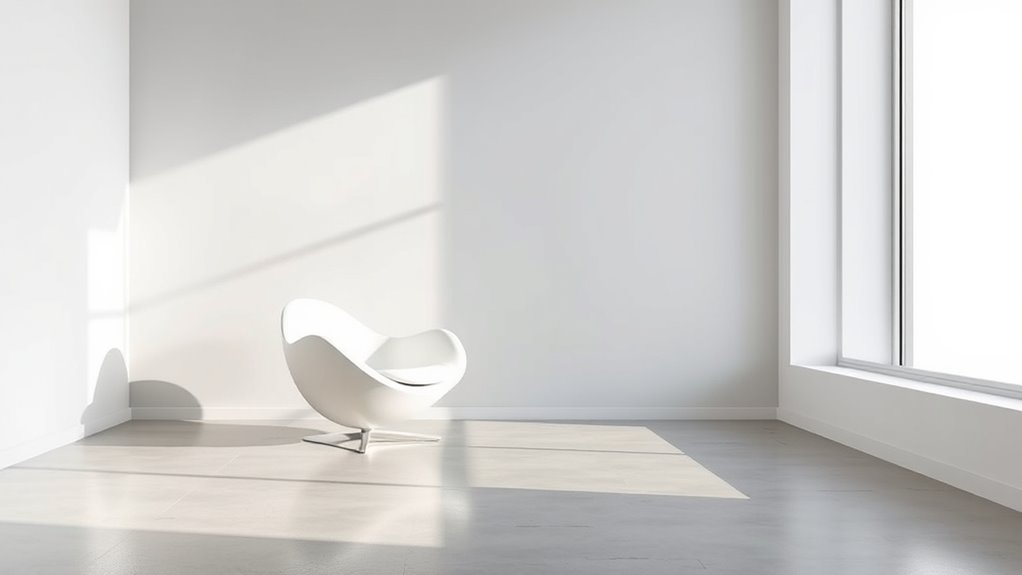

Minimalism remains a powerful design philosophy because it helps you cut through chaos, making essential elements stand out clearly. By focusing on simplicity and natural features, you create environments and visuals that communicate effectively and foster calm. This approach enhances usability and reduces stress by removing unnecessary clutter. As you explore further, you’ll discover how minimalism’s emphasis on restraint and intentionality can transform spaces and visuals into impactful, harmonious experiences.

Get art and craft supplies delivered free with Prime
- Fast, free delivery on millions of items
- Prime Video, Amazon Music and more included
- Member-only deals all year
Key Takeaways
- Minimalism enhances clarity and focus by removing unnecessary clutter, making designs more impactful and easier to understand.
- It promotes functionality and usability, ensuring only essential elements are emphasized for better user experience.
- The philosophy fosters serenity and balance, integrating naturally with environmental elements for a calming aesthetic.
- Minimalism supports efficiency and productivity by reducing visual noise and simplifying spaces or visuals.
- Its emphasis on restraint and intentionality cultivates timeless, adaptable designs that remain relevant and compelling.

Have you ever wondered why less often feels more in design? It’s because minimalism champions a functionality focus that strips away unnecessary clutter, highlighting what truly matters. When you embrace aesthetic simplicity, you create spaces, products, or visuals that speak directly to their purpose without distraction. This approach isn’t just about making things look clean; it’s about making them work better for you. By removing excess, you allow the core elements to shine, making every detail purposeful and intentional. That clarity makes it easier for you to navigate, understand, and appreciate what’s in front of you, whether it’s a room, a website, or a piece of art. Embracing design simplicity allows for a more cohesive and impactful user experience. Minimalism’s power lies in its ability to cut through chaos. When your environment or design is cluttered, your mind can become overwhelmed. Simplifying allows you to focus on what’s essential, reducing stress and increasing productivity. It’s a mindset that values quality over quantity and appreciates the beauty of restraint. Less is more because each element is carefully chosen and intentionally placed. This focus on essential functionality not only enhances usability but also cultivates a sense of calm and order. Incorporating intentional design principles helps create spaces that are both beautiful and functional. When you adopt a minimalist philosophy, you’re choosing clarity over complexity, making your space or design more efficient and more meaningful. Additionally, natural elements can be integrated seamlessly into minimalist spaces to promote serenity and balance.
As an affiliate, we earn on qualifying purchases.
Frequently Asked Questions
How Does Minimalism Influence User Experience in Digital Interfaces?
Minimalism influences your user experience by enhancing visual clarity, making interfaces easier to navigate and understand. With fewer distractions, you’re more likely to stay engaged with the content and complete desired actions. This design approach simplifies interactions, reducing cognitive load, and encourages user engagement. Ultimately, minimalism creates a clean, focused environment that guides your attention efficiently, improving overall satisfaction and usability in digital interfaces.
What Are Common Challenges When Adopting Minimalism in Design?
When adopting minimalism in design, you often face challenges like reducing visual clutter without sacrificing important details. You need to strike a balance to prevent user overload, ensuring the interface remains clean yet functional. Sometimes, simplifying too much can make navigation unclear or obscure key information, so you must carefully curate content and visual elements. Ultimately, the goal is to create an intuitive experience that feels uncluttered but still engaging.
Can Minimalism Be Effectively Applied Across Diverse Cultural Contexts?
You might think minimalism is a one-size-fits-all approach, but it can truly thrive across diverse cultural contexts. By understanding cultural interpretation and embracing aesthetic diversity, you can adapt minimalist principles to resonate locally. Minimalism’s simplicity can highlight unique cultural elements rather than erase them, proving it’s not just a trend but a flexible philosophy that respects and celebrates different traditions worldwide. It’s like tailoring a suit, perfectly fitting every culture’s style.
How Does Minimalism Impact the Sustainability of Products and Designs?
Minimalism positively impacts product sustainability by encouraging the use of eco-friendly materials and emphasizing quality over quantity. When you choose minimalist designs, you’re more likely to select durable items that last longer, reducing waste. This approach promotes thoughtful consumption, as sleek, simple products often require fewer resources to produce and maintain. Ultimately, minimalism helps you create a more sustainable lifestyle by prioritizing longevity and environmental responsibility in your choices.
What Role Does Minimalism Play in Branding and Corporate Identity?
Minimalism plays a pivotal role in branding and corporate identity by enhancing brand recognition through simple, consistent visuals. It helps you create a clear, memorable message that resonates emotionally with your audience. By stripping away unnecessary details, you focus on core values, making your brand more approachable and impactful. This emotional connection builds trust and loyalty, ensuring your brand stands out in a crowded marketplace.
natural material home accessories
As an affiliate, we earn on qualifying purchases.
As an affiliate, we earn on qualifying purchases.
Conclusion
You walk into a room where every object has a purpose, every line is clean, and space breathes freely. Minimalism isn’t just about simplicity; it’s about creating a canvas that lets your mind breathe and your surroundings breathe. It’s the quiet elegance of a single, striking piece on a wall or the calm of an uncluttered desk. In embracing minimalism, you invite clarity and peace into your life, making every detail count.
As an affiliate, we earn on qualifying purchases.
As an affiliate, we earn on qualifying purchases.
Halloween Picks
halloween
As an affiliate, we earn on qualifying purchases.