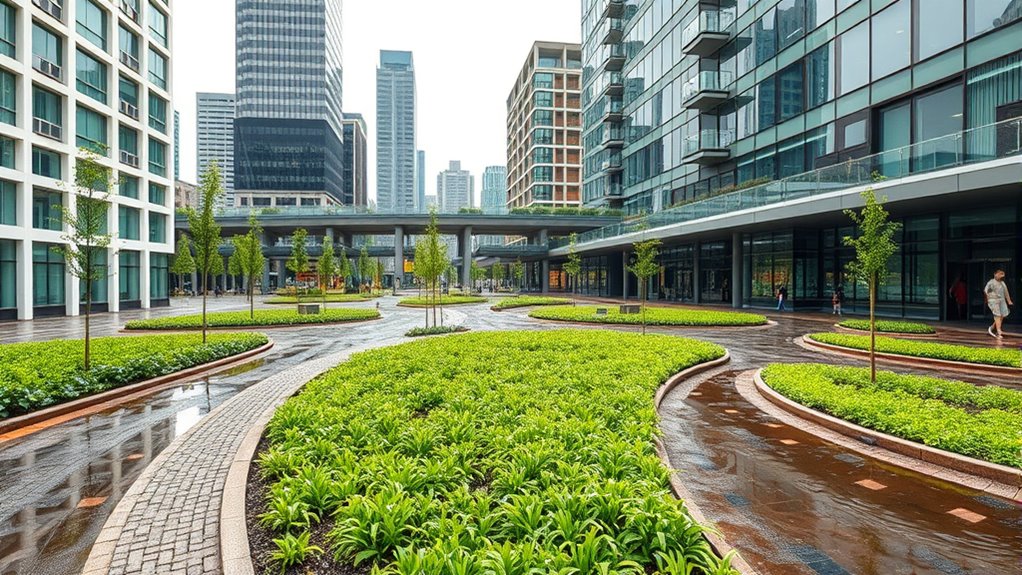

Water-sensitive urban design helps you create cities that better handle heavy rains and flooding by integrating natural water management features like permeable pavements, rain gardens, and green roofs. These features reduce runoff, slow water infiltration, and prevent urban floods. By working with nature, you can improve water quality, support local ecosystems, and build resilient communities. Continuing to explore this approach reveals effective strategies to transform urban areas into more adaptive and flood-resistant spaces.
Key Takeaways
- WSUD integrates green infrastructure to manage stormwater naturally, reducing flood risk during heavy rainfall.
- Incorporating permeable surfaces and rain gardens enhances ground infiltration, decreasing urban runoff and flood potential.
- WSUD strategies absorb excess water, preventing overwhelmed drainage systems and minimizing flood impacts.
- Climate-adaptive WSUD designs improve city resilience by accommodating unpredictable storm patterns and heavy rain events.
- Implementing WSUD promotes sustainable urban environments that mitigate flooding while enhancing ecological and community benefits.
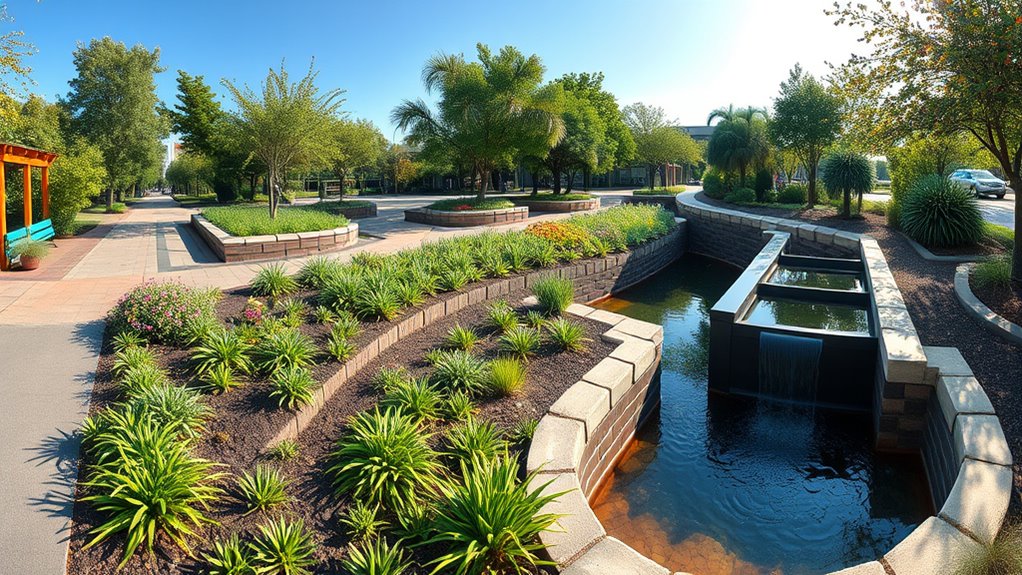
Water-sensitive urban design (WSUD) integrates water management into the fabric of cities to create sustainable, resilient environments. When you adopt WSUD principles, you’re actively managing stormwater runoff, reducing flood risks, and enhancing urban ecosystems. At its core, stormwater management becomes a proactive process, aiming to mimic natural water cycles rather than simply draining excess water away. This approach not only prevents flooding during heavy rains but also preserves water quality and supports biodiversity within urban areas.
Water-sensitive urban design mimics natural water cycles to prevent floods and support urban biodiversity.
Green infrastructure plays a pivotal role in achieving these goals. By incorporating features like permeable pavements, rain gardens, green roofs, and bioswales, you can transform conventional stormwater pathways into functional, eco-friendly systems. These elements allow water to infiltrate the ground slowly, reducing the volume and speed of runoff that can overwhelm drainage systems. As a result, you’re less likely to experience urban flooding, even during intense storms. Green infrastructure also offers additional benefits, such as cooling urban heat islands, improving air quality, and creating inviting public spaces.
Implementing WSUD strategies means you’re designing cities that work with nature rather than against it. Instead of relying solely on traditional drainage infrastructure, you’re integrating green spaces that absorb and filter stormwater naturally. This integration helps maintain groundwater levels and prevents pollutants from reaching waterways. When storms hit, your urban environment becomes better equipped to handle the influx of water, thanks to these thoughtfully designed systems. Not only does this resilience reduce the impact of floods, but it also minimizes the economic costs associated with stormwater damage and infrastructure repairs.
Furthermore, you’re fostering a sense of community and ecological stewardship. Green infrastructure can be incorporated into parks, streetscapes, and building designs, making water management visible and engaging for residents. This encourages civic participation and awareness about sustainable practices. As climate change leads to more unpredictable and severe weather patterns, adopting WSUD becomes essential for safeguarding urban populations and infrastructure. You’re creating a city that’s adaptive and prepared, capable of managing stormwater effectively while enhancing quality of life.
In essence, water-sensitive urban design empowers you to reimagine city landscapes. By prioritizing stormwater management through green infrastructure, you’re not only reducing flood risks but also building healthier, more resilient communities. It’s about working smarter with nature—designing urban spaces that are sustainable, adaptable, and ready for the challenges of tomorrow. Additionally, understanding the contrast ratio of projectors can help optimize visual clarity in these thoughtfully designed urban environments.

TRUEGRID | Deco Permeable Pavers | Designed as Driveway Pavers, Garden Pavers, Stepping Stone Support, for Walkways, Patios, Poolside, DIY | Outdoor Pavers | 1.8" Depth | Pack of 10 (40 Square Feet)
- Stabilizes walkways and driveways: Prevents gravel migration and adds decoration
- Made in USA from recycled materials: Constructed from 100% post-consumer recycled HDPE
- All-weather durability: Suitable for all climates, snow plowable, permeable, and quick-draining
As an affiliate, we earn on qualifying purchases.
As an affiliate, we earn on qualifying purchases.
Frequently Asked Questions
How Does Urban Design Influence Local Water Quality?
Urban design directly impacts your local water quality through effective stormwater management. By incorporating features like green roofs, permeable pavements, and rain gardens, you help reduce runoff and filter pollutants before they reach waterways. These strategies lower pollutant levels, preventing contamination and improving water clarity. When you prioritize such designs, you contribute to cleaner water, healthier ecosystems, and a more resilient urban environment for everyone.
What Are the Cost Implications of Implementing Water-Sensitive Design?
Cost concerns can cause caution, but careful cost analysis shows that implementing water-sensitive design can be cost-effective long-term. You’ll need to contemplate initial investments, potential savings, and sustainable funding strategies. While upfront expenses might seem steep, benefits like reduced flood risks and improved water quality often outweigh costs. Strategic planning and securing diverse funding sources can make these projects more affordable, ensuring resilient, resourceful urban environments without breaking the bank.
How Can Communities Participate in Water-Sensitive Urban Planning?
You can participate in water-sensitive urban planning through active community engagement and participatory planning. Attend local workshops, share your ideas, and voice your concerns about water management. Join neighborhood groups or committees focused on sustainable development, and collaborate with planners and officials to shape projects that reflect community needs. Your involvement guarantees that water-sensitive solutions are practical, inclusive, and effective, fostering a resilient and environmentally friendly urban environment.
What Are the Best Practices for Retrofitting Existing Urban Areas?
To retrofit existing urban areas effectively, you should prioritize installing green infrastructure like rain gardens, green roofs, and permeable pavements. These measures enhance stormwater management by reducing runoff and improving water absorption. You can also upgrade drainage systems and create green corridors to boost flood resilience. Engaging local stakeholders and securing funding will help implement these practices smoothly, ensuring the city adapts better to climate challenges while enhancing its livability.
How Does Water-Sensitive Design Adapt to Climate Change Impacts?
Imagine you’re in a time machine, adapting today’s city for tomorrow’s storms. You implement water-sensitive design by increasing green spaces, using permeable pavements, and restoring natural waterways. These strategies boost urban resilience and help your city better handle climate change impacts like flooding and droughts. By integrating climate adaptation into urban planning, you guarantee your community stays safe, sustainable, and resilient for decades to come.
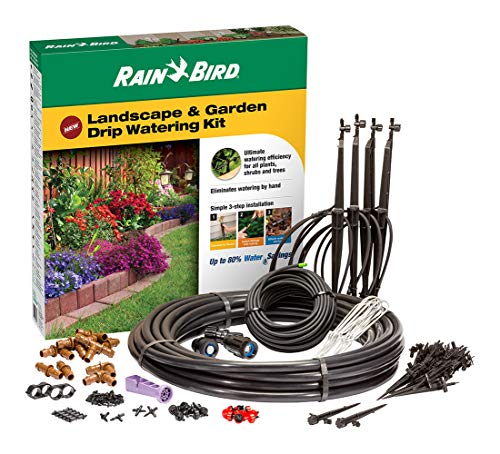
Rain Bird LNDDRIPKIT Drip Irrigation Kit
- Complete 108-Piece Kit: For gardens, flower beds, landscapes
- Water Savings: Up to 80% water efficiency
- Easy 3-Step Installation: Connect, insert, attach
As an affiliate, we earn on qualifying purchases.
As an affiliate, we earn on qualifying purchases.
Conclusion
By embracing water-sensitive urban design, you become a steward of the city’s harmony with nature. Like a delicate stream flowing through a resilient landscape, your efforts help the environment breathe and adapt. When you integrate these principles, you’re planting seeds for a future where flood resilience blossoms, symbolizing hope and renewal. Remember, each mindful choice is a ripple, shaping a city that gracefully withstands the storms—your role in this ongoing dance of water and resilience.

Green Roof Systems: A Guide to the Planning, Design, and Construction of Landscapes over Structure
As an affiliate, we earn on qualifying purchases.
As an affiliate, we earn on qualifying purchases.

Bioswales: Practical Nature-Based Solutions for Stormwater Management and Climate-Resilient Cities
As an affiliate, we earn on qualifying purchases.
As an affiliate, we earn on qualifying purchases.