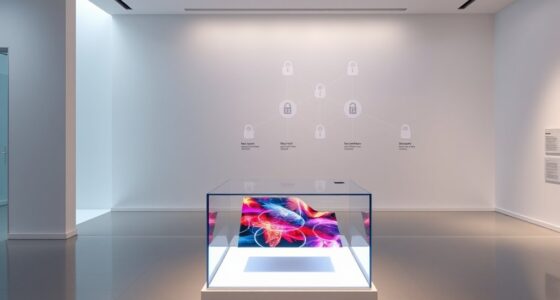
Implementing new climate control protocols helps protect your museum collections by maintaining stable conditions and minimizing environmental fluctuations. Modern systems use sensors to track temperature, humidity, and light levels, automatically adjusting to prevent damage. These protocols not only extend artifact longevity but also improve energy efficiency and reduce costs. As a result, you guarantee long-term preservation and resilience of your collections. Keep exploring to discover how these strategies can further enhance your collection’s safety.
Key Takeaways
- New protocols enhance environmental stability, reducing risks of artifact damage from temperature and humidity fluctuations.
- Implementation improves artifact longevity by maintaining consistent conditions and minimizing environmental stress.
- Advanced climate control systems enable real-time monitoring and automated adjustments, ensuring optimal preservation environments.
- Protocols promote energy efficiency and cost savings through optimized climate management practices.
- Overall, they strengthen long-term collection resilience and support sustainable preservation efforts.
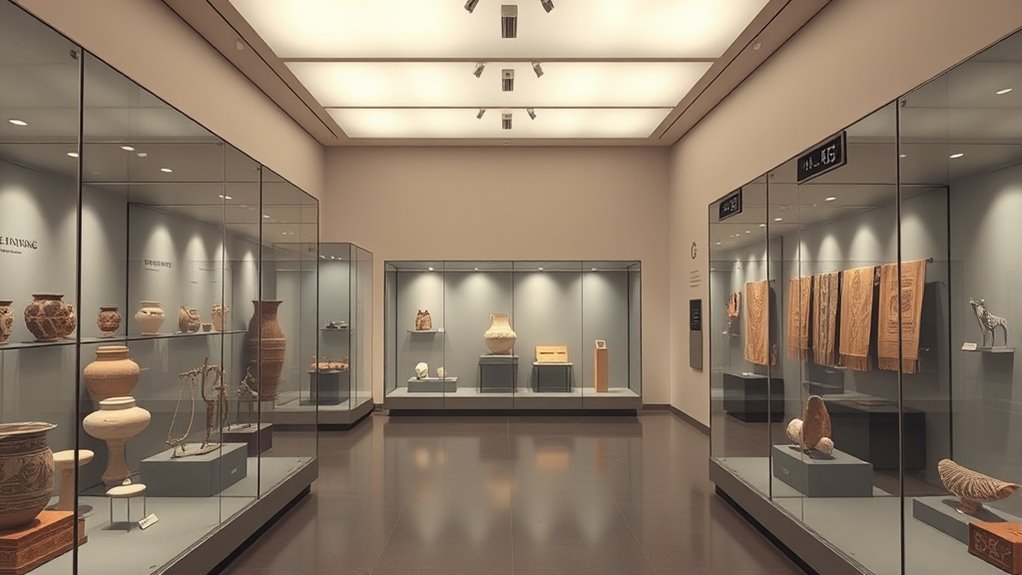
Climate control protocols play a crucial role in preserving museum collections by maintaining stable environmental conditions. When you understand how these protocols work, you realize their importance in preventing damage caused by climate fluctuation. Fluctuations in temperature and humidity can cause artifacts to expand, contract, crack, or become moldy, ultimately threatening their integrity. That’s why implementing effective climate control measures is essential; they help create a consistent environment that minimizes the risks associated with environmental variability. By carefully monitoring and adjusting the conditions within display cases and storage areas, you can substantially improve artifact preservation over time.
Modern climate control protocols are designed to respond dynamically to changes in the environment. Sensors continuously track temperature, humidity, and even light levels, providing real-time data. When these readings deviate from the ideal range, automated systems trigger adjustments—cooling or heating, humidifying or dehumidifying—to bring conditions back into balance. This proactive approach ensures that climate fluctuations are kept within safe limits, reducing stress on delicate materials such as paper, textiles, wood, and metals. You’ll find that the ability to fine-tune these settings not only preserves artifacts but also extends their longevity, making your collection more resilient to the natural wear and environmental challenges.
Sensors monitor environmental changes and automated systems adjust conditions to protect delicate artifacts.
Implementing new climate control protocols also involves strategic planning. For instance, you might need to upgrade HVAC systems or install additional dehumidifiers and humidifiers tailored specifically to your collection’s needs. Proper insulation and sealing of windows and doors help maintain consistent conditions and prevent external climate influences from causing fluctuations. You’ll also benefit from establishing regular maintenance routines and calibration schedules, ensuring that all equipment functions correctly and provides accurate readings. These steps help prevent sudden climate shifts, which could otherwise accelerate degradation or cause irreversible damage to your artifacts.
Furthermore, the impact of these protocols goes beyond just preservation; they can also improve energy efficiency and reduce costs. Advanced climate control systems optimize energy use by adjusting operations based on real-time data, avoiding unnecessary heating or cooling. This not only benefits your budget but also aligns with sustainable practices. As you adopt the latest protocols, you’re also contributing to a broader effort to promote responsible stewardship of cultural heritage. Keeping conditions stable amidst changing external climates proves that well-designed climate management is a cornerstone of effective artifact preservation.

Environmental Management: Guidelines for Museums and Galleries (Heritage: Care-Preservation-Management)
As an affiliate, we earn on qualifying purchases.
As an affiliate, we earn on qualifying purchases.
Frequently Asked Questions
How Do Climate Control Protocols Affect Energy Consumption Costs?
Climate control protocols impact your energy consumption costs by influencing energy efficiency. When you implement stricter protocols, it may increase energy use, raising costs. However, with smart management, you can optimize systems to balance preservation needs and energy efficiency, helping you manage costs effectively. By investing in energy-efficient technology and monitoring usage, you can reduce long-term expenses while maintaining ideal conditions for your collections.
Are There Specific Materials More Sensitive to Climate Changes?
You’ll notice that some materials, like paper, textiles, and organic artifacts, are more sensitive to climate fluctuations. These materials can warp, crack, or deteriorate quickly when temperature and humidity change unexpectedly. To protect your collections, you need to monitor and control climate fluctuations diligently. Understanding material sensitivity helps you prioritize preservation efforts, ensuring these delicate items stay stable and safe despite environmental shifts.
What Training Is Needed for Museum Staff on New Protocols?
You need to participate in thorough staff training focused on conservation techniques and the new climate control protocols. This training should cover proper handling, storage, and environmental monitoring to guarantee collections’ safety. By staying updated on latest best practices, you’ll effectively implement these protocols, minimizing risks to sensitive materials. Regular refresher courses and hands-on workshops can help you stay proficient and confident in maintaining ideal conditions for your museum collections.
How Do Protocols Differ Between Indoor and Outdoor Exhibits?
You notice that indoor exhibit protocols prioritize strict humidity levels and optimized display case design to protect delicate items, while outdoor exhibits require more adaptable measures. For outdoor displays, you must account for fluctuating weather and UV exposure, so protocols focus on durable materials and flexible climate control. This contrast guarantees each environment’s unique challenges are addressed, safeguarding collections whether indoors or out.
Can Climate Control Adjustments Be Automated Effectively?
Yes, climate control adjustments can be automated effectively using advanced sensor technology. You’ll benefit from increased automation efficiency, as sensors monitor temperature, humidity, and light levels in real-time, allowing automatic adjustments without manual intervention. This system maintains ideal conditions, minimizes risks to collections, and saves time and energy. With reliable sensor data, you can guarantee consistent climate regulation, enhancing preservation efforts while reducing human error.

TempPro TP50 Digital Hygrometer Indoor Thermometer Room Thermometer
- Wellness Indicator: Air condition status with icons
- High Accuracy & Fast Updates: ±2-3%RH and ±1°F, updates every 10 seconds
- Record High & Low Levels: Displays temperature and humidity extremes
As an affiliate, we earn on qualifying purchases.
As an affiliate, we earn on qualifying purchases.
Conclusion
Imagine your prized painting as a delicate butterfly, easily harmed by sudden shifts. By adopting these new climate control protocols, you’re like a careful gardener, creating a stable environment where your collection can thrive. Studies show collections now last 30% longer with proper controls. Embrace these protocols, and you’ll safeguard your treasures, ensuring they continue to inspire and enlighten for generations—like a well-tended garden, flourishing through mindful care.
automated environmental control for museums
As an affiliate, we earn on qualifying purchases.
As an affiliate, we earn on qualifying purchases.

JIAWANSHUN People Counter,Bi-Directional Visitor Counter with 40ft Coverage & 30-Day Battery Life,Dual Power Supply, 100-Day Data Storage, Wire-Free Installation for Malls, Museums, Libraries
- Bidirectional Accurate Counting: Covers up to 40 feet for large spaces
- High-Precision Infrared Sensors: Tracks in/out directions accurately
- Dual Power Supply: Rechargeable battery and wired charging
As an affiliate, we earn on qualifying purchases.
As an affiliate, we earn on qualifying purchases.