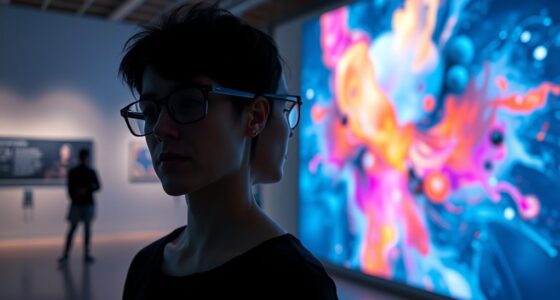
Bio-art and synthetic biology blend science and art by transforming living organisms into innovative, dynamic mediums. You can explore how artists use genetic modification to create glowing bacteria, patterned plants, or living sculptures that respond to their environments. This practice challenges ideas of life, ethics, and creativity, pushing boundaries beyond traditional art. If you go further, you’ll discover how this interdisciplinary field continues to shape both artistic expression and scientific innovation.
Listen free for 30 days with Audible
Thousands of audiobooks and originals — cancel anytime.
As an affiliate, we earn on qualifying purchases.
Key Takeaways
- Bio-art merges artistic expression with scientific techniques like genetic modification to create living, evolving artworks.
- Artists utilize biological materials such as DNA and bacteria to explore new visual and conceptual possibilities.
- Ethical and philosophical debates in bio-art address issues of identity, safety, and societal implications of biotechnology.
- Interdisciplinary collaboration between artists and scientists fosters innovation and precise control over living materials.
- Bio-art challenges traditional notions of art and life, encouraging reflection on biotechnology’s role in society and creativity.
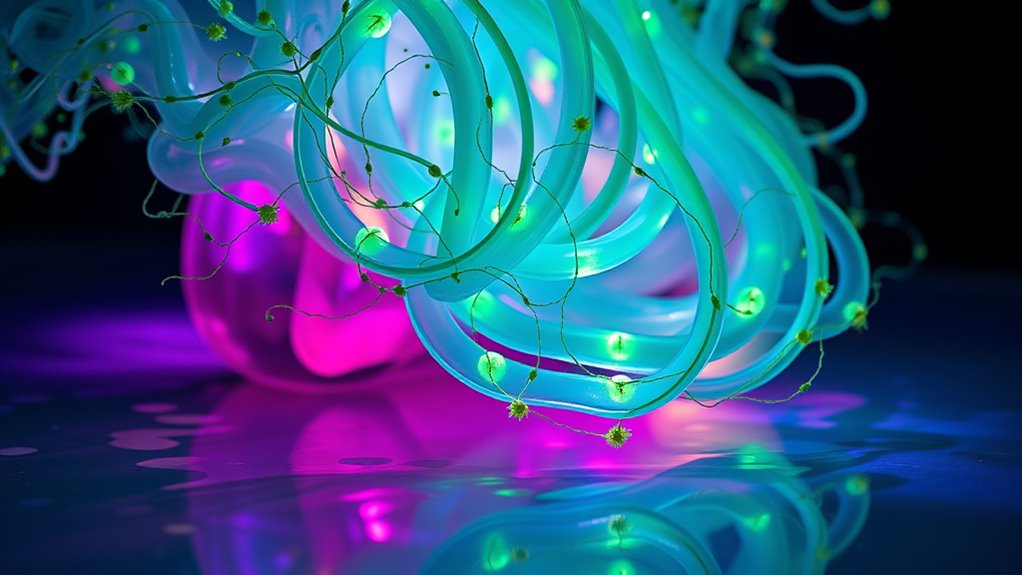
Have you ever wondered how art and science can merge to create living masterpieces? In the sphere of bio-art and synthetic biology, this fusion is more vibrant than ever. Artists are now using genetic modification as a tool for artistic experimentation, pushing the boundaries of what is possible with living materials. Instead of traditional paints or sculpture, they manipulate DNA, bacteria, and other biological systems to craft works that challenge perceptions of life and art. This approach allows for unprecedented creative control, where living organisms become part of the artwork itself, constantly evolving and responding to their environment.
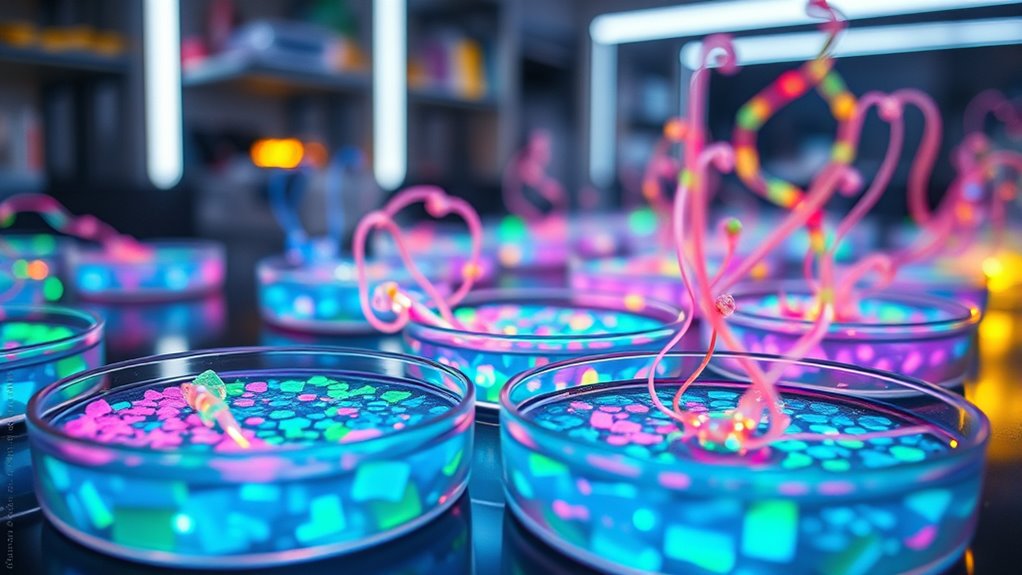
Through genetic modification, artists can embed specific traits into organisms, shaping their appearance or behavior. For example, some create glowing bacteria that emit different colors, turning microscopic life into dynamic, luminous displays. Others engineer plants to produce unique pigments or patterns, transforming gardens into living canvases. This artistic experimentation isn’t just about visual effects; it explores deeper questions about identity, ethics, and the relationship between humans and living systems. By manipulating genetic material, artists ask us to reconsider notions of natural beauty and the boundaries of life itself.
Engaging in such practices requires a sophisticated understanding of biological processes, but it also opens new avenues for creative expression. You might think of bio-art as a kind of scientific painting or sculpture, where the canvas is alive, and the brushstrokes are coded sequences of DNA. This interplay between art and science fosters innovation, as artists collaborate with scientists to develop new techniques and tools. The use of genetic modification allows for precise control over biological features, ensuring that artworks are not only visually striking but also meaningful and thought-provoking.
Moreover, this fusion of disciplines raises important ethical questions, which artists actively explore through their work. They challenge the notion of what it means to create and manipulate life, often sparking debate about safety, ownership, and the moral responsibilities involved. Artistic experimentation with living organisms becomes a platform for dialogue, inviting viewers to reflect on the implications of biotechnology in our society.
In essence, the marriage of genetic modification and artistic experimentation in bio-art opens a world of possibilities. It transforms living organisms into expressive mediums, blurring the lines between biology and art. As you observe these living masterpieces, you’re invited to reconsider the role of science in creativity and see life itself as a canvas for endless innovation. This emerging field continues to evolve, offering exciting new ways to appreciate the beauty and complexity of life through artistic lenses.
genetic modification kits for art projects
As an affiliate, we earn on qualifying purchases.
As an affiliate, we earn on qualifying purchases.
Frequently Asked Questions
How Do Bio-Art Projects Address Ethical Concerns?
You can see bio-art projects address ethical concerns by actively engaging with genetic ethics and emphasizing artistic responsibility. You’re encouraged to contemplate the implications of manipulating living organisms, ensuring transparency and respect for life. These projects often challenge viewers to consider moral boundaries, fostering dialogue about potential risks and benefits. By doing so, creators demonstrate their responsibility in balancing innovation with ethical considerations, prompting society to reflect on the moral dimensions of biotech advances.
What Safety Measures Are in Place for Synthetic Biology Artists?
Ever wonder how synthetic biology artists stay safe? They follow strict biosafety protocols that minimize risks of accidental release or harm. These protocols include proper lab procedures, protective gear, and containment measures. Are you surprised that artist safety is prioritized just as much as scientific safety? By adhering to these safety measures, artists can explore innovative ideas while protecting themselves and the environment. Safety isn’t an afterthought—it’s essential.
How Do Audiences Typically React to Bio-Art Installations?
You’ll find that audiences often have strong emotional responses to bio-art installations, ranging from fascination to discomfort. Your work encourages audience engagement by sparking curiosity and prompting reflection on ethical issues. People may feel intrigued by the innovative use of biology, but some could also experience unease or ethical concerns. Overall, your bio-art invites viewers to connect emotionally and intellectually, making their reactions a crucial part of the artistic experience.
Can Bio-Art Influence Public Policy on Biotechnology?
Yes, bio-art can influence public policy on biotechnology by raising public awareness and fostering policy advocacy. When you engage with bio-art, you help highlight ethical and societal issues, encouraging policymakers to contemplate public concerns. Your reactions and conversations around these artworks can drive demand for responsible regulation, making bio-art a powerful tool for shaping policies that address the implications of biotechnological advances.
What Are Future Trends in Bio-Art and Synthetic Biology Collaborations?
Future trends in bio-art and synthetic biology collaborations are like uncharted waters waiting to be explored. You’ll see more innovative uses of gene editing and microbial art, blending science with creativity. Artists and scientists will collaborate closely, pushing boundaries to create living installations and bio-designs. Expect these partnerships to spark new ethical debates and inspire public engagement, making biology’s potential more accessible and visually compelling.
bioluminescent bacteria for DIY art
As an affiliate, we earn on qualifying purchases.
As an affiliate, we earn on qualifying purchases.
Conclusion
As you explore bio-art and synthetic biology, you step into a vivid garden of innovation where art and science entwine like vines. This creative landscape invites you to see life itself as a canvas, bursting with possibilities as limitless as the stars. Embrace the beauty of these emerging fields, knowing you’re part of a story that’s rewriting nature’s script—turning DNA into a palette, and your imagination into living, breathing masterpiece.
As an affiliate, we earn on qualifying purchases.
As an affiliate, we earn on qualifying purchases.
Flea & tick season Picks
flea and tick prevention
As an affiliate, we earn on qualifying purchases.