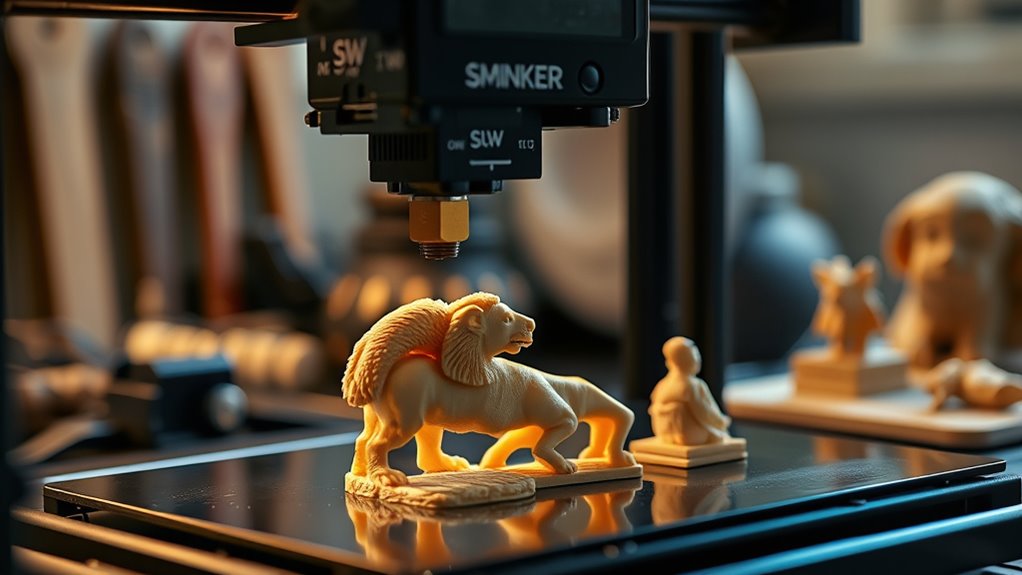

3D printing and additive manufacturing transform restoration and preservation by allowing you to recreate damaged or missing parts with high precision. You can produce complex, detailed components faster and more cost-effectively than traditional methods. Choosing the right materials—such as resins, plastics, or metals—depends on your project’s needs. By understanding these technologies and materials, you’ll enhance the longevity and authenticity of your restorations. Continue to explore how these advances can elevate your preservation efforts.
Key Takeaways
- 3D printing enables precise reproduction and restoration of damaged or missing artifacts, preserving cultural heritage effectively.
- Various techniques like selective laser sintering and material jetting optimize restorations based on complexity and material needs.
- Material selection, including plastics, resins, and metals, is critical for matching original appearance and ensuring durability.
- Advances in additive manufacturing expand options for fine detail, strength, and environmental compatibility in restorations.
- Combining appropriate techniques and materials enhances the accuracy, authenticity, and sustainability of restoration projects.

3D printing has revolutionized the field of restoration by enabling precise and efficient reproduction of damaged or missing parts. With this technology, you can now recreate complex components with a level of detail that traditional methods often struggle to match. When approaching restoration projects, understanding the right restoration techniques is crucial, as they directly influence the quality and longevity of the final piece. Additive manufacturing allows you to choose from a variety of approaches—layer-by-layer deposition, selective laser sintering, or material jetting—each suited to different types of restorations. Selecting the appropriate technique depends on the complexity of the part, the required precision, and the material you plan to use.
Material selection plays a vital role in ensuring successful restoration outcomes. You need to carefully match the material to the original, considering factors like durability, color, finish, and compatibility with the existing object. For instance, if you’re restoring a historic artifact, you might opt for materials that closely mimic the original’s appearance and aging characteristics. For functional parts, strength and wear resistance take priority. Common materials for 3D printing in restoration include various plastics, resins, and even metals. Each offers unique benefits; plastics are versatile and cost-effective, while resins can provide fine detail and smooth finishes. Metals like titanium or stainless steel can be used for more durable, load-bearing components.
Another key aspect of material selection involves understanding the limitations of your chosen material. Not all 3D printable materials are suitable for every environment or application. Some plastics may degrade under UV exposure or high temperatures, making them unsuitable for outdoor or high-heat settings. Conversely, certain resins might offer exquisite detail but lack the strength needed for functional parts. By carefully evaluating these factors, you ensure the restored element will stand the test of time. Additionally, advances in composite materials are expanding your options, allowing you to combine properties like flexibility and strength.
Ultimately, successful restoration using 3D printing hinges on the synergy between the right techniques and the appropriate materials. When you match your approach to the specific needs of each project, you can restore damaged items with precision and confidence. This technology not only accelerates the process but also opens new horizons for preserving cultural heritage, repairing valuable artifacts, and replacing parts that were once impossible to reproduce. As you explore these options, you’ll discover how 3D printing makes restoration more accessible, sustainable, and accurate, ensuring your work stands the test of time. Recognizing the importance of material properties ensures that restorations are both durable and authentic.

Heat Transfer Vinyl Bundle - 43 Pack 12" x 10" PU Iron on Vinyl for T-Shirt, 32 Assorted Colors HTV Vinyl for Heat Press Machine - Easy to Cut, Weed & Transfer
2023 UPDATED HTV VINYL -Our heat transfer vinyl sheets is thin with an excellent dimensional stability and very...
As an affiliate, we earn on qualifying purchases.
Frequently Asked Questions
What Materials Are Most Suitable for Historic Artifact Replication?
You should choose materials with high durability and excellent replication accuracy for historic artifact replication. Materials like resin composites, certain plastics, and specialized ceramics are ideal because they resist wear and maintain fine details. These options guarantee your replicas are both long-lasting and true to the original’s appearance. By selecting the right materials, you can achieve precise reproductions that honor the artifact’s historical significance while lasting through time.
How Does 3D Printing Impact Traditional Restoration Techniques?
You see, 3D printing transforms traditional restoration by enabling digital duplication and rapid prototyping. It allows you to create precise replicas of artifacts quickly, reducing the need for invasive procedures. This technology enhances accuracy, preserves original pieces, and accelerates project timelines. While it complements traditional methods, it also introduces new possibilities for detailed restoration, making your work more efficient and preserving history with greater fidelity.
Can 3D Printed Parts Withstand Environmental Conditions Over Time?
Think of 3D printed parts as shields against the elements—they can withstand environmental conditions over time, but their durability depends on the material used. High-quality materials offer great environmental durability and longer material longevity, guaranteeing your restorations last. However, lower-grade options may degrade faster. So, choose your materials wisely to ensure your 3D printed parts maintain their strength and appearance, even in challenging conditions.
What Are the Ethical Considerations in Digital Restoration Processes?
You should consider ethical issues like maintaining authenticity and obtaining consent before digital restoration. Respect intellectual property rights and avoid reproducing works without permission. Think about how digital modifications might affect the original piece’s value and integrity. Ensuring transparency about your methods and intentions helps maintain trust, and always prioritize preserving the artifact’s true essence over superficial fixes. This responsible approach safeguards both cultural heritage and ethical standards.
How Accessible Is 3D Printing Technology for Small Preservation Projects?
Think of 3D printing as a well-kept garden waiting for your touch; it’s quite accessible for small projects. You’ll need to contemplate cost analysis carefully, as equipment and materials vary. While skill requirements aren’t insurmountable, they do demand some learning curve. With patience, you can harness this technology to breathe new life into delicate artifacts, making preservation more approachable and personalized.

IRON-ON HTV Heat Transfer Vinyl Bundle 42 Pack 12" x 10" Sheets Iron on Vinyl 32 Assorted Colors for Shirts DIY Design for All Cutter and Heat Press Machine
【Various colors & multipurpose】: 32 Various colors are available, It is convenient to do your personalized design. Customize...
As an affiliate, we earn on qualifying purchases.
Conclusion
Imagine holding a fragile relic in your hands, knowing 3D printing can recreate its intricate details with precision. Just like a skilled artist restoring a masterpiece, you can breathe new life into damaged artifacts with additive manufacturing. Studies show that 3D printing reduces restoration time by up to 50%, making the process more efficient. With this technology, you become a guardian of history, ensuring priceless pieces are preserved for generations to come.

【Premium Bundle】 HTVRONT Automatic Heat Press 2 + HTVRONT Heat Press Accessories Kit + 2 Pack Cutting Mats 12x12 + 8 Pcs 3D Puff Vinyl + 10" x 8ft Gold Glitter HTV Heat Transfer Vinyl
【Bundle Contains】HTVRONT Automatic heat press 2, HTVRONT Automatic Heat Press Accessories Kit (Include: T-shirt rulers*1, weeding hooks*1, 15X15...
As an affiliate, we earn on qualifying purchases.

HTVRONT HTV Heat Transfer Vinyl Bundle - 20 Pack 12'' x 3FT Iron on Vinyl for All Cutting Machine, Easy to Use Heat Transfer Vinyl for T Shirts, HTV Vinyl Bundle with 20 Assorted Colors
【GREAT FOR CUTTING & WEEDING & TRANSFER】This htv heat transfer vinyl bundle is made of SGS certified high-quality...
As an affiliate, we earn on qualifying purchases.