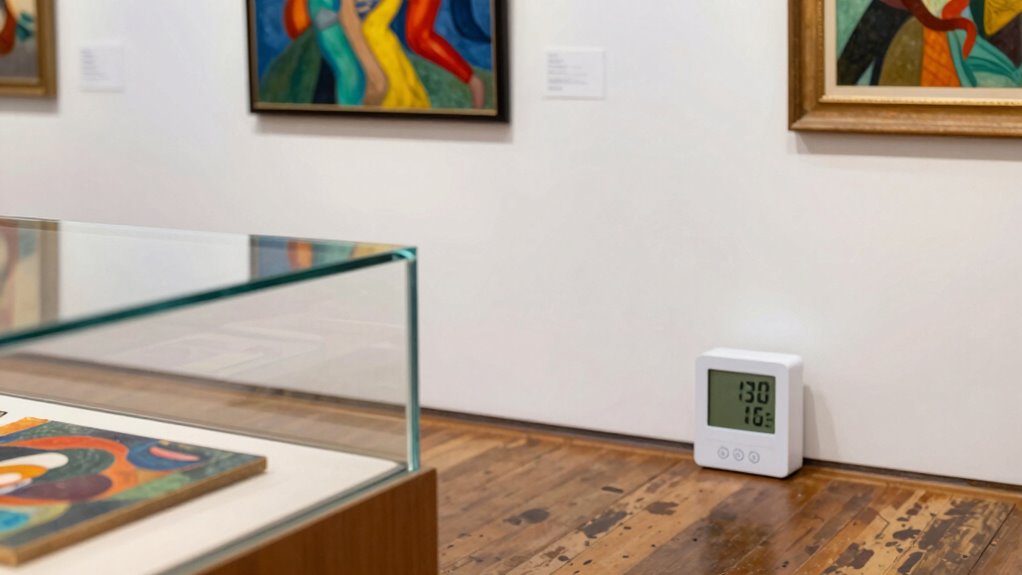

To protect your artwork, keep humidity levels between 40% and 50%. Fluctuations outside this range can cause cracking, warping, mold, or brittleness. Use reliable hygrometers to monitor conditions regularly, and control humidity with humidifiers or dehumidifiers as needed. Stable environments minimize damage and prolong your pieces’ lifespan. If you want to learn how to maintain the perfect environment and prevent common issues, keep exploring these essential tips.
Key Takeaways
- Maintain humidity between 40-50% to prevent cracking, mold, and deterioration of artwork.
- Fluctuations outside this range cause expansion, contraction, warping, and paint flaking.
- Use reliable hygrometers and environmental controls like humidifiers or dehumidifiers for stability.
- Avoid placing artwork near heat sources, vents, or windows to prevent environmental fluctuations.
- Regular monitoring and early detection of damage signs help preserve artwork long-term.

TempPro TP50 Digital Hygrometer Indoor Thermometer Room Thermometer and Humidity Gauge with Temperature Humidity Monitor(Previously ThermoPro)
Wellness Indicator: This humidity meter with humidity level icon indicates air conditions – DRY/COMFORT/WET, allowing this humidity sensor…
As an affiliate, we earn on qualifying purchases.
As an affiliate, we earn on qualifying purchases.
Why Is Humidity Important for Preserving Artwork?
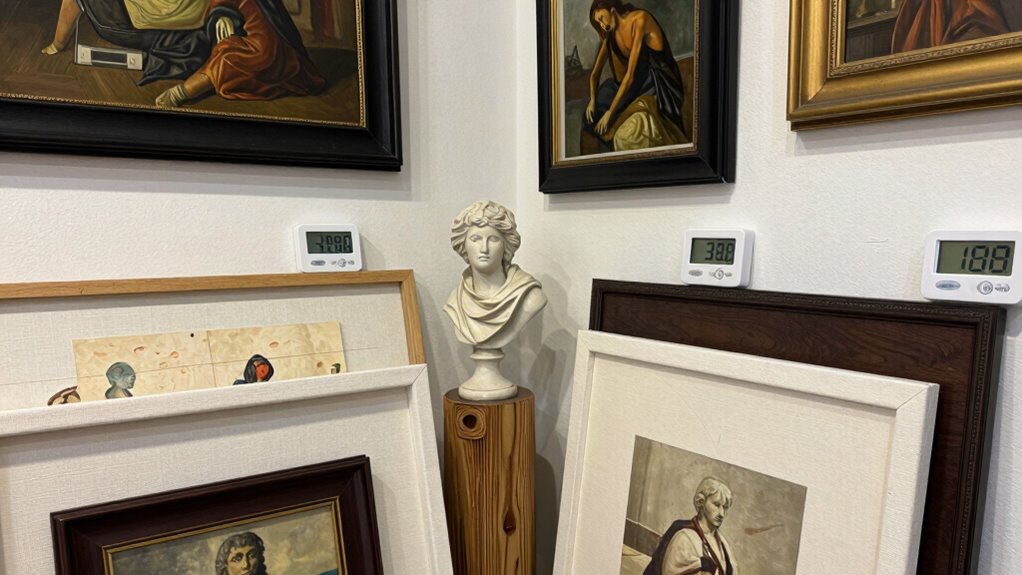
Humidity plays a vital role in preserving artwork because it directly affects the materials’ stability and integrity. Maintaining proper humidity levels is essential for effective art conservation, as fluctuations can cause materials like paper, canvas, and paint to expand, contract, or crack. Excess moisture promotes mold growth and deterioration, while too little causes drying and brittleness. By controlling the environment, you help prevent these issues and extend the lifespan of your collection. Environmental control strategies ensure consistent humidity, reducing risks associated with rapid changes. When humidity remains stable, artworks stay intact, colors stay vibrant, and structural damage is minimized. Understanding and managing humidity is crucial for anyone serious about preserving their art for the long term. Proper environmental conditions help maintain the artwork’s physical and visual integrity over time, and employing tools like humidifiers can assist in achieving stable humidity levels. Additionally, monitoring devices such as hygrometers provide accurate readings to maintain ideal conditions. Implementing climate control methods is especially important in areas with fluctuating weather patterns, ensuring the preservation environment remains consistent. Maintaining awareness of humidity fluctuations is essential for proactive conservation efforts, helping to prevent damage before it occurs.

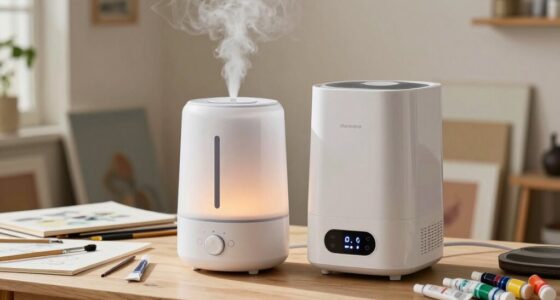
LEVOIT Classic 160 Top-Fill Ultrasonic Cool Mist Humidifier, Super Easy to Fill and Clean, Quiet Operation for Bedroom Home Baby & Plants, Auto Shut-off for Safety, 360° Rotating Nozzle, 2.5L, Black
𝙁𝙖𝙨𝙩 𝙃𝙪𝙢𝙞𝙙𝙞𝙛𝙞𝙘𝙖𝙩𝙞𝙤𝙣 𝘼𝙡𝙡 𝙉𝙞𝙜𝙝𝙩: Runs for up to 25 hours on low thanks to its SUPER LARGE capacity…
As an affiliate, we earn on qualifying purchases.
As an affiliate, we earn on qualifying purchases.
What’s the Ideal Humidity Range for Artworks?
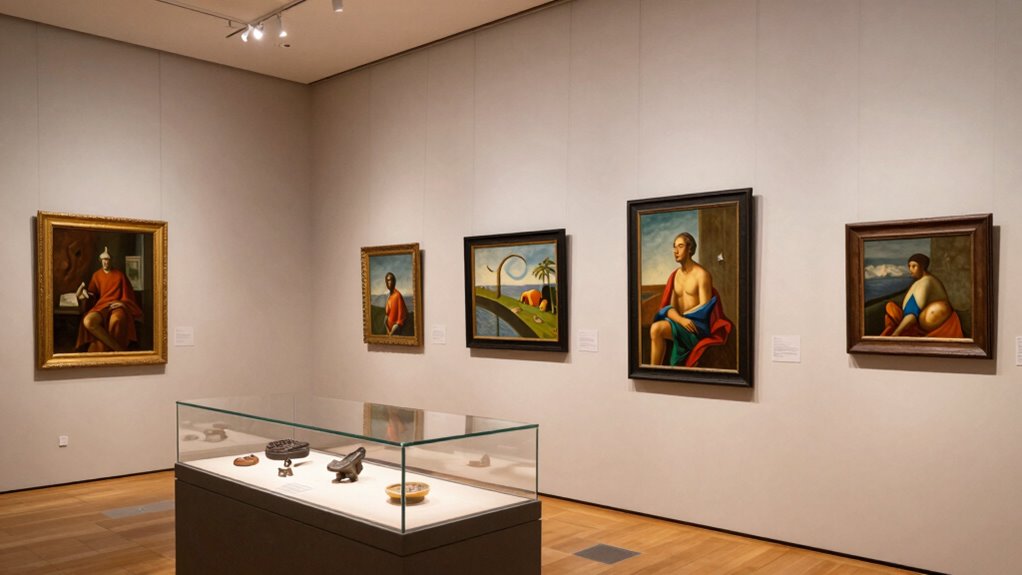
You want to keep your artwork safe, so knowing the ideal humidity range is crucial. Maintaining proper levels helps prevent damage caused by fluctuations, which can lead to warping or cracking. Staying within the right range ensures your art stays preserved for years to come. Additionally, controlling humidity levels can be achieved with the use of humidifiers or dehumidifiers, which are common tools for art preservation. Proper air circulation also plays a vital role in maintaining stable humidity and preventing mold growth on your artwork. Regular monitoring with a hygrometer can help you keep humidity within the safe range and protect your collection effectively. Recognizing the importance of visual and auditory cues from speech therapy can also enhance your understanding of environmental factors affecting artifact preservation.
Optimal Humidity Levels
Maintaining the right humidity level is essential for preserving artwork, as fluctuations can cause materials to expand, contract, or crack. The ideal artwork climate requires consistent humidity stabilization, typically between 40-50%. This range helps prevent damage and ensures longevity. You should monitor your environment regularly and use reliable devices to keep humidity steady. Consider the table below for quick reference:
| Humidity Level | Effect on Artwork |
|---|---|
| 40-50% | Suitable for most artworks |
| Below 40% | Risk of cracking and dryness |
| Above 50% | Potential mold growth |
Sticking to this range minimizes stress on your collection, keeping it safe and vibrant over time. Proper humidity control is crucial, especially in areas with fluctuating weather conditions. Regular adjustments and proper storage are key for effective humidity management, and understanding the environmental factors that influence humidity can help you better control your display or storage conditions.
Effects of Fluctuations
Fluctuations in humidity levels can quickly damage artwork, causing materials to expand and contract unpredictably. Humidity swings and moisture fluctuations create stress on paints, wood, and canvas, leading to cracking, warping, or peeling. Rapid changes force materials to shift suddenly, weakening their structure over time. Even short-term fluctuations can cause cumulative damage, making your artwork more vulnerable to deterioration. Maintaining stable humidity levels minimizes these risks, preserving the integrity of your pieces. When humidity varies markedly, it accelerates aging and damages delicate surfaces. Material expansion due to moisture fluctuations can compromise structural integrity, emphasizing the importance of humidity control. Ensuring stable conditions helps prevent the destructive effects of moisture fluctuations, which is essential for long-term preservation**, and avoiding costly repairs. Additionally, understanding how to monitor humidity levels** can empower you to take proactive steps in safeguarding your collection.
![FURWEY 100g [ 6 Packs] Rechargeable Desiccant Packs for Storage, Color Indicating Silica Gel Desiccant Packets, Moisture absorbers for storage, Dehumidifier bag for Closets](https://m.media-amazon.com/images/I/51+FVaudz3L._SL500_.jpg)
FURWEY 100g [ 6 Packs] Rechargeable Desiccant Packs for Storage, Color Indicating Silica Gel Desiccant Packets, Moisture absorbers for storage, Dehumidifier bag for Closets
Convenient To Carry: One desiccant pack measures 5.5×3.1 inches in size and weighs 100 grams, making it very…
As an affiliate, we earn on qualifying purchases.
As an affiliate, we earn on qualifying purchases.
How Can You Measure and Monitor Humidity in Your Collection?
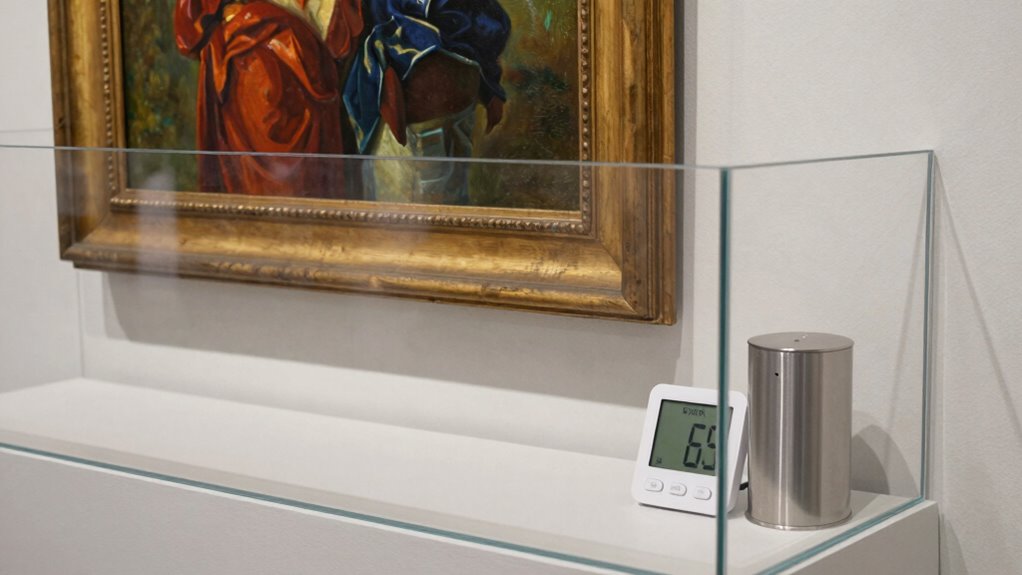
To keep your artwork safe, you need reliable tools to measure humidity accurately. Choosing the right hygrometer is essential, so pick one suited for your collection’s needs. Once you have it, establishing a routine to monitor humidity levels helps maintain ideal conditions consistently. Additionally, understanding the whole-home water systems can help prevent environmental issues caused by excess moisture or dryness. Being aware of your battery inverter generator options can also be beneficial if you need backup power to maintain climate control during outages.
Choosing Proper Hygrometers
Choosing the right hygrometer is vital for accurately monitoring humidity levels in your collection. Start by considering sensor accuracy, as precise readings depend on high-quality sensors. Look for models that offer consistent performance and minimal drift over time. Calibration techniques are important; regularly calibrate your hygrometer using salt or saturated solutions to guarantee reliable measurements. Digital hygrometers often provide easier calibration and more precise readings, while analog models may require manual adjustments. Avoid cheap, unreliable devices that can give false readings, risking your artwork’s safety. Sensor quality plays a crucial role in ensuring your hygrometer provides trustworthy data. A well-chosen hygrometer with accurate sensors and proper calibration ensures you’re always aware of your environment, helping you maintain the ideal humidity range and protect your collection effectively.
Establishing Monitoring Routines
Establishing a consistent monitoring routine is essential for maintaining a stable environment for your artwork. Regularly check your hygrometers and ensure your sensors are properly calibrated to provide accurate readings. Calibration involves comparing your device’s measurements with a known standard and adjusting if necessary, which helps you detect any deviations caused by climate adjustment issues. Set a schedule—daily or weekly—to record humidity levels, noting fluctuations that could affect your collection. Keep your sensors in representative locations, away from direct sunlight or vents. Monitoring routines allow you to respond quickly to changes, whether that means adjusting your climate control systems or taking protective actions. Understanding hygrometric ratings can help you choose optimal storage conditions for your collection. Additionally, being aware of electric bike horsepower can inform you about the potential environmental impact of energy sources used in climate control devices. Consistency and precision in monitoring help safeguard your artwork from humidity-related damage.

Conservation Concerns: A Guide for Collectors and Curators
As an affiliate, we earn on qualifying purchases.
As an affiliate, we earn on qualifying purchases.
What Are Common Humidity-Related Problems in Art Preservation?

Humidity fluctuations can cause serious problems for artworks, leading to physical damage and deterioration. When humidity levels shift suddenly or frequently, materials like canvas, wood, and paint can expand or contract, causing cracking, warping, or peeling. These changes also make your artwork vulnerable to environmental contaminants, which can settle into cracks or porous surfaces, accelerating decay. Temperature fluctuations often accompany humidity swings, worsening the stress on delicate materials. Excess moisture promotes mold growth and attracts pests, further threatening your collection. Conversely, low humidity can cause materials to become brittle and fragile. Overall, these issues highlight the importance of maintaining stable humidity levels to preserve your artworks’ integrity and prevent costly damage over time. Regional flavors and insights into climate control can help collectors develop effective preservation strategies.
How to Control Humidity and Prevent Damage at Home or in a Gallery
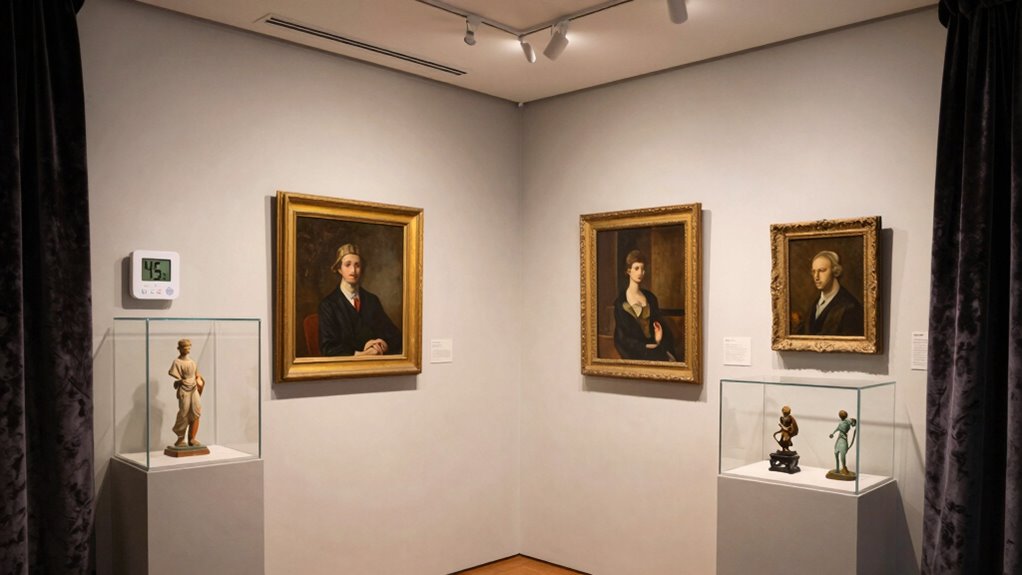
To protect your artworks from humidity-related damage, you need to actively control the environment where they’re stored or displayed. Humidity control is essential for maintaining environmental stability, which prevents warping, cracking, or mold growth. Use a hygrometer to monitor humidity levels regularly and aim for the ideal range of 40-50%. If levels fluctuate, consider using a humidifier or dehumidifier to adjust the environment accordingly. Avoid placing art near heat sources, windows, or vents that cause temperature swings and humidity spikes. Keep artwork away from damp basements or attics prone to moisture. Consistent airflow and stable conditions help preserve your pieces. By managing humidity control diligently, you create a safe environment that minimizes the risk of damage and prolongs your artwork’s lifespan.
When Should You Seek Professional Help for Humidity Damage?
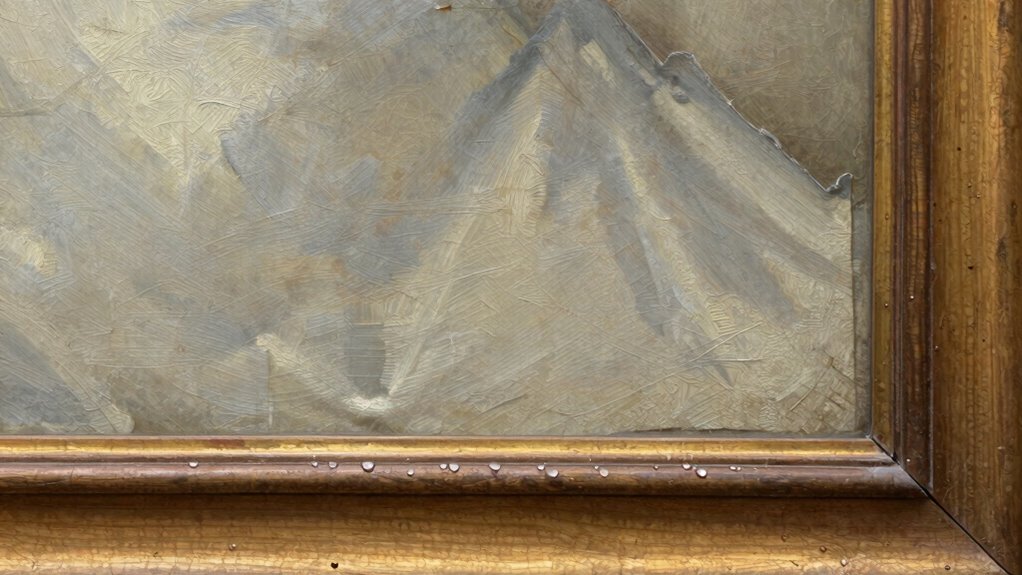
If you notice persistent or severe damage to your artwork despite proper humidity control, it’s time to seek professional help. Warning signs like cracking, warping, mold growth, or paint flaking indicate humidity damage that may require expert evaluation. Don’t overlook these symptoms, as they can worsen over time. A professional assessment can identify underlying issues and determine whether your artwork needs specialized conservation or restoration. Prompt action ensures damage doesn’t spread or become irreversible. If your efforts to regulate humidity don’t seem effective, or if damage progresses despite your precautions, consulting a conservator or restoration expert is essential. Recognizing these warning signs early helps protect your collection and preserves your artwork’s integrity for years to come.
Frequently Asked Questions
How Does Temperature Interact With Humidity to Affect Artwork Preservation?
Temperature effects your artwork by influencing moisture migration, which can cause expansion or contraction. When the temperature rises, it accelerates moisture movement within the material, leading to warping or cracking. Conversely, cooler temperatures slow this process, helping preserve your art. Maintaining a stable temperature prevents sudden shifts that could damage delicate surfaces. Keep your environment consistent to minimize the combined impact of temperature effects and humidity fluctuations on your artwork’s longevity.
Can Humidity Fluctuations Occur Indoors Even With Climate Control Systems?
Yes, humidity fluctuations can still happen indoors despite climate control systems. Indoor moisture and air quality can vary due to many factors—seasonal changes, ventilation issues, or equipment malfunctions. These subtle shifts might seem insignificant but can cause unseen damage to your artwork over time. Stay vigilant; consistent monitoring guarantees you catch these fluctuations early, protecting your collection from the subtle, yet persistent, effects of indoor humidity swings.
Are Certain Types of Artwork More Sensitive to Humidity Changes?
Yes, some artwork is more sensitive to humidity fluctuations, especially those made of paper, textiles, or wood. These pieces have lower humidity thresholds, meaning they can easily warp, crack, or mold if humidity levels aren’t maintained within a stable range. You should monitor humidity sensitivity for each artwork type and keep humidity fluctuations minimal to prevent damage. Consistent climate control helps protect your collection from adverse effects.
What Are the Long-Term Effects of Slight Humidity Variations on Artwork?
Slight humidity variations can gradually cause your artwork to expand, contract, or develop cracks, impacting its long-term preservation. The humidity impact may lead to warping or mold growth if not managed properly. To protect your pieces, implement preservation strategies like maintaining consistent humidity levels, using dehumidifiers or humidifiers, and monitoring conditions regularly. These steps help minimize damage, ensuring your artwork stays in ideal condition for years to come.
How Often Should Humidity Levels Be Checked in a Collection?
You should check your humidity levels at least weekly to maintain climate stability. Regular humidity monitoring helps you catch fluctuations early, preventing damage. Use a reliable hygrometer and keep records of your readings. Consistent checks guarantee your collection stays within the safe humidity range, preserving the artwork’s condition over time. Don’t forget to adjust your climate control systems if you notice any significant changes in humidity levels.
Conclusion
Maintaining the right humidity levels is vital—did you know that fluctuations as small as 5% can cause significant damage? By staying within the recommended range of 40-60%, you can protect your artwork from warping, mold, and cracking. Regularly measuring and controlling humidity keeps your collection safe and vibrant for years to come. Don’t wait for visible damage; proactive care guarantees your masterpieces remain as stunning as the day you acquired them.