
TL;DR
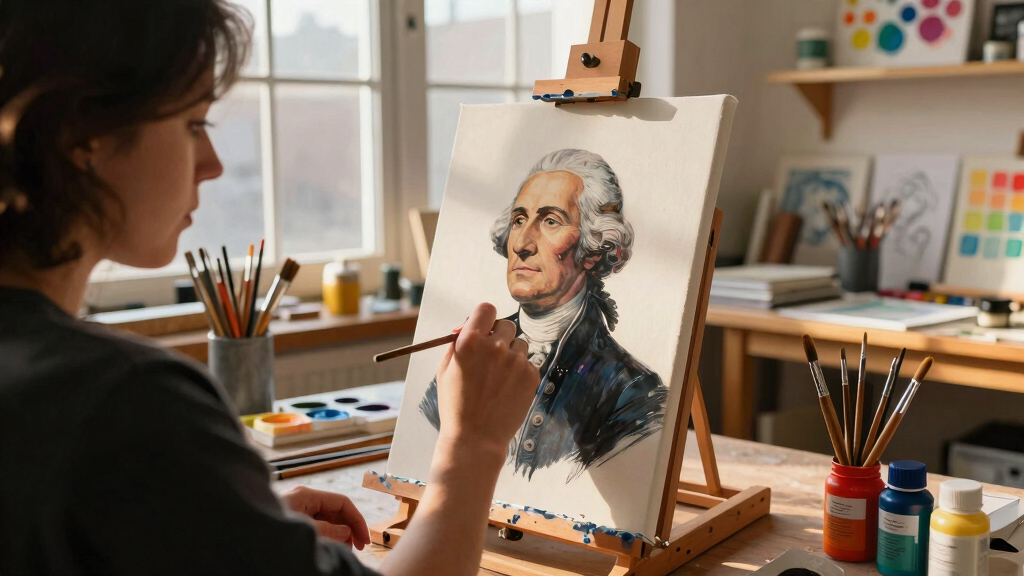
The Virginia Museum of Fine Arts is displaying a show that contrasts 19th-century paintings of George Washington with contemporary art highlighting his flaws, especially slavery. This reflects a broader effort to present a more nuanced American history ahead of the 250th anniversary.
The Virginia Museum of Fine Arts has launched an exhibition that juxtaposes 19th-century paintings of George Washington with contemporary artworks that depict his involvement in slavery, offering a more complex view of the founding father as the United States approaches its 250th anniversary.

Get art and craft supplies delivered free with Prime
- Fast, free delivery on millions of items
- Prime Video, Amazon Music and more included
- Member-only deals all year
The exhibition, titled “Pictures More Famous Than the Truth,” features works by Junius Brutus Stearns, who painted idealized scenes of Washington’s life in the 19th century, and contemporary artist Titus Kaphar, whose pieces confront Washington’s role as a slaveholder. Kaphar’s work, which includes sculptures and paintings with mixed media, seeks to unite the image of Washington as a national hero with the acknowledgment of his human flaws, particularly slavery. The show aims to challenge traditional patriotic narratives that often omit these uncomfortable truths. Outside the museum, Kehinde Wiley’s sculpture Rumors of War further contextualizes the ongoing debate over Confederate monuments and their historical implications.
Why It Matters
This exhibit highlights a shift in American historical memory, emphasizing a more honest and inclusive understanding of the nation’s founding figures. It encourages viewers to see Washington both as a symbol of national greatness and as a flawed individual, fostering a more nuanced patriotism. The display also underscores ongoing debates about how history is commemorated and the importance of confronting uncomfortable truths about America’s past.
Popular right now

De'Longhi Classic Signature Espresso Machine with Adjustable Milk Frother

Sony BRAVIA 6 65-Inch OLED 4K HDR Smart Google TV with Gemini (K-65A60)

Samsung 43-Inch M70H Series 4K Mini LED Smart TV (2026)
As an affiliate, we earn on qualifying purchases.
Background
Historically, Washington has been depicted in idealized portraits that emphasize his leadership and heroism. However, recent scholarship and social movements have increasingly focused on his role as a slaveholder, challenging traditional narratives. The Virginia Museum’s show responds to this evolving perspective, coinciding with national discussions about monuments, memory, and identity. The 250th anniversary serves as a moment for reevaluation, with artists and institutions exploring new ways to represent the nation’s history.
“My work aims to bring together the celebrated and the uncomfortable, to show Washington as both a founding father and a human being who enslaved others.”
— Titus Kaphar
“The Confederate monuments in Richmond were historically linked to ideas that sought to equate the Confederacy with the founding fathers, which the exhibit subtly challenges.”
— Lydia Brandt, historian
What Remains Unclear
It remains unclear how the public will receive this more nuanced portrayal of Washington and whether it will influence broader national debates on history and memorials.
What’s Next
The museum plans to continue engaging audiences with discussions about history, memory, and representation, possibly expanding the exhibit or hosting related programs. Further scholarly and public reactions are expected as the 250th anniversary approaches and national conversations about monuments and history intensify.
Key Questions
Why is this reimagining of Washington’s portrait important now?
It reflects a broader movement to present a more honest and complex history of America, especially as the nation prepares to mark its 250th anniversary.
How do contemporary artists like Titus Kaphar change the narrative?
They incorporate modern techniques and perspectives to confront uncomfortable truths about historical figures, blending admiration with critique.
Will this affect how Washington is officially commemorated?
It is uncertain, but it contributes to ongoing debates about how history should be remembered and memorialized in public spaces.
Are other historical figures being reexamined similarly?
Yes, many institutions are increasingly revisiting the legacies of other founding figures and Confederate monuments as part of a broader reevaluation of history.