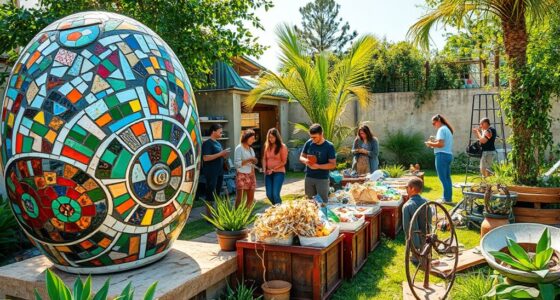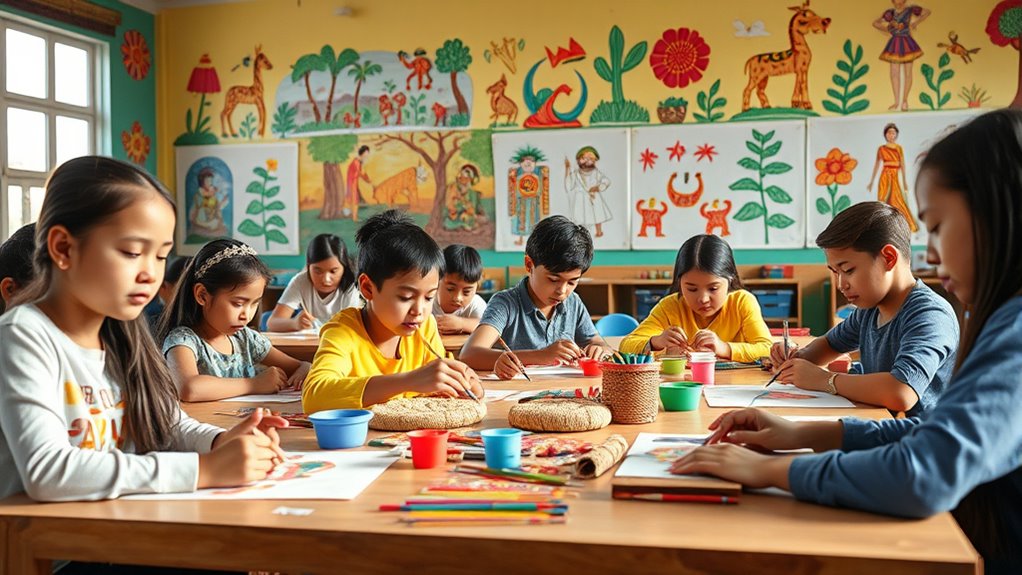

To create culturally relevant art lessons for diverse classrooms, connect students’ backgrounds with meaningful projects using traditional techniques like weaving, Chinese brush painting, or mask making. Incorporate works by contemporary artists from various cultures to show evolving influences. Use authentic materials to deepen experiences and empower students to explore their identities through art. Blending traditional methods with modern styles fosters pride and appreciation. Keep exploring to discover practical ideas that celebrate diversity through creative expression.
Key Takeaways
- Integrate traditional cultural art techniques to validate diverse heritages and foster pride.
- Use authentic materials to deepen tactile engagement and cultural understanding.
- Incorporate contemporary artists from various backgrounds to connect past traditions with modern expression.
- Design projects blending traditional methods with modern styles to promote cultural exchange and innovation.
- Create an inclusive environment that encourages students to explore and express their identities through art.
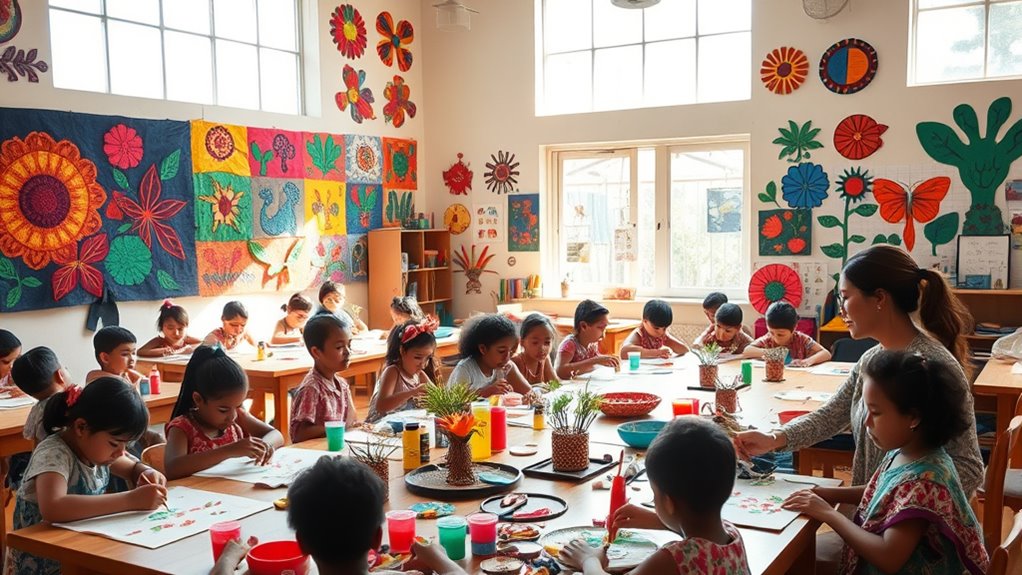
Have you ever wondered how art lessons can truly resonate with students’ backgrounds and experiences? When you design culturally relevant art lessons, you tap into your students’ identities, making art a powerful way for them to express themselves and connect with their heritage. One effective approach is to introduce traditional techniques from various cultures, giving students hands-on experience with methods that have stood the test of time. For example, you might teach indigenous weaving patterns, Chinese brush painting, or African mask making. These traditional techniques not only enrich students’ technical skills but also deepen their appreciation for cultural diversity. Encouraging students to explore these methods allows them to see the artistic practices of their ancestors or communities as valid and valuable, fostering pride and a sense of belonging.
Design culturally relevant art lessons that connect students’ identities and foster pride through traditional techniques.
In addition to traditional techniques, incorporating works by contemporary artists from diverse backgrounds can profoundly enhance your lessons. Contemporary artists often draw inspiration from their cultural roots, blending ancient traditions with modern themes and media. By exposing your students to these artists, you help them understand how cultural identity continues to influence art today. For instance, you might showcase the vibrant street art of African or Latin American artists or explore the mixed-media pieces of Native American creators. These examples demonstrate that culture is not static but dynamic, constantly evolving through individual expression. When students see how contemporary artists reinterpret their heritage, they realize that art is a living dialogue—a way to honor the past while engaging with the present.
Using a combination of traditional techniques and contemporary artworks offers a balanced perspective that celebrates cultural continuity and innovation. You can design projects where students experiment with traditional methods and then adapt those techniques into their own contemporary style. For example, students might learn Tlingit beadwork and then create their own modern jewelry designs inspired by those patterns. This approach shows students that cultural practices are not relics but sources of inspiration, allowing them to forge personal and cultural connections through their art. It also encourages critical thinking about cultural exchange and adaptation, fostering a respectful understanding of diverse artistic traditions. Additionally, incorporating authentic cultural materials can enhance the tactile experience and authenticity of student projects.
Ultimately, by weaving traditional techniques and contemporary artists into your lessons, you empower students to see their cultures reflected and celebrated. Your role becomes that of a facilitator who guides them in exploring their identities creatively, helping them craft artworks that speak to their unique experiences. This approach not only enriches their technical skills but also nurtures their confidence and cultural pride, transforming your classroom into a space where diversity is valued and celebrated through every brushstroke and sculpture.

Traditional Craft Kits Beginner Basket Weaving Kit (Set of 6) – Basketry Weave Kit for Kids and Adults Complete with Basket Weaving Supplies and Instructional Booklets
Learn to Make Baskets: Designed with beginners in mind, this basket-making kit promotes mindfulness and creativity. Basket sizes…
As an affiliate, we earn on qualifying purchases.
As an affiliate, we earn on qualifying purchases.
Frequently Asked Questions
How Can I Assess Student Engagement in Culturally Relevant Art Lessons?
You can assess student engagement by observing their participation and seeking authentic feedback. Watch how actively students contribute to discussions, share ideas, and collaborate on projects. Encourage them to express their thoughts about the lessons and artwork, which reveals their level of interest and connection. When students feel heard and involved, it indicates strong engagement. Use their responses and involvement as indicators to gauge how well your lessons resonate with them.
What Resources Are Best for Integrating Diverse Cultural Art Forms?
A picture is worth a thousand words, and to integrate diverse cultural art forms, you should explore authentic cultural art sources like museum collections, community artists, and online archives. Use multicultural art techniques such as traditional textiles, folk painting, and indigenous craftwork. These resources deepen students’ understanding and appreciation, making lessons more meaningful. By combining these elements, you foster inclusivity and cultural awareness through engaging, hands-on experiences.
How Do I Handle Cultural Stereotypes in Art Projects?
You handle cultural stereotypes in art projects by fostering cultural sensitivity and stereotype awareness. Encourage students to research and understand the cultural significance behind their artwork, avoiding stereotypes. Guide them to ask respectful questions and reflect on their assumptions. Promote open discussions about cultural differences and emphasize the importance of authentic representation. By creating a safe space for dialogue, you help students appreciate diverse perspectives while minimizing stereotypes in their creative expressions.
What Strategies Promote Inclusivity in a Multicultural Art Classroom?
You promote inclusivity in your multicultural art classroom by emphasizing cultural representation through diverse art styles and themes. Incorporate an inclusive curriculum that values each student’s background, encouraging respectful sharing and dialogue. Use collaborative projects that celebrate different cultures, and invite students to share personal stories behind their artwork. These strategies foster respect, understanding, and a sense of belonging, ensuring every student feels seen and valued in your inclusive environment.
How Can Parents Be Involved in Culturally Relevant Art Education?
You can involve parents by encouraging family participation in art projects that reflect their cultural heritage. Invite them to share traditions, stories, or artworks during class activities, fostering a sense of community. Collaborate with families and local organizations to host cultural art events, making learning more meaningful. This active engagement promotes understanding and respect, enriching the classroom experience and ensuring that diverse perspectives are celebrated through culturally relevant art education.
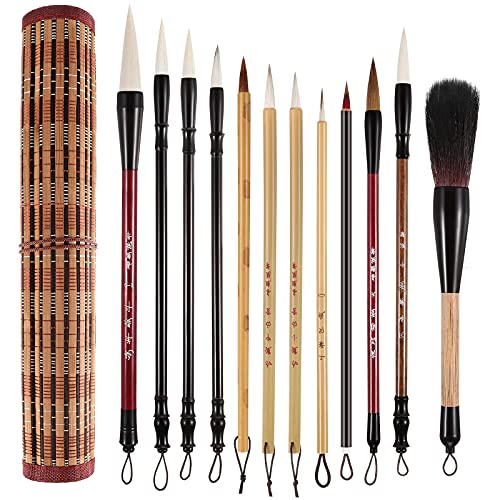
Marspark 12 Pieces Chinese Calligraphy Brushes Painting Writing Watercolor Ink Brushes Set for Kanji Japanese Sumi Drawing with Roll-up Holder
Nice brushes set: you will receive 12 pieces Chinese calligraphy brushes in total, which includes 1 piece artificial…
As an affiliate, we earn on qualifying purchases.
As an affiliate, we earn on qualifying purchases.
Conclusion
So, as you craft your culturally relevant art lessons, remember that embracing diversity might just turn out to be the easiest part. Ironically, the more you celebrate different backgrounds, the more your students will feel seen and inspired—without even realizing they’re learning. It’s almost like honoring their cultures makes your classroom richer and easier to manage. Who knew that inclusion could be the secret ingredient to a thriving, vibrant art space?

S&S Worldwide African Mask Craft Kit, 9" Diameter, Pack of 9
Decorate with markers and colorful raffia
As an affiliate, we earn on qualifying purchases.
As an affiliate, we earn on qualifying purchases.

Crayola Bulk Crayon Set, Colors of The World, Multicultural Crayons, School Supplies, 6 Sets of 24 Colors
BULK CRAYON SET: This bulk set of crayons features 6 sets of 24 crayon colors that represent people…
As an affiliate, we earn on qualifying purchases.
As an affiliate, we earn on qualifying purchases.