Design thinking helps you solve artistic problems creatively by focusing on your audience’s needs and experiences. It encourages you to empathize, gather feedback, and experiment with new ideas. By analyzing what doesn’t work, brainstorming solutions, and refining your work, you foster innovation and engagement. This approach transforms your art into meaningful connections. If you keep exploring, you’ll discover how to make your creative process more thoughtful and impactful.
Key Takeaways
- Define artistic challenges from the audience’s perspective to develop targeted, effective solutions.
- Use active feedback and viewer reactions to iteratively refine creative concepts.
- Experiment with new formats and interactive elements to enhance engagement and problem-solving.
- Incorporate empathy and audience insights to craft meaningful, resonant art experiences.
- Apply design thinking stages—empathize, ideate, prototype, test—to foster innovative artistic solutions.
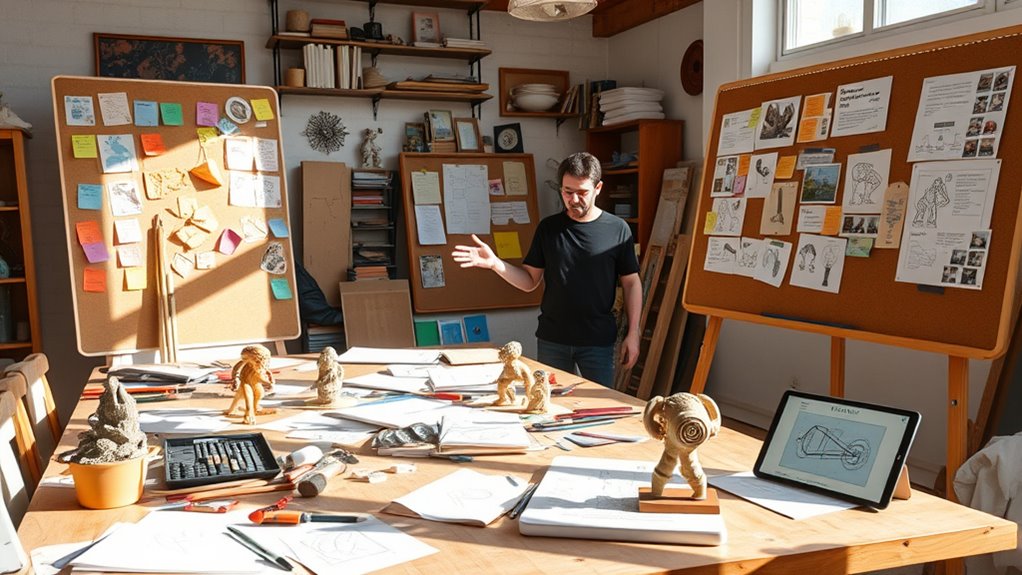
Ever wondered how artists can harness the principles of design thinking to elevate their creative process? It all starts with adopting a user-centered approach. This means shifting your focus from purely personal expression to understanding your audience’s needs, preferences, and experiences. When you approach your art with empathy, you’re better equipped to create pieces that resonate deeply. Instead of guessing what others will enjoy, you actively seek feedback, observe reactions, and immerse yourself in the perspectives of those who will experience your work. This mindset transforms your creative process into a continuous dialogue, making your art more impactful and meaningful.
By embracing a user-centered approach, you *access* powerful avenues for creative problem solving. When faced with a challenge—whether it’s finding a new technique, overcoming creative blocks, or addressing a conceptual issue—you don’t just rely on intuition alone. Instead, you start by defining the core problem from the viewer’s standpoint. For example, if your artwork isn’t engaging your audience as intended, you analyze why. Is it the messaging, the medium, or the presentation? Then, you brainstorm solutions that prioritize the audience’s experience, such as experimenting with different formats or incorporating interactive elements. This iterative process guides you to refine your work based on real-world feedback, ensuring your solutions are tailored and effective. Incorporating cybersecurity considerations can also help protect your digital art assets and online presence from potential threats. Additionally, understanding best practices for digital security can help you safeguard your creative assets and maintain your artistic integrity. Being aware of privacy policies can also help you understand how your data and creative work are managed online, adding another layer of protection. Recognizing the importance of skin health can inspire you to care for your tools and materials, ensuring your creative process remains smooth and safe.
Define the core problem from the viewer’s perspective to refine your artistic solutions effectively.
Incorporating design thinking into your art practice also encourages experimentation. You test ideas, learn from failures, and quickly adapt. This cycle of creating, testing, and refining helps you develop innovative solutions to artistic dilemmas. For instance, if you’re stuck on how to visually communicate a complex concept, you might prototype different visual styles or narratives, then observe how viewers respond. Their reactions serve as valuable data, helping you adjust your approach until it aligns with both your vision and audience expectations.
Most importantly, this approach cultivates a mindset of curiosity and resilience. Instead of viewing obstacles as setbacks, you see them as opportunities to learn and grow. With a user-centered perspective guiding your creative problem solving, you’re not just making art—you’re crafting experiences. Additionally, understanding the importance of contrast ratio can help you optimize your visual storytelling by ensuring clarity and depth in your work. This strategic mindset pushes you beyond traditional boundaries, inspiring fresh ideas and methods that elevate your artistic practice. Ultimately, integrating design thinking into your work transforms the way you approach challenges, making your creative process more thoughtful, adaptable, and deeply connected to those who experience your art.
Frequently Asked Questions
How Can Artists Incorporate Design Thinking Into Their Daily Creative Process?
To incorporate design thinking into your daily creative process, start with creative ideation by exploring new ideas openly. Embrace an iterative refinement approach, regularly testing and improving your work based on feedback. This mindset encourages you to view challenges as opportunities for growth, helping you stay adaptable and innovative. By consciously applying these steps, you’ll develop more unique, well-rounded art that reflects thoughtful problem-solving and continuous improvement.
What Are Common Challenges Artists Face When Applying Design Thinking?
Did you know that 65% of artists report creative blocks as a major challenge? When applying design thinking, you might struggle with overcoming creative blocks or technical limitations. These hurdles can make it hard to stay innovative or experiment freely. You may find yourself hesitant to take risks, feeling stuck in old habits. Recognizing these challenges helps you develop strategies to push through, fueling your creativity and problem-solving skills.
How Does Design Thinking Differ From Traditional Artistic Problem-Solving?
You see, design thinking differs from traditional artistic problem-solving because it emphasizes innovative ideation and iterative experimentation. Instead of relying solely on intuition or established methods, you actively explore multiple solutions, testing and refining ideas along the way. This approach encourages you to be more adaptable and open-minded, fostering creative solutions that might not emerge through conventional methods. It’s a dynamic process that enhances your artistic problem-solving skills.
Can Design Thinking Help Artists Collaborate More Effectively?
Oh, sure, because artists collaborating effectively is just a matter of magic, right? In reality, design thinking offers tools like collaborative techniques and creative brainstorming that actually make teamwork smoother. It encourages open-mindedness, shared ideas, and iterative feedback, helping you break down creative barriers. So, yes, it can transform your collaborations into more productive, innovative endeavors—no magic required, just structured, human-centered processes.
What Tools or Resources Are Recommended for Artists New to Design Thinking?
For artists new to design thinking, start with simple tools like brainstorming techniques to generate ideas and visualization tools to bring concepts to life. Use sketchbooks, mind maps, or digital apps like Miro to organize your thoughts creatively. These resources help you explore solutions more effectively and develop your skills. Embracing these tools makes the process engaging, encouraging innovation as you learn how to approach problems with a fresh perspective.
Conclusion
As you navigate the creative landscape with design thinking, you become a skilled navigator charting new territories of innovation. Each problem transforms into an uncharted island waiting to be explored, and your imagination serves as the compass guiding you through uncharted waters. Embrace this approach, and you’ll find your artistic journey blossoming like a garden in spring—vivid, resilient, and endlessly evolving. Let your ideas flow freely, turning challenges into masterpieces that echo your unique vision.