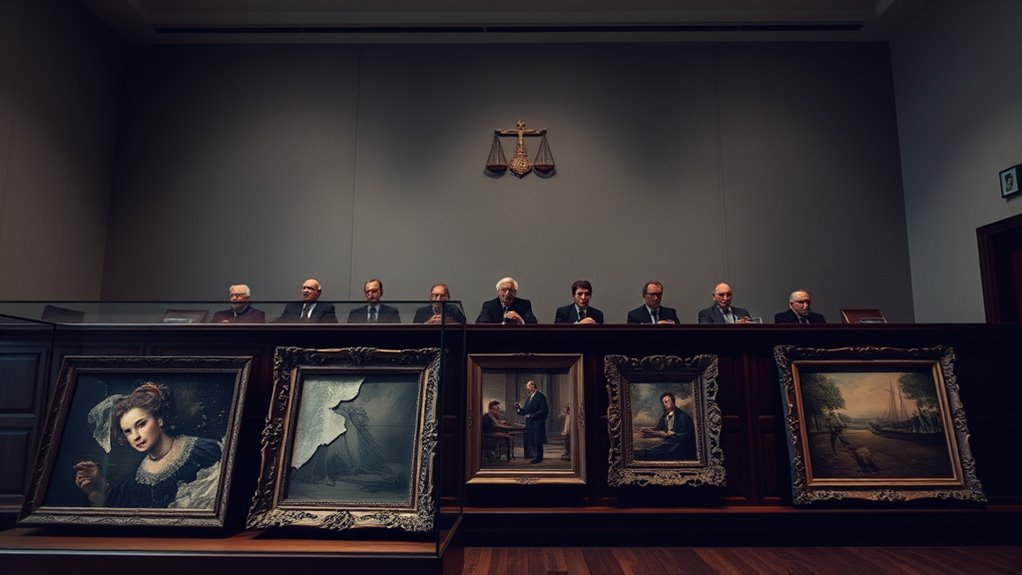

Germany’s new tribunal helps you understand how they’re addressing Nazi-looted art, marking a major step toward justice and cultural restitution. This tribunal provides a transparent process for claims, aiming to reconnect victims and their families with lost artworks and restore cultural heritage. It emphasizes accountability and fairness, ensuring unresolved cases are addressed. As you explore further, you’ll discover how this effort protects history and keeps the memory of stolen art alive for future generations.
Key Takeaways
- Germany has established a new tribunal dedicated to resolving claims for Nazi-looted art.
- The tribunal offers a transparent, formal process for victims and heirs to seek restitution.
- Restitution involves detailed provenance research and complex negotiations with claimants.
- The effort aims to restore cultural heritage, justice, and address past injustices linked to Nazi theft.
- Emphasizing transparency and accountability, the tribunal helps rebuild trust and cultural connections.

Nazi-looted art refers to artworks stolen or forcibly taken by the Nazi regime during World War II, often from Jewish families and other persecuted groups. These pieces, many of which hold deep cultural and historical significance, were seized under brutal circumstances, and their recovery remains a complex and emotional process. Today, Germany has established a new tribunal dedicated to addressing these claims, marking a significant step forward in restitution efforts. This tribunal aims to provide a formal, transparent process for individuals and families seeking the return of stolen art, acknowledging the profound injustices inflicted during the Holocaust. You might see this as a move toward acknowledging not just the physical loss of art but the cultural heritage that was forcibly taken. Restitution efforts are more than legal procedures—they’re about restoring dignity and preserving history that was nearly erased.
As you follow the developments, you’ll notice that this tribunal signals Germany’s commitment to confronting its past. It recognizes that many victims and their descendants have waited decades for justice, and it’s a tangible step toward righting historical wrongs. The process involves meticulous research, documentation, and often, complex negotiations. Restitution isn’t always straightforward—sometimes, the provenance of a piece is murky, or new evidence emerges that complicates claims. However, the tribunal’s goal is to create a fair, accessible pathway for rightful owners to be recognized and their cultural heritage restored. For families, this isn’t just about recovering artwork; it’s about reconnecting with a lost history, reclaiming a part of their identity that was stolen.
The new tribunal also emphasizes transparency and accountability, which are vital for restoring trust in the process. As you observe these efforts unfold, you’ll see how they help rebuild cultural bridges that Nazi looting fractured. Restitution efforts serve as a reminder that cultural heritage isn’t just about art—it’s about memory, identity, and the ongoing struggle for justice. This tribunal provides a formal mechanism to address unresolved claims, ensuring that the stories behind these works aren’t forgotten. It’s an acknowledgment that the damage caused by Nazi theft extends beyond physical loss; it erases parts of communities’ histories and identities. By actively pursuing restitution, Germany aims to repair this damage and reinforce the importance of safeguarding cultural heritage for future generations.
Frequently Asked Questions
How Does the Tribunal Verify the Provenance of Disputed Artworks?
You can expect the tribunal to verify the provenance of disputed artworks through thorough art authentication and provenance research. They examine historical records, sale documents, and previous ownership chains, cross-referencing archives and databases. This process helps establish the artwork’s origin and history, ensuring it wasn’t illicitly looted. By carefully investigating these details, the tribunal aims to make informed decisions about rightful ownership and prevent the return of stolen art.
What Compensation Options Are Available for Original Owners?
You can pursue restitution procedures through the tribunal, which seeks to restore stolen art to original owners or their heirs. Compensation options include returning the artwork, monetary reimbursement, or negotiated settlements. However, be aware of potential legal challenges, such as proving provenance or ownership, which can complicate claims. The tribunal aims to streamline these processes, but legal hurdles might still delay or limit compensation possibilities.
How Are Claims Prioritized Among Multiple Claimants?
Think of the claim process as a tug-of-war, with compensation schemes pulling in different directions. You’re likely to be prioritized based on legal precedence, which acts as the referee, giving weight to claims backed by strong evidence or historical records. The tribunal evaluates these factors carefully, ensuring that those with the most compelling proof, or who align with established legal standards, get the first chance at restitution, like the first light of dawn.
What Is the Timeframe for Resolving a Claim?
You can expect the timeframe for resolving a claim to vary, often taking months to several years, depending on the complexity. The tribunal considers historical context and follows strict legal procedures to guarantee fairness. While there’s no fixed deadline, they aim to process claims efficiently. Your patience is essential, as thorough investigations and verification of ownership are necessary steps before reaching a resolution.
Are There International Collaborations to Recover Nazi-Looted Art?
Yes, international collaborations exist to recover Nazi-looted art. You should know that, due to the historical context and complex legal challenges, countries like Germany, the U.S., and Israel work together through organizations like the Holocaust Expropriated Art Recovery Project. These partnerships aim to identify, locate, and return stolen art, overcoming legal hurdles and fostering transparency. Such cooperation helps guarantee that victims receive justice and rightful ownership is restored across borders.
Conclusion
You can’t afford to ignore this groundbreaking tribunal—it’s a game-changer that’s shaking the very foundation of art restitution! If you think recovering Nazi-looted art is just a small piece of history, think again. This new court is unleashing a tidal wave of justice, promising to right centuries of wrongs. Don’t blink or you’ll miss the moment history is rewritten—and trust me, this is one showdown you’ll want to witness firsthand!