Augmented reality layering in physical artworks allows you to add digital elements like animations, audio, and interactive features directly onto sculptures, murals, or paintings. This transforms passive viewing into an engaging, immersive experience where you can explore hidden stories and details. As digital layers respond to your movements or choices, the artwork becomes alive and dynamic. Continue exploring to discover how this innovative approach can elevate your appreciation and interaction with art.
Key Takeaways
- AR overlays digital elements onto physical artworks, creating interactive, multi-dimensional experiences that enhance viewer engagement.
- Digital layers animate or reveal hidden stories, transforming static art into immersive storytelling environments.
- Artists embed multimedia content like audio or video into physical pieces, expanding creative boundaries and interpretation.
- AR makes artworks more accessible and engaging, encouraging exploration and deeper emotional connections.
- Layering techniques integrate digital storytelling tools, fostering innovation and cultural relevance in physical art.
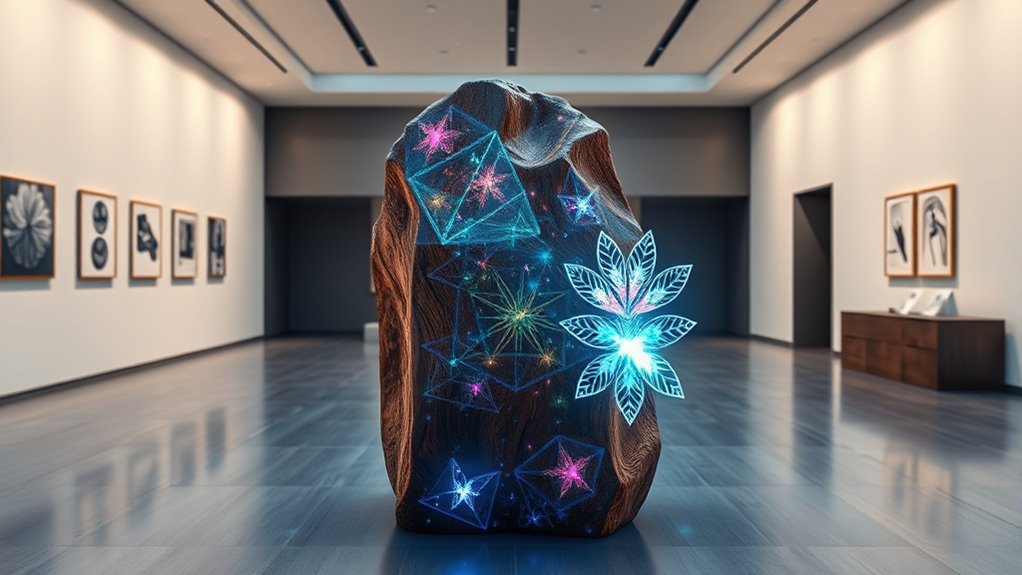
Augmented reality (AR) is transforming how we experience physical art by blending the digital with the tangible. When you view a piece through an AR device or app, you’re invited into a layered world where digital elements enhance, animate, or add context to the original artwork. This fusion creates a new level of engagement, allowing you to explore the art beyond its static form. Instead of simply observing, you become an active participant, interacting with digital overlays that reveal hidden stories or details the artist intended to convey. This digital interaction deepens your connection to the piece, making the experience more personal and memorable. It’s no longer just about looking at a painting or sculpture; it’s about stepping into an immersive storytelling environment where the physical and digital coexist seamlessly.
As you explore artworks with AR, you’ll notice how artists use layering to add multiple dimensions to their creations. Digital elements can animate, change perspective, or even respond to your movements, turning a simple viewing into a dynamic encounter. For instance, a mural might reveal a narrative sequence or hidden symbols when viewed through an AR app. This layered approach invites you to uncover stories that aren’t immediately visible, making the artwork a living, breathing entity. The immersive storytelling enabled by AR transforms static objects into experiences that can educate, entertain, and evoke emotion all at once. You’re not just a passive observer but a participant who influences and explores the story in real time.
Moreover, this layering technique encourages artists to push creative boundaries. They can embed multimedia content—audio, video, or interactive elements—directly into physical pieces, enriching your understanding and appreciation. When you engage with these augmented layers, you’re often guided through a narrative journey that enhances your emotional connection and intellectual curiosity. This process makes art more accessible and engaging for diverse audiences, breaking down traditional barriers of interpretation and interaction. Additionally, incorporating interactive technology can elevate the viewer’s experience and foster deeper emotional responses. It’s a way to breathe new life into physical artworks, making them relevant in a digital age where interaction and storytelling are central to how we consume information and culture.
Frequently Asked Questions
How Does AR Layering Affect the Physical ARtwork’s Durability?
AR layering generally doesn’t harm your physical artwork’s durability if applied correctly. It won’t cause material degradation or compromise structural integrity when you use proper, non-invasive technology. However, if AR layers are poorly implemented or require physical attachment, they could lead to damage over time, especially with exposure to elements or handling. Keep your AR setup lightweight and reversible to preserve your artwork’s longevity and structural soundness.
What Skills ARe Needed to Create AR Layers for Physical ARt?
To create AR layers for physical art, you need strong digital design skills and technical programming abilities. You should be comfortable using AR development platforms like Unity or Unreal Engine, and understand coding languages such as C# or JavaScript. Additionally, you must grasp spatial understanding and user experience design to guarantee seamless integration. Practice problem-solving and stay updated on new AR tools to enhance your ability to craft engaging, interactive layers.
Can AR Layers Be Customized for Individual Viewer Experiences?
Yes, AR layers can be customized for individual viewer experiences. You can incorporate personalization options to tailor viewer-specific content, enhancing engagement and emotional connection. By utilizing data about the viewer’s preferences or interactions, you create a more immersive and meaningful experience. This customization enables each person to see unique elements, making the artwork more dynamic and accessible. Your ability to adapt AR layers guarantees a personalized, memorable encounter with the physical artwork.
How Do AR Overlays Impact the Provenance and Authenticity of ARtworks?
AR overlays dramatically transform how you perceive an artwork’s provenance and authenticity, making them as vital as the masterpiece itself. You should realize that digital documentation via AR creates new legal implications, potentially complicating ownership and attribution. While they can enhance viewer engagement, these overlays demand rigorous verification, as they can also be manipulated. Ultimately, AR impacts not just perception but the very legal foundation underpinning art provenance.
Are There Any Health or Safety Concerns With Ar-Enhanced Physical Artworks?
You should be aware that AR-enhanced physical artworks pose minimal health or safety risks when used properly. However, digital safety is important; prolonged use of AR devices like headsets or screens can cause eye strain or fatigue. To protect your viewer health, take regular breaks and make sure your devices meet safety standards. Overall, with responsible use, AR artworks are safe and engaging, offering immersive experiences without significant health concerns.
Conclusion
As you step back from the physical artwork, the augmented reality layers reveal a hidden world, vibrant and alive, contrasting sharply with the stillness beneath. You become both observer and creator, blending tangible art with digital imagination. This fusion transforms traditional art into an immersive experience, where silence and sound, stillness and motion coexist. In this dance of layers, you’ll find that the boundary between reality and imagination dissolves, inviting you to see art in an entirely new light.