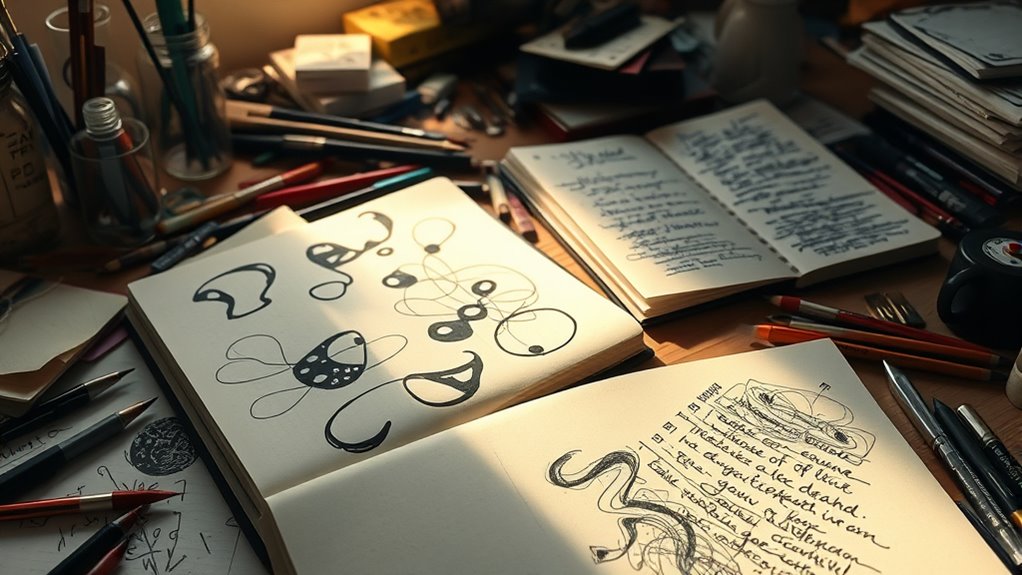

Improvisational drawing and automatic writing are spontaneous techniques that help you tap into your subconscious mind. By letting go of judgment and planned results, you can access raw insights, emotions, and ideas that usually stay hidden. These practices also promote mindfulness and encourage playful, intuitive expression. As you embrace these methods, you’ll open your creative potential and gain a deeper understanding of yourself—if you keep exploring, you’ll discover even more ways to connect authentically.
Key Takeaways
- Both techniques facilitate access to the subconscious, revealing hidden thoughts, emotions, and creative insights.
- Improvisational drawing emphasizes spontaneous creation without judgment, fostering intuitive expression through texture and movement.
- Automatic writing involves continuous, uncensored writing to uncover inner truths and deepen mindfulness.
- These methods promote playful, nonjudgmental engagement with creativity, enhancing problem-solving and idea generation.
- Regular practice encourages trust in intuition, self-discovery, and unlocking full creative potential.
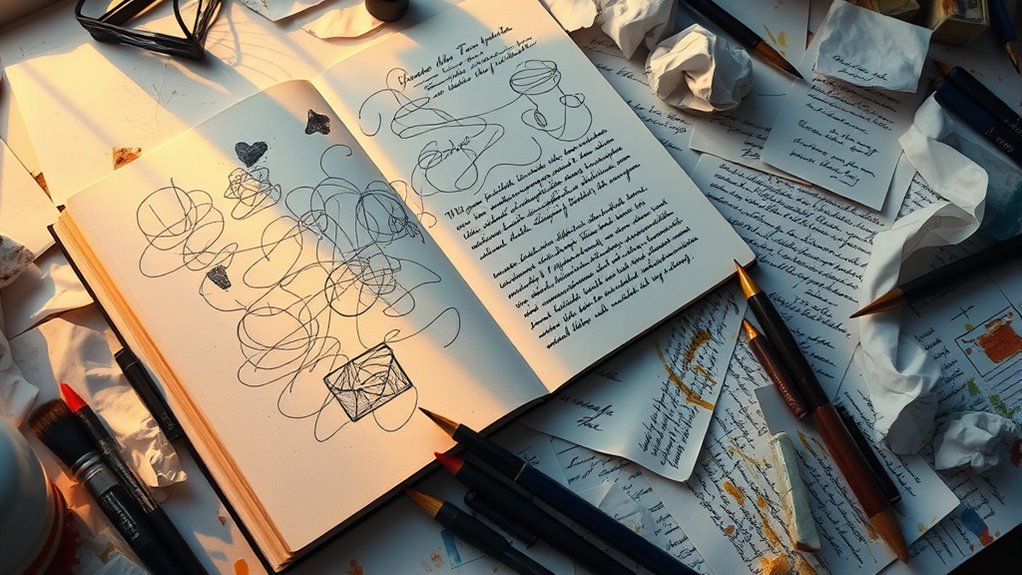
Improvisational drawing and automatic writing are spontaneous creative techniques that open your subconscious mind. These methods allow you to tap into your inner thoughts and feelings without the constraints of judgment or planning. As you engage in these practices, you cultivate a mindfulness practice that centers your attention on the present moment, helping you bypass mental filters and access raw, unfiltered creativity. By embracing this sense of immediacy, you foster a state of creative spontaneity, where ideas flow freely and unreservedly. This process encourages you to relinquish control, letting your intuition lead, which often results in surprising and insightful outcomes.
Engage your subconscious through spontaneous art and writing, unlocking raw creativity and intuitive insights without judgment or planning.
When you start improvisational drawing, you simply pick up a pen or pencil and begin to create without a predetermined plan. Don’t worry about whether your lines are perfect or if the image makes sense. Instead, focus on the act of drawing itself, feeling the texture of the paper and the movement of your hand. As you do this, you’ll notice your mind quiets, and your attention shifts inward. This mindful awareness enhances your ability to stay present, making the experience more immersive and freeing your creative spontaneity. Over time, this process can reveal subconscious themes or emotions you might not access through verbal reflection alone.
Similarly, automatic writing involves setting a timer and writing nonstop without censorship or editing. As you let your hand move across the page, don’t think too much about grammar or coherence—just let the words flow. This technique acts as a stream of consciousness, connecting you directly to your subconscious. As you write, you may find yourself uncovering hidden thoughts, desires, or fears. The key is to remain nonjudgmental and open, allowing whatever emerges to surface naturally. Regular practice deepens your mindfulness, sharpening your ability to observe inner truths without judgment, and enhances your capacity for spontaneous expression. Engaging in these practices aligns with the Law of Attraction, as positive energy and openness can attract insights and opportunities.
Both improvisational drawing and automatic writing cultivate a playful attitude toward creativity. They remind you that creation doesn’t always need to be polished or purposeful; sometimes, the act itself is enough. These techniques help you develop trust in your intuition and foster creative spontaneity, which can spill over into other areas of your life. As you continue practicing, you’ll notice a greater ease in generating ideas, solving problems, and embracing uncertainty. Ultimately, these spontaneous methods serve as powerful tools for self-discovery, encouraging you to embrace your subconscious mind and release your full creative potential.

Automatic Writing Journal – Raise Vibration & Connect with Spirit: Steps Included on Channeling – Log Book with Fill in the Blank Pages – Recording & Write Angels, Guides & Higher Self
As an affiliate, we earn on qualifying purchases.
As an affiliate, we earn on qualifying purchases.
Frequently Asked Questions
Can Improvisational Drawing Be Used for Therapeutic Purposes?
Yes, improvisational drawing can be a powerful therapeutic tool. As you engage in spontaneous creation, you practice mindfulness meditation, helping you stay present and focused. This process allows you to explore your emotions freely, leading to emotional release and insight. By expressing yourself without judgment, you can reduce stress and gain clarity. It’s an accessible, creative way to support emotional healing and cultivate self-awareness.
What Materials Are Best for Automatic Writing?
For automatic writing, you should use smooth, high-quality paper like plain or journal paper that allows your pen to glide easily. Avoid textured or rough paper, which can hinder your flow. Use simple art supplies such as a pen, pencil, or soft marker, depending on your preference. Choose materials that feel comfortable and allow you to write freely without distraction, helping you connect more deeply with your subconscious.
How Do I Overcome Creative Blocks During Improvisation?
You overcome creative blocks during improvisation by embracing mindfulness exercises and creative journaling. When your mind stalls, take a deep breath and focus on the present moment to clear mental clutter. Use journaling to explore your thoughts freely, breaking free from self-criticism. These practices help you reconnect with your intuition, spark new ideas, and keep your creative flow alive, transforming blocks into opportunities for spontaneous expression.
Are There Specific Techniques to Enhance Spontaneity in Drawing?
To enhance spontaneity in your drawing, try technique variations like rapid sketching or blind contours, which push you to create freely without overthinking. Incorporate spontaneity exercises such as timed doodling sessions or drawing with your non-dominant hand to break routines and release fresh ideas. Regularly practicing these methods helps you stay loose, responsive, and more confident in your creative flow, encouraging natural, uninhibited expressions.
How Can Beginners Start Practicing Automatic Writing Effectively?
To start practicing automatic writing effectively, you should first find a quiet space and relax. Use mindfulness exercises to clear your mind and focus on your hand’s movement. Begin with simple journaling prompts or just write whatever comes to mind without judgment. Set a timer for a few minutes, trust your intuition, and let your thoughts flow freely. Regular practice helps you develop spontaneity and release your subconscious.

IlLISTration: Improvisational Lists and Drawing Assists to Spark Creativity
As an affiliate, we earn on qualifying purchases.
As an affiliate, we earn on qualifying purchases.
Conclusion
As you embrace improvisational drawing and automatic writing, you channel your inner muse like a modern-day Da Vinci or Sylvia Plath. Trust the process, let your subconscious lead, and watch creativity flow effortlessly. These practices uncover hidden depths, turning chaos into art and words into windows of insight. Remember, even in spontaneity, there’s a divine spark—your personal Muses guiding you toward discovery, just as they have for artists and writers through centuries.

Buddha Board – The Original Water Painting Board for Mindfulness & Creativity – Unique Gift for Artists, Adults & Kids – Mess-Free Zen Art Supplies
RELAX & LET GO – The Original Buddha Board is inspired by Zen mindfulness, helping you unwind, focus,…
As an affiliate, we earn on qualifying purchases.
As an affiliate, we earn on qualifying purchases.
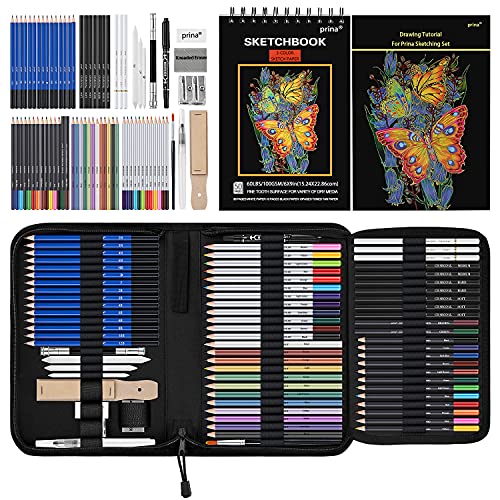
Prina 76 Pack Drawing Set Sketching Kit, Pro Art Supplies with 3-Color Sketchbook, Include Tutorial, Colored, Graphite, Charcoal, Watercolor & Metallic Pencil, for Artists Adults Teens Beginner
【Professional And Complete Drawing Sketching Set】: 76 Pack Art Pencil Set Include 3 White Charcoal Pencils, 7 Black…
As an affiliate, we earn on qualifying purchases.
As an affiliate, we earn on qualifying purchases.