Generative art uses algorithms and computational systems to inspire unique and visually compelling compositions. By creating rules and parameters, you can produce complex patterns, shapes, and colors that blend mathematical precision with artistic expression. This process allows you to experiment systematically or spontaneously, leading to endless variations. Seeing algorithms as collaborators, you can craft mesmerizing visuals that deepen your understanding of digital aesthetics. Keep exploring, and you’ll discover more about how technology can transform your creative projects.
Key Takeaways
- Generative art uses algorithms and computational systems to create unique, visually compelling compositions through rule-based processes.
- It blends mathematical precision with artistic exploration, allowing for endless variations and innovative designs.
- Coding tools like Processing and p5.js enable artists to experiment with parameters, fostering intuitive and iterative creation.
- Algorithms serve as creative collaborators, inspiring new ideas by balancing control, randomness, and visual surprises.
- Viewing algorithms as partners deepens understanding, enriching the artistic process and appreciation of digital generative works.
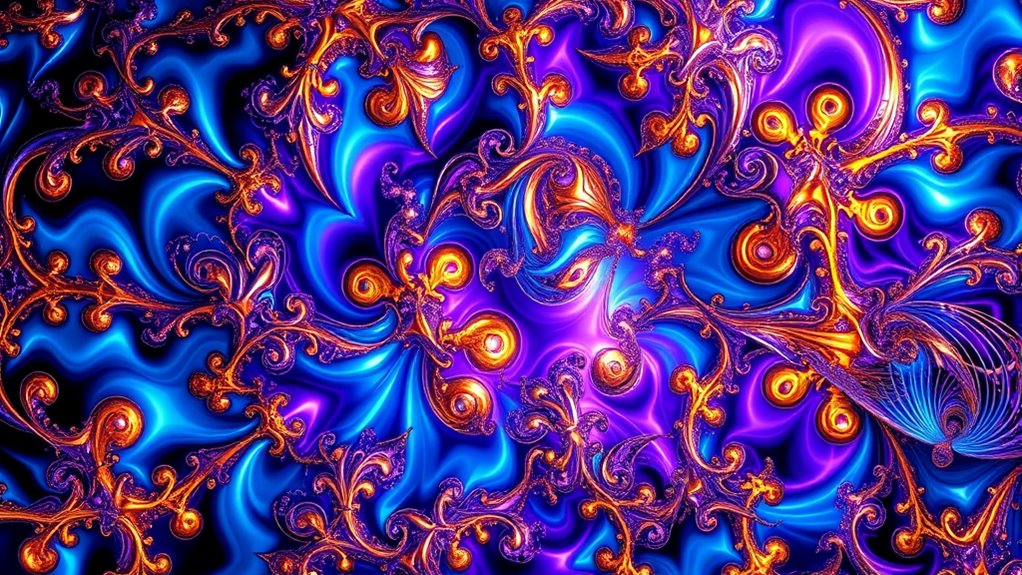
Generative art is a creative process where artists use algorithms and computational systems to produce unique visual works. Instead of manually designing each element, you harness the power of code to set the rules and parameters that guide the artwork’s evolution. This approach taps into algorithmic creativity, allowing you to explore countless variations and push the boundaries of traditional art forms. By embedding logic into your creative process, you can generate complex patterns, shapes, and colors that might be impossible to conceive manually. The result is a dynamic collaboration between human intention and machine execution, where each piece becomes a reflection of your initial input and the algorithm’s inherent variability.
When you plunge into generative art, you’re engaging with computational aesthetics—the study and application of how algorithms can create visually appealing and meaningful images. This field emphasizes understanding what makes certain digital compositions attractive or engaging, and how computational methods can enhance aesthetic qualities. As you experiment with different algorithms, you learn to manipulate parameters like randomness, symmetry, and recursion to craft visuals that resonate on an aesthetic level. The beauty of computational aesthetics lies in its ability to blend mathematical precision with artistic expression, giving you tools to craft works that are both precise and emotionally compelling.
You might find yourself writing code in languages like Processing, p5.js, or Python, where you set conditions that the computer interprets to generate visuals. As you tweak variables, you observe how small changes lead to significant shifts in the composition’s appearance. This iterative process encourages a form of creative exploration that’s both systematic and spontaneous. You’re not just designing static images—you’re designing systems that produce an endless variety of outputs, each with its own unique charm. This makes generative art particularly exciting, as it offers endless possibilities for innovation and experimentation.
Moreover, algorithmic creativity isn’t just about randomness; it’s about designing smart algorithms that can produce meaningful patterns and surprises. You learn to balance control with unpredictability, ensuring your artwork remains engaging and cohesive. Over time, you develop an intuitive sense of how mathematical and computational principles can evoke aesthetic responses. The interplay of code and creativity becomes a powerful tool, allowing you to craft intricate, mesmerizing visuals that evolve in real-time or through pre-programmed sequences. Ultimately, generative art invites you to see algorithms not just as tools, but as collaborators that expand your artistic horizons, blending technology and aesthetics into compelling digital masterpieces. Additionally, understanding computational systems helps you better grasp how these visual outputs are generated, deepening your appreciation of the process and its possibilities.
Top picks for "generative algorithm inspire"
Open Amazon search results for this keyword.
As an affiliate, we earn on qualifying purchases.
Frequently Asked Questions
How Do Algorithms Influence the Emotional Impact of Generative Art?
Algorithms influence the emotional resonance of generative art by shaping patterns and structures that evoke specific feelings. You notice how algorithmic randomness can create surprise, while precise code fosters calm or order. This directly impacts your aesthetic perception, making the artwork feel more dynamic or harmonious. By adjusting algorithms, you can enhance emotional depth, guiding viewers’ responses and creating a powerful, personalized connection with the piece.
What Are the Best Tools for Beginners to Start Creating Generative Art?
Think of diving into creative coding as stepping into a vibrant garden of algorithmic techniques. For beginners, tools like Processing and p5.js serve as friendly entry points, offering accessible platforms to experiment and grow. These tools enable you to harness the power of algorithms, transforming simple code into mesmerizing visuals. With patience, you’ll cultivate your skills and watch your artistic ideas blossom into enthralling generative art.
Can Generative Art Be Patented or Copyrighted?
You can’t easily patent generative art, but it can be protected under copyright law as an original work of authorship. When you create generative art, your intellectual property rights give you copyright protection, ensuring others can’t copy or distribute your work without permission. Keep in mind, the algorithms or code behind your art might also have their own licensing rules, so understanding both copyright and intellectual property laws helps safeguard your creations.
How Does Machine Learning Enhance Generative Art Techniques?
Sure, machine learning makes generative art feel like magic, but it’s really just neural networks doing the heavy lifting. You benefit from creative automation, where algorithms learn your style and generate stunning visuals effortlessly. Ironically, you’re the artist behind the scenes, guiding these algorithms to produce unique pieces. So, instead of creating manually, you tap into AI to open up endless artistic possibilities, making your work smarter, not harder.
What Are Emerging Trends in the Future of Generative Art?
You’ll see AI collaborations becoming more integrated, pushing the boundaries of creativity, while immersive experiences deepen your engagement with generative art. As technology advances, expect artists to experiment with real-time interaction and multi-sensory environments, making art more accessible and personal. These trends will redefine how you create and experience art, blending human intuition with algorithmic innovation to craft enthralling, dynamic works that evolve alongside your involvement.
Conclusion
As you explore generative art, you realize that algorithms are like modern-day Da Vincis, inspiring your creativity in ways you never imagined. Embrace the blend of technology and artistry, and don’t be afraid to experiment—like a digital Renaissance artist in a pixelated era. This fusion pushes boundaries, opening new horizons for your compositions. So, immerse yourself, get inspired, and let your algorithms lead you to uncharted artistic domains—perhaps even before the time of the first computer!