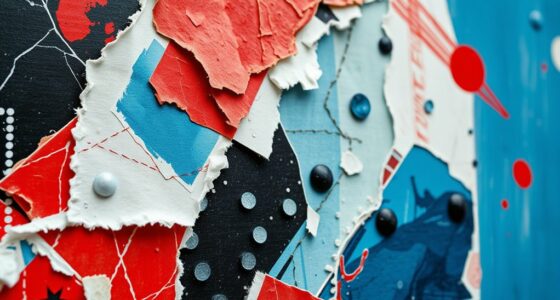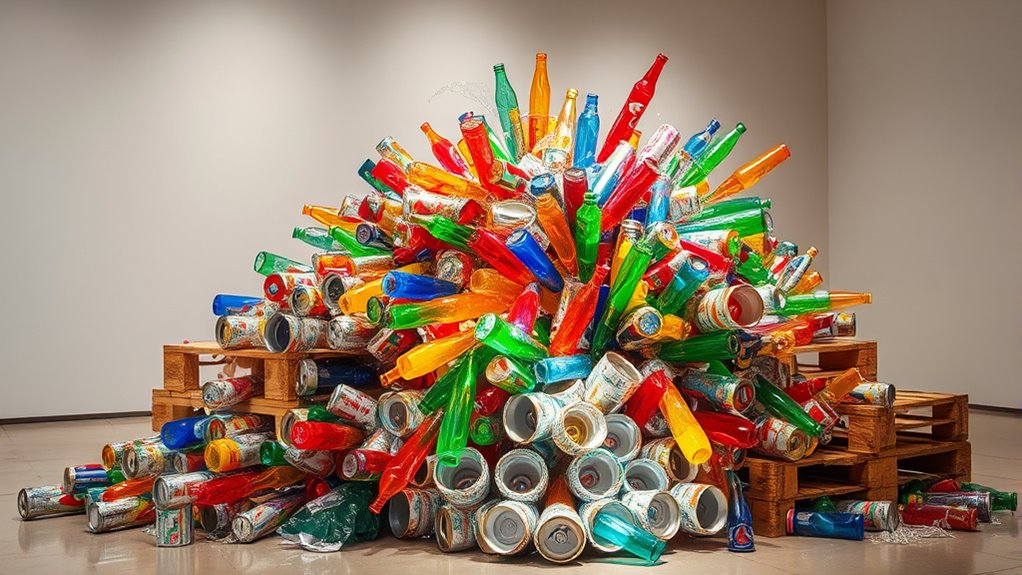

Recycled art allows you to transform discarded materials into stunning masterpieces that highlight sustainability and creativity. By upcycling items like bottles, paper, or electronics, you can create unique sculptures and mosaics that challenge traditional views of beauty. This process encourages resourcefulness and environmental awareness, turning trash into treasures. Embracing innovative techniques, you’ll expand your artistic mindset while making meaningful statements. Keep exploring, and you’ll discover inspiring ways to turn everyday refuse into remarkable art.

Get art and craft supplies delivered free with Prime
- Fast, free delivery on millions of items
- Prime Video, Amazon Music and more included
- Member-only deals all year
Key Takeaways
- Recycled art transforms discarded materials into visually striking and meaningful masterpieces, promoting sustainability and environmental awareness.
- Artists use unconventional objects like bottle caps and electronics to create mosaics, sculptures, and mixed-media pieces.
- Upcycling techniques challenge traditional notions of beauty, inspiring innovation, resourcefulness, and resilience.
- Creative practices balance aesthetics, function, and eco-friendly principles, deepening understanding of material properties.
- Recycled art encourages an exploratory mindset, redefining waste as a source of artistic potential and environmental stewardship.

Have you ever wondered how discarded materials can be transformed into stunning works of art? Recycled art does just that, turning what others see as trash into treasured masterpieces. This creative practice isn’t just about making something visually striking; it’s also about embracing sustainable practices that help protect our environment. When you choose to repurpose materials, you’re actively reducing waste, conserving resources, and promoting environmental consciousness. This approach demonstrates that art can be a powerful tool for change, inspiring others to think differently about waste and consumption. By integrating sustainable practices into your art, you’re not only expressing your creativity but also contributing to a more eco-friendly world. Techniques like upcycling and repurposing are essential components of recycled art, encouraging innovation and resourcefulness. Artistic innovation plays an essential role in recycled art. It pushes boundaries, challenging traditional notions of beauty and material use. When you experiment with unconventional objects—old newspapers, bottle caps, discarded metal, or broken electronics—you’re exploring new creative horizons. The possibilities are limitless, and each piece becomes a unique testament to your ingenuity. Recycled art encourages you to see potential where others see junk, transforming everyday refuse into meaningful, thought-provoking works. This inventive mindset fosters a sense of resourcefulness and resilience, reminding you that limitations can spark some of the most original ideas. It’s about reimagining what’s possible and redefining the relationship between art and waste. Furthermore, recycled art often involves clever techniques and innovative design strategies. You might combine disparate materials to create intricate mosaics, sculptures, or mixed-media installations. The challenge lies in balancing aesthetics with sustainability—finding ways to make the recycled elements visually compelling while maintaining eco-friendly practices. This process enhances your artistic skills and deepens your understanding of material properties, encouraging continuous experimentation. Each project becomes a dialogue between form and function, tradition and innovation, waste and wonder. By embracing recycled art, you’re not only making a statement about environmental responsibility but also pushing the boundaries of your own creativity. Engaging with the principles of the Law of Attraction can help manifest your creative visions and attract positive energy into your artistic endeavors. Additionally, understanding the difference between art and design can help you better appreciate the purpose and intent behind recycled projects, whether they’re meant as functional pieces or purely aesthetic expressions. Recognizing the importance of sustainable practices in art helps reinforce your commitment to environmental stewardship and inspires more mindful creation. Another key aspect is understanding how the color temperature of your materials influences the overall mood and perception of your artwork, especially when working with diverse recycled components. Incorporating the role of attention in your creative process can significantly improve the quality and impact of your recycled art pieces, ensuring focused and intentional craftsmanship.
As an affiliate, we earn on qualifying purchases.
Frequently Asked Questions
How Do Artists Select Suitable Recycled Materials?
When selecting suitable recycled materials, you consider material selection carefully to guarantee your art piece is both meaningful and sustainable. You look for items that align with source sustainability, choosing materials that are durable, safe, and ethically sourced. By evaluating the condition and compatibility of each material, you can create compelling artwork that minimizes waste and highlights environmental consciousness, making your recycled art impactful and environmentally responsible.
What Safety Precautions Are Needed for Creating Recycled Art?
You might think creating recycled art is safe, but hazards exist. Always wear protective gear like gloves and goggles to avoid cuts or chemical exposure. Guarantee proper ventilation safety to prevent inhaling dust, fumes, or mold. Use a well-ventilated space and take breaks if working with strong adhesives or paints. By prioritizing safety precautions, you protect yourself while transforming trash into beautiful, meaningful art.
Can Recycled Art Be Weatherproof for Outdoor Display?
Yes, recycled art can be weatherproof for outdoor display. You should apply weatherproof coatings, like sealants or varnishes, to safeguard your artwork from moisture, UV rays, and temperature changes. Using durable, outdoor-appropriate materials also enhances outdoor durability. Regular maintenance and reapplication of protective coatings help ensure your masterpiece withstands the elements, keeping it vibrant and intact for years to come.
How Do Recycled Art Pieces Impact Environmental Awareness?
You can see how recycled art sparks significant social and environmental shifts. By showcasing creative, mesmerizing creations, you boost conservation awareness and combat plastic pollution. These pieces serve as powerful prompts, prompting people to ponder their pollution problems and embrace eco-friendly choices. Your art turns trash into treasures, inspiring change and encouraging others to reduce waste, recycle responsibly, and realize the essential value of environmental preservation.
Are There Any Affordable Tools Specifically for Recycled Art Projects?
You’ll find plenty of affordable tools designed for recycled art projects. Items like hot glue guns, scissors, and basic paint supplies are budget-friendly and perfect for working with recycled materials. You don’t need expensive equipment—just creativity and some simple tools. Using affordable tools allows you to transform everyday recycled materials into unique masterpieces without breaking the bank, making your art both eco-friendly and accessible.
As an affiliate, we earn on qualifying purchases.
Conclusion
By embracing recycled art, you transform discarded materials into symbols of hope and renewal. Every piece you create becomes a mirror reflecting your commitment to a greener world, proving that even trash can hold hidden treasures. When you turn waste into wonder, you’re not just making art—you’re planting seeds of change that blossom into a brighter future. Remember, within every discarded item lies the potential for beauty, waiting for you to bring it to life.
As an affiliate, we earn on qualifying purchases.
As an affiliate, we earn on qualifying purchases.
Halloween Picks
halloween
As an affiliate, we earn on qualifying purchases.