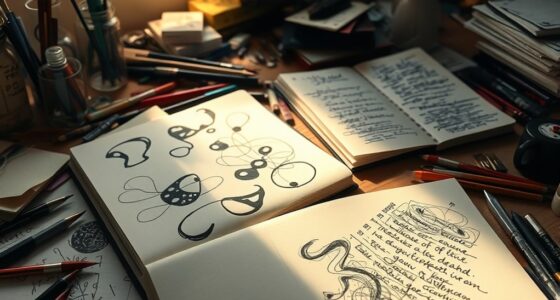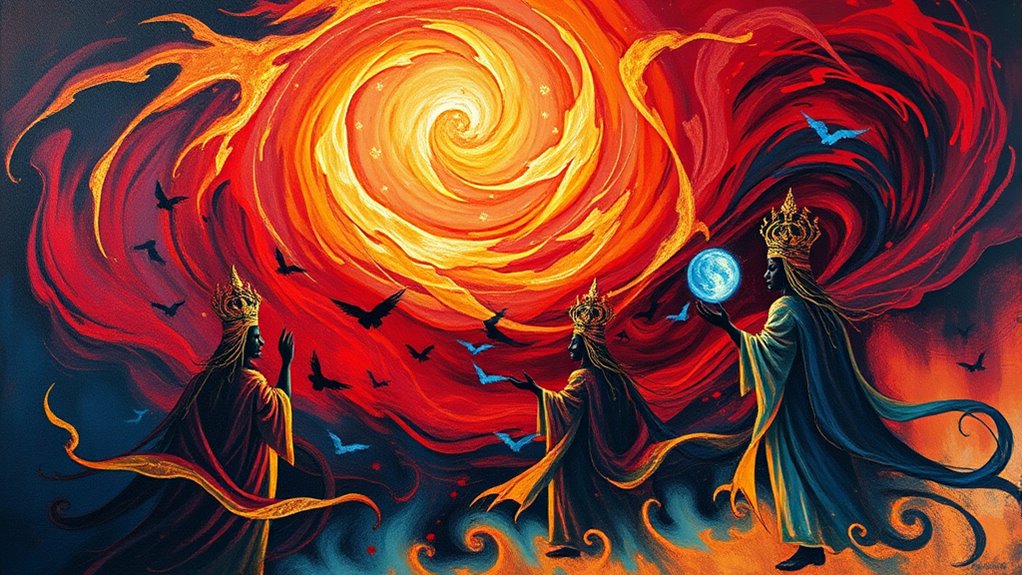

Modern painting often explores ritual and myth to connect you with universal themes like creation, transformation, and mortality. Artists use symbolic imagery, abstract forms, and subtle motifs to evoke shared cultural stories and spiritual beliefs. These elements create a dialogue between past and present, inviting you to interpret deeper meanings behind the artwork. If you keep exploring, you’ll discover how myth and ritual continue to shape contemporary art and your understanding of culture.
Key Takeaways
- Modern paintings incorporate symbolic elements rooted in ritual and myth to connect viewers with universal themes.
- Artists use mythic symbols like serpents or gods to evoke collective memory and cultural significance.
- Ritualistic gestures and sacred objects in art emphasize spiritual connection and cultural identity.
- Symbolism in contemporary art deepens narrative layers, inviting nuanced interpretation of mythic ideas.
- Artworks foster ongoing cultural conversations, highlighting the enduring relevance of myth and ritual in human experience.
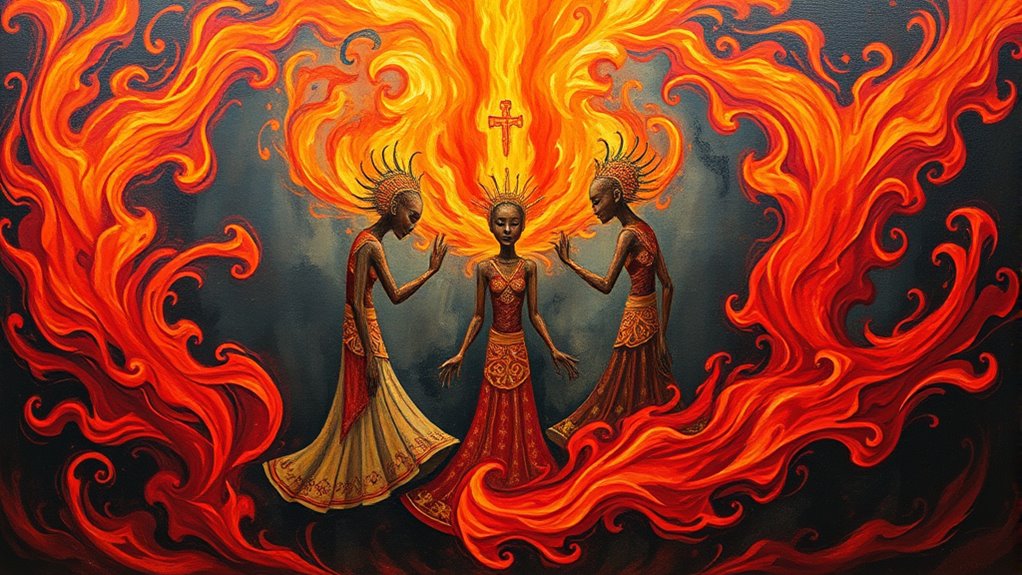
Modern painting often explores the deep roots of ritual and myth, revealing how these ancient stories and practices continue to influence contemporary art. When you observe these works, you’ll notice that artists use symbolic representation to connect viewers with timeless themes. Symbols serve as powerful tools that encapsulate complex ideas, emotions, and spiritual beliefs, making ancient narratives accessible in a modern context. Through vivid imagery, abstract forms, or subtle motifs, painters evoke a sense of shared cultural significance, inviting you to interpret and engage with the deeper meanings behind the artwork.
Modern painters use symbols to connect you with universal themes and timeless stories.
You’ll find that many modern painters draw upon mythic themes to explore universal human experiences—creation, destruction, transformation, and mortality. These themes are embedded within visual languages that tap into collective memory, allowing you to see beyond individual stories and recognize the larger cultural significance. For example, a piece might feature recurring symbols like serpents, gods, or ritual objects, each carrying layered meanings rooted in specific traditions. These symbols act as bridges between the ancient and the contemporary, reminding you that mythic ideas still resonate today, shaping societal values and beliefs. Additionally, the use of subtle motifs helps deepen the narrative and invites a more nuanced interpretation.
As you examine these paintings, you’ll realize that the use of ritual elements isn’t accidental. Artists often incorporate ritualistic components—such as ceremonial gestures, sacred objects, or repetitive patterns—to evoke a sense of reverence and spiritual connection. These elements evoke a cultural significance that extends beyond mere decoration; they serve as visual expressions of collective memory and identity. When you observe the deliberate placement of these symbols, you understand that the artist aims to create a dialogue between the past and present, emphasizing how ritual practices continue to influence modern life and artistic expression.
Furthermore, these works challenge you to contemplate the ongoing relevance of myth and ritual. They prompt questions about your own cultural background and the stories that shape your worldview. By employing symbolic representation, artists highlight the enduring power of myth to provide meaning, moral guidance, and a sense of belonging. When you interpret these paintings, you participate in a shared cultural conversation—an acknowledgment that, although times change, the core themes of myth and ritual remain deeply woven into human experience. Ultimately, these artworks remind you that understanding the symbolic and cultural significance behind modern paintings enriches your appreciation of how ancient stories continue to inform contemporary art and society.
symbolic art prints
As an affiliate, we earn on qualifying purchases.
As an affiliate, we earn on qualifying purchases.
Frequently Asked Questions
How Do Contemporary Artists Interpret Ancient Myths Visually?
Contemporary artists interpret ancient myths visually through symbolic storytelling and visual symbolism, bringing timeless themes into modern contexts. You’ll notice they blend traditional motifs with innovative techniques to evoke emotional and cultural resonance. By reimagining mythological scenes, they challenge viewers to explore deeper meanings, connecting past and present. Their work invites you to see familiar stories anew, using symbolism to evoke reflection and understanding of universal human experiences.
What Role Does Ritual Play in Modern Painting Techniques?
Ritual plays a essential role in modern painting techniques by guiding your use of symbolic gestures and ritual symbolism. You incorporate deliberate actions or repetitive patterns to evoke a sense of tradition or spiritual significance. These elements create a visual language that connects viewers to deeper meanings, transforming your artwork into a ritualistic experience. By emphasizing ritual, you invite reflection and a sense of continuity within contemporary visual storytelling.
Are There Specific Cultures Influencing Current Myth-Based Artworks?
You’ll notice that many contemporary artists draw on diverse cultures, incorporating cultural symbolism and myth reinterpretation to enrich their work. From African and Indigenous traditions to Asian and European mythologies, these influences shape new narratives and deepen meaning. By blending ancient stories with modern perspectives, artists create powerful images that resonate across cultures, inviting viewers to explore universal themes through a fresh, myth-inspired lens.
How Has Digital Media Transformed Myth and Ritual in Art?
Digital media transforms myth and ritual by blending digital symbolism with virtual spirituality, creating new domains of meaning. You now navigate sacred narratives through screens, where symbols evolve and rituals become interactive. Virtual spirituality fosters a personal connection, yet distances you from traditional communal practices. This juxtaposition highlights how technology reshapes ancient stories, making myth more accessible yet more fragmented, inviting you to reinterpret timeless truths in a digital age.
Can Modern Paintings Evoke Spiritual Experiences Similar to Traditional Rituals?
Yes, modern paintings can evoke spiritual experiences similar to traditional rituals through symbolic abstraction and ritual repetition. When you view these artworks, you feel engaged in a process that mirrors ritualistic practices, fostering a sense of connection and transcendence. The use of symbolic elements invites personal interpretation, allowing you to experience a deeper, almost spiritual, resonance—creating a modern ritual that taps into timeless human longing for meaning.
mythology inspired paintings
As an affiliate, we earn on qualifying purchases.
As an affiliate, we earn on qualifying purchases.
Conclusion
You might think modern painting has moved beyond ritual and myth, but they still shape your perception. These elements aren’t just ancient symbols; they’re powerful tools that deepen meaning and evoke emotion. Don’t dismiss them as outdated—embrace how they connect your modern experience to timeless stories. By recognizing ritual and myth in art, you gain a richer understanding that transcends time, revealing the profound layers behind every brushstroke.
ritualistic sculpture decor
As an affiliate, we earn on qualifying purchases.
As an affiliate, we earn on qualifying purchases.
contemporary myth art
As an affiliate, we earn on qualifying purchases.
As an affiliate, we earn on qualifying purchases.