
Kinetic painting and sound-wave techniques are transforming the way you experience art by creating immersive, multisensory environments. These methods respond dynamically to your movements, sounds, and even physiological signals, making you a co-creator in the artwork. As boundaries between observer and creator dissolve, you’ll explore new ways of perceiving and feeling art that blend sight, sound, and touch. To discover how this revolution in art is shaping future spaces, there’s more to explore.
Key Takeaways
- Kinetic painting and sound-wave techniques create multisensory, interactive artworks that respond dynamically to viewer movements and sounds.
- These methods dissolve traditional boundaries between observer and artwork, fostering immersive, participatory experiences.
- Technologies like sensors and real-time data processing enable artworks to react live to physiological signals and environmental inputs.
- Such techniques enhance emotional well-being through therapeutic, responsive environments that breathe and evolve with viewers.
- They push artistic innovation by making art responsive, alive, and deeply engaging, opening new creative and perceptual possibilities.

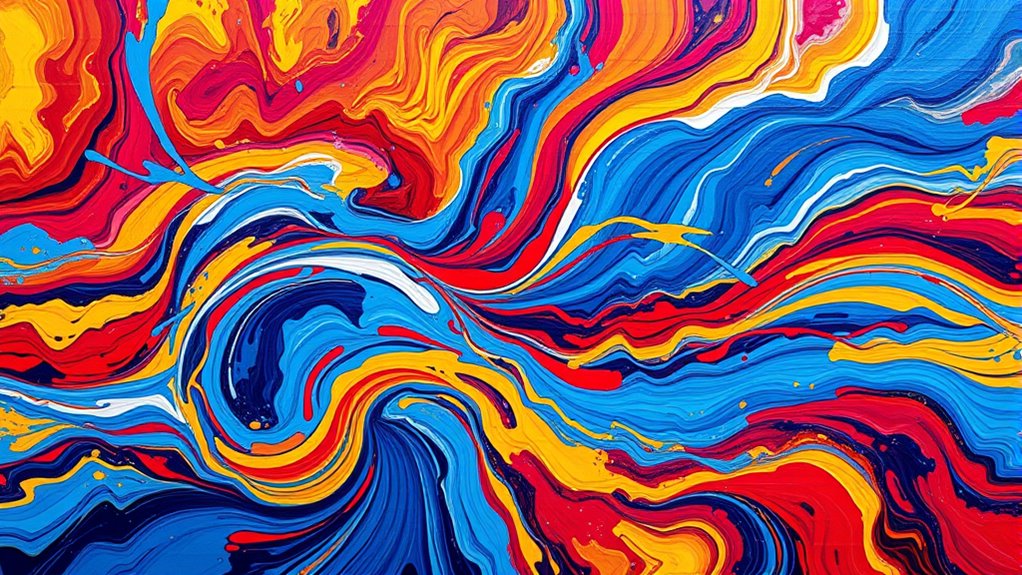
Kinetic painting and sound-wave techniques are transforming the way artists create and viewers experience art. As you step into this innovative world, you quickly realize that the boundary between observer and artwork is dissolving. Interactive installations now invite you to become an active participant, blurring traditional lines and immersing you in multisensory environments. These installations don’t just display visuals; they respond to your movements, sounds, and presence, creating a dynamic dialogue between you and the art. You might find yourself walking through a space where your gestures trigger swirling colors or shifting patterns, making you feel like a co-creator rather than just a spectator. This approach heightens engagement and deepens emotional connections, making each encounter uniquely personal.
At the core of these advancements are synesthetic experiences—where senses intertwine in compelling ways. Kinetic painting, combined with sound-wave techniques, allows for a seamless fusion of sight and sound. As you observe a piece, you might notice that a sound’s pitch influences the movement of visual elements, or that certain colors vibrate in harmony with specific tones. This sensory crossover evokes a sense of synesthesia, where your brain interprets one stimulus as another. It’s like experiencing a painting that not only looks beautiful but also “sounds” beautiful, or a soundscape that visually ripples with energy. These multisensory experiences challenge your perceptions, encouraging you to perceive art beyond traditional boundaries and tap into a deeper, more intuitive understanding.
The technology behind these works often involves sensors, motion detection, and real-time data processing. When you interact with an installation, your presence becomes a crucial input, shaping the visual and auditory output. This creates a live, responsive environment that reacts to your movements, sounds, or even your heartbeat. As a viewer, you’re not just an audience; you’re a performer shaping the artwork’s evolution. This participatory aspect invites you to explore new ways of perceiving and connecting with art on a visceral level. It’s an exciting shift from passive observation to active engagement, opening up possibilities for personal expression and shared experiences.
Furthermore, understanding sound healing science enhances how these multisensory art forms can promote emotional and physical well-being, making the experience not only immersive but also therapeutically beneficial. Through this fusion of kinetic painting and sound-wave techniques, artists are pioneering a new frontier where art is alive, responsive, and deeply immersive. You leave behind the notion of static art objects and step into spaces that breathe and evolve with you. As a result, your experience becomes richer, more complex, and ultimately more memorable. These innovations are redefining artistic boundaries, making you an integral part of the creative process and inspiring new ways to see, hear, and feel the world around you.
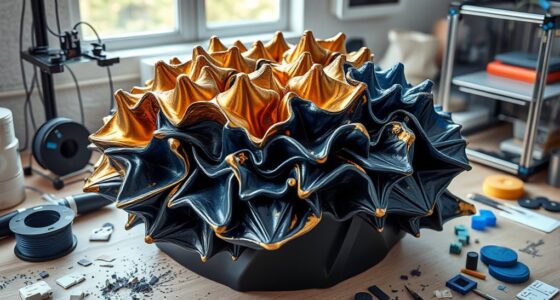
interactive kinetic art installation
As an affiliate, we earn on qualifying purchases.
As an affiliate, we earn on qualifying purchases.
Frequently Asked Questions
How Do Kinetic Painting and Sound-Wave Techniques Influence Viewer Perception?
Kinetic painting and sound-wave techniques boost your sensory engagement, making you feel more connected to the artwork. They create dynamic movement and sound, which can intensify your emotional response. As you observe, these techniques draw you into a multi-sensory experience, encouraging you to explore deeper layers of meaning. This active engagement transforms your perception, making the art feel alive and personal, ultimately heightening your emotional connection with the piece.
What Materials Are Best Suited for Creating Kinetic Paintings?
You should use mixed media like acrylics, lightweight metals, and plastics for creating kinetic paintings. These materials offer the best balance of durability and flexibility, allowing your artwork to move and withstand time. Consider incorporating materials that are resistant to environmental factors, ensuring your kinetic piece remains functional and visually striking over time. Using durable, versatile materials enhances both the longevity and dynamic quality of your kinetic painting.
Can These Techniques Be Integrated Into Digital Art Forms?
The ball is in your court—these techniques can definitely be integrated into digital art forms. By leveraging digital tools, you can create immersive experiences that blend kinetic movements and sound waves seamlessly. Digital integration allows for real-time interaction, expanding the possibilities of kinetic paintings beyond physical limits. You can experiment with animation, sensors, and sound design to craft mesmerizing, dynamic artworks that engage viewers on a whole new level.
What Are the Challenges in Synchronizing Sound Waves With Visual Motion?
You face challenges in synchronizing sound waves with visual motion because precise audio calibration and motion timing are critical. Small discrepancies can cause lag or mismatch between sound and visuals, disrupting the viewer’s experience. You need to carefully adjust audio levels and timing controls, ensuring the visual motion aligns perfectly with sound cues. This meticulous calibration demands attention to detail and often requires iterative testing to achieve seamless synchronization.
How Do These Methods Impact the Longevity of the Artwork?
Think of your artwork as a delicate clock that needs constant care. These methods pose preservation challenges because materials used may degrade over time, especially with continuous sound and motion exposure. For example, vibrations can weaken structural components, reducing durability. To guarantee longevity, you must carefully select durable materials and implement maintenance routines, or risk losing the dynamic beauty of your kinetic or sound-wave piece prematurely.
sound wave responsive art
As an affiliate, we earn on qualifying purchases.
As an affiliate, we earn on qualifying purchases.
Conclusion
You might be surprised to learn that over 60% of viewers report feeling more emotionally connected to kinetic paintings that incorporate sound waves. This shows how these innovative techniques can truly transform art into an immersive experience. By blending movement and sound, you’re not just observing; you’re engaging with the artwork on a deeper level. Embracing these methods can revolutionize how you connect with art, making every piece more dynamic and personally meaningful.
sensor-based immersive art
As an affiliate, we earn on qualifying purchases.
As an affiliate, we earn on qualifying purchases.
multisensory art experience
As an affiliate, we earn on qualifying purchases.
As an affiliate, we earn on qualifying purchases.