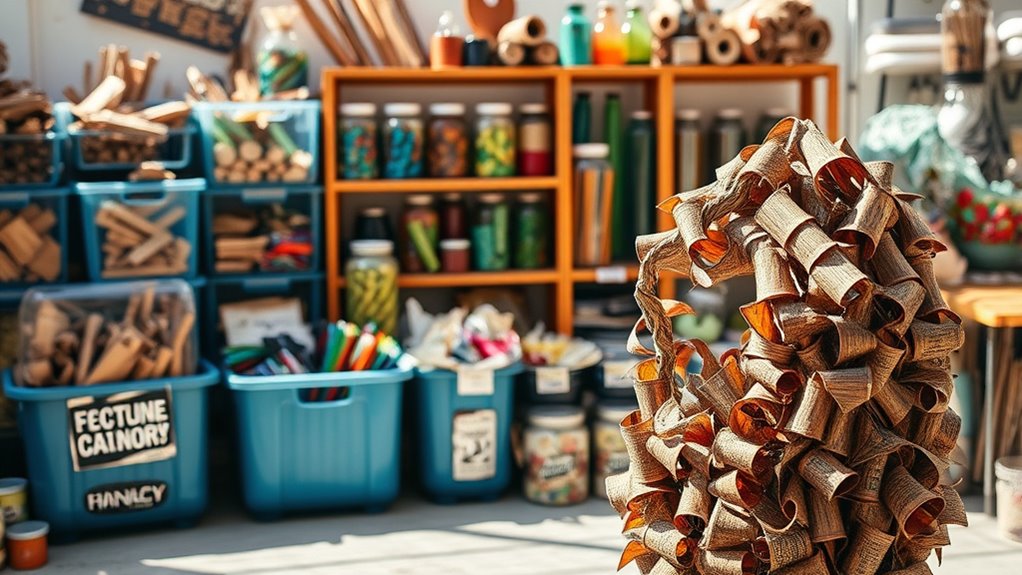

Sustainable art materials like upcycled canvases and biodegradable pigments help you create environmentally friendly art while reducing waste. By choosing recycled textiles or old artworks, you give discarded items new life and minimize resource demand. Eco-friendly pigments made from natural minerals and plant extracts promote vibrant colors without harmful chemicals. Incorporating these materials allows you to make mindful choices and explore innovative techniques. Keep exploring to discover how these alternatives can transform your creative practice while supporting sustainability.
Key Takeaways
- Upcycling practices in art involve transforming discarded materials like old canvases and textiles into new, unique artworks.
- Eco-friendly mediums include biodegradable pigments made from natural minerals and plant extracts, reducing environmental impact.
- Using recycled canvases minimizes waste and adds character, supporting sustainable art creation and resource conservation.
- Sustainable art emphasizes mindful material choices that promote ecological balance and reduce chemical runoff.
- Incorporating upcycled and eco-friendly materials demonstrates ethical artistic practices and fosters innovation in environmentally conscious art.
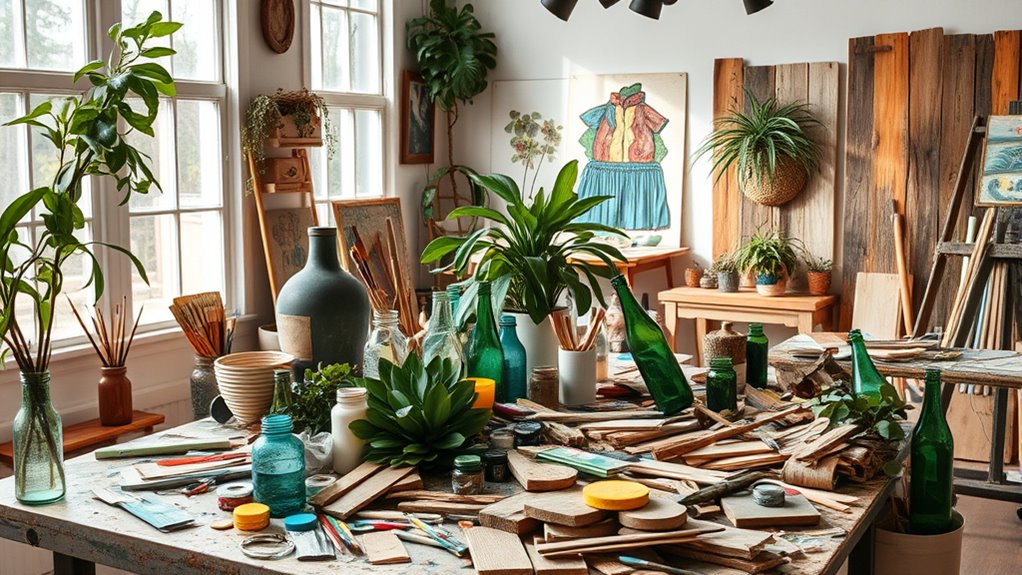
Have you ever wondered how your art supplies impact the environment? It’s a question worth asking, especially as awareness around sustainability grows. Traditional art materials often come with hidden environmental costs, from toxic chemicals to waste that piles up in landfills. But there’s good news: more artists are turning to eco-friendly options that reduce their footprint without sacrificing creativity. For instance, biodegradable pigments are gaining popularity. Unlike synthetic dyes that linger in ecosystems for years, biodegradable pigments break down naturally over time, leaving less harmful residue behind. They’re made from natural ingredients like minerals, plant extracts, or other organic compounds, so you can create vibrant artwork while being kinder to the planet. Choosing these pigments means you’re actively reducing chemical runoff and pollution, making your art practice more sustainable.
Recycled canvases also play a significant role in eco-conscious artistry. Instead of purchasing new canvases, you can source pre-owned or upcycled materials. Many artists repurpose old paintings, fabric scraps, or discarded textiles into new canvases, giving them a second life. This approach not only cuts down on waste but also adds a unique history and character to your work, making each piece truly one-of-a-kind. Using recycled canvases reduces the demand for new resources and minimizes waste that would otherwise end up in landfills. It’s a simple yet powerful way to align your artistic process with environmental values. Plus, working on recycled surfaces can inspire creativity, as you incorporate elements of the past into your present work.
Adopting biodegradable pigments and recycled canvases isn’t just about reducing harm; it’s about rethinking your entire approach to art. You become more aware of the materials you choose and their lifecycle, which encourages a more mindful, intentional process. These choices often lead to discovering innovative techniques and new materials that are both eco-friendly and expressive. As you explore sustainable mediums, you’ll notice how your art can make a statement—not just visually but ethically. Your commitment to using biodegradable pigments and recycled canvases signals that you care about the environment and want to contribute positively through your craft. It’s a small change with a big impact, proving that sustainability and artistic excellence can go hand in hand. By making these conscious decisions, you’re helping to shape a future where art and ecology coexist harmoniously.
eco-friendly biodegradable pigments
As an affiliate, we earn on qualifying purchases.
As an affiliate, we earn on qualifying purchases.
Frequently Asked Questions
How Can I Identify Genuinely Eco-Friendly Art Supplies?
To identify genuinely eco-friendly art supplies, look for labels that specify recycling paint or biodegradable brushes. Check for certifications like FSC or Green Seal, which indicate sustainable practices. Avoid products with vague claims or excess packaging. You can also research brands committed to eco-conscious methods. By paying attention to these details, you guarantee your art supplies support environmental health and reduce waste.
Are Upcycled Art Materials as Durable as Traditional Ones?
Upcycled art materials can be just as durable as traditional ones if you choose wisely. Your recycling practices, like selecting high-quality reclaimed wood or sturdy plastics, help extend the material lifespan. Keep in mind, some upcycled mediums may have slight wear, but with proper handling, they hold up well in artistic projects. Ultimately, investing in quality upcycled supplies guarantees your artwork remains durable and environmentally friendly.
What Are Some Beginner-Friendly Sustainable Art Techniques?
You can start with recycling art ideas like transforming old paper or fabric into new projects. Use natural pigment sourcing by experimenting with plant-based dyes from berries, leaves, or spices. These beginner-friendly techniques involve simple processes and are eco-conscious. You’ll enjoy creating unique pieces while reducing waste, and over time, you’ll develop your skills in sustainable art practices that are both satisfying and environmentally friendly.
How Do Eco-Friendly Mediums Impact Artwork Longevity?
Eco-friendly mediums like biodegradable pigments and recycled canvases can enhance your artwork’s longevity when properly cared for. These materials are often durable and less prone to chemical degradation over time. Using high-quality recycled canvases provides a stable surface, while biodegradable pigments ensure vibrant colors without harmful residues. With proper sealing and storage, your eco-friendly pieces can last as long as traditional artworks, all while reducing environmental impact.
Where Can I Find Affordable Sustainable Art Materials Locally?
Looking for budget-friendly ways to access sustainable art materials? You should explore local art stores and community markets, where you might stumble upon hidden gems. These spots often carry eco-friendly mediums and upcycled supplies at affordable prices. Plus, supporting local vendors helps reduce environmental impact and fosters community connections. Keep an eye out for special sales or events—they’re great opportunities to find quality materials without breaking the bank.
upcycled canvas art supplies
As an affiliate, we earn on qualifying purchases.
As an affiliate, we earn on qualifying purchases.
Conclusion
By embracing eco-friendly mediums and upcycling, you actively advocate for art that’s both innovative and environmentally responsible. Your dedication to sustainable art materials transforms trash into treasures, turning waste into wondrous works of art. With mindful methods and meaningful motives, you master the art of making a positive impact. Remember, your creative choices can catalyze change, proving that art and eco-consciousness can coexist beautifully. Let your artistic journey be a demonstration to sustainability, style, and sincere vision.
recycled textile art canvases
As an affiliate, we earn on qualifying purchases.
As an affiliate, we earn on qualifying purchases.
natural mineral pigments for painting
As an affiliate, we earn on qualifying purchases.
As an affiliate, we earn on qualifying purchases.