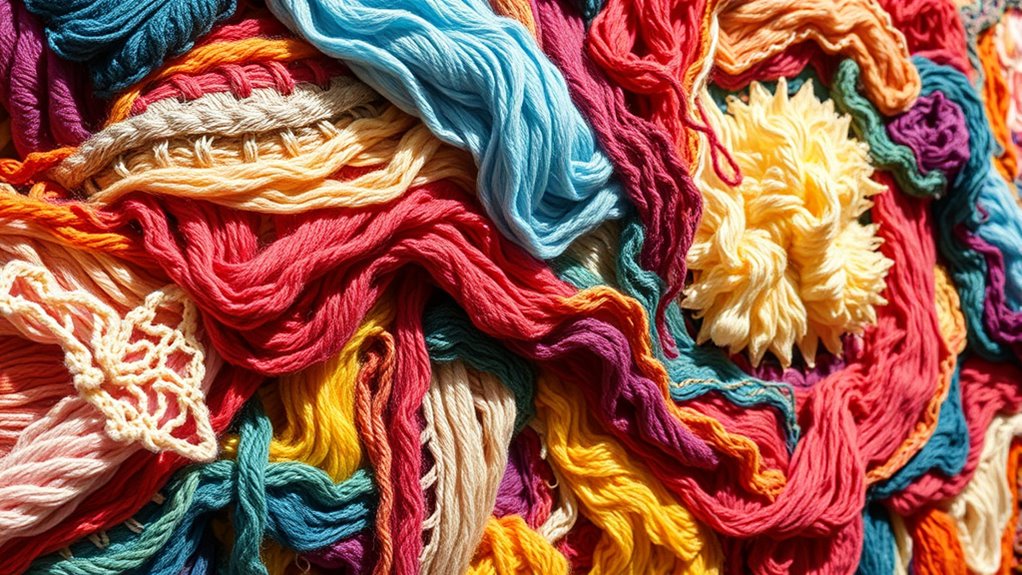

Contemporary textile art combines traditional fiber techniques with modern methods, allowing you to create innovative, multidimensional pieces. Artists blend skills like weaving, dyeing, and embroidery with mixed media, incorporating materials such as plastics, metals, and found objects. This approach honors cultural history while pushing boundaries and exploring new textures and visual effects. If you keep exploring, you’ll discover how these evolving practices continue to inspire and transform textile art today.

Get art and craft supplies delivered free with Prime
- Fast, free delivery on millions of items
- Prime Video, Amazon Music and more included
- Member-only deals all year
Key Takeaways
- Contemporary textile artists blend traditional fiber techniques with mixed media to create multidimensional, innovative artworks.
- Modern practices reinterpret historic methods like quilting and dyeing, influenced by diverse cultural traditions.
- Combining fibers with materials such as metals, plastics, and found objects enhances visual texture and storytelling.
- Experimentation with textures and materials expands the boundaries of conventional textile art.
- Artistic practice is inspired by historical textiles, evolving through innovation and cultural referencing.
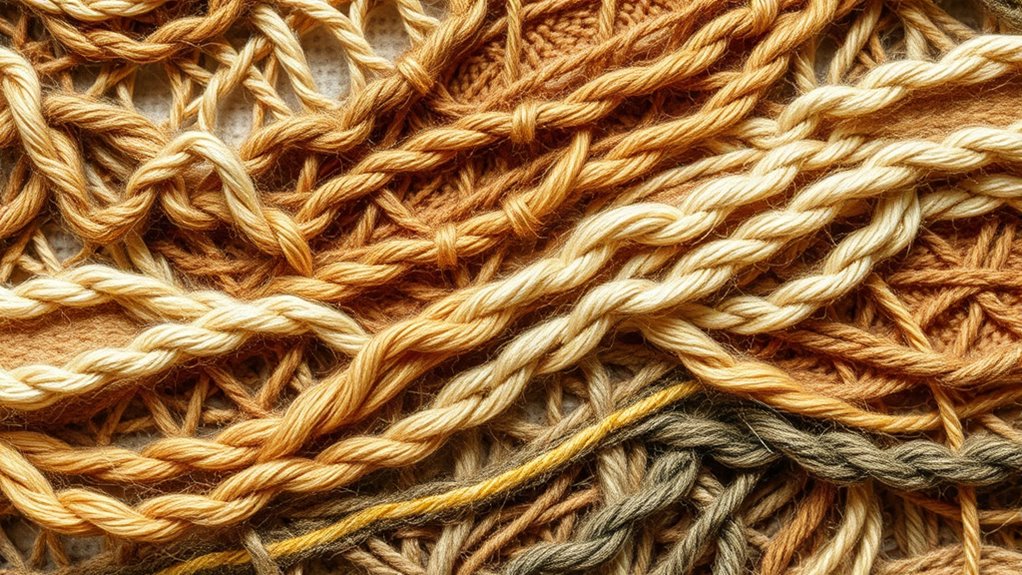
Have you ever wondered how artists transform simple fibers into intricate works of art? It’s a fascinating process that combines creativity, skill, and a deep understanding of various techniques. In contemporary textile art, artists often blend traditional fiber methods with mixed media approaches, creating layered, multidimensional pieces that challenge the boundaries of conventional art forms. This fusion allows for experimentation with different materials, textures, and visual effects, resulting in works that are both innovative and rooted in a rich history. When you explore the history behind textile art, you’ll notice that many techniques and motifs are influenced by diverse cultures and time periods, reflecting a shared human fascination with fabric and craftsmanship. These historical influences serve as a foundation, inspiring modern artists to reinterpret ancient methods in fresh, contemporary ways. Additionally, exploring textile techniques can deepen your understanding of the craft and open new avenues for artistic expression.
Incorporating mixed media into textile art opens up a world of possibilities. You might combine fibers with paints, metals, plastics, or found objects, adding depth and complexity to your work. By integrating different materials, you’re not only enhancing visual interest but also expanding the tactile experience for viewers. This approach allows you to experiment with contrasting textures—soft yarns alongside rigid elements—and create pieces that invite closer inspection. The use of mixed media also encourages you to think beyond traditional boundaries, blending textile techniques like weaving, embroidery, or felting with other art forms, such as collage or sculpture. As a result, your work can evoke a variety of emotions and narratives, drawing viewers into a layered story told through fibers and materials.
Understanding the historical influences behind textile techniques helps you appreciate the cultural significance embedded in these crafts. Many traditional methods, like quilting in North America or ikat dyeing in Southeast Asia, carry centuries of symbolism and storytelling. When you incorporate these influences into your contemporary practice, you honor the craftsmanship of the past while pushing the medium forward. This historical context can inform your choice of materials, motifs, and techniques, giving your work a sense of authenticity and depth. Whether you’re inspired by ancient textiles or modern reinterpretations, recognizing these influences allows you to create pieces that resonate on both personal and cultural levels. By blending history with innovation, you become part of a long-standing tradition of textile artistry that continues to evolve and inspire.
As an affiliate, we earn on qualifying purchases.
Frequently Asked Questions
How Do Contemporary Artists Incorporate Digital Technology Into Textile Art?
You can incorporate digital technology into textile art by using digital embroidery to create intricate, precise designs that traditional methods can’t achieve. Virtual weaving allows you to simulate and plan complex weaves before physically crafting them, saving time and resources. These techniques enable you to experiment with digital tools, blending traditional fiber art with modern tech, resulting in innovative, visually stunning pieces that push the boundaries of contemporary textile practice.
What Eco-Friendly Fibers Are Gaining Popularity in Modern Textile Practices?
You’ll love how eco-friendly fibers like organic cotton, hemp, and bamboo are gaining popularity. They’re sustainable choices that reduce environmental impact. Many artists combine these with natural dyes and recycled fabrics, making their work both beautiful and eco-conscious. It’s inspiring to see how these fibers and techniques help create textiles that are stylish, durable, and kinder to the planet—proving sustainability can be both innovative and inspiring.
How Do Cultural Traditions Influence Current Fiber Art Techniques?
You see that cultural traditions deeply influence your fiber art techniques by inspiring traditional motifs and guiding your use of ancestral methods. When you incorporate motifs rooted in specific cultures, it adds meaning and authenticity to your work. By embracing ancestral methods, you honor heritage and keep traditions alive while innovating within contemporary practices. This blend of tradition and modernity creates rich, meaningful fiber art that resonates across communities and generations.
What Are Emerging Trends in Wearable Textile Art?
You’re witnessing a revolution in wearable textile art that’s changing everything overnight. Innovative dyeing techniques create vibrant, dynamic designs that seem to breathe with life. Modular textiles, which can be reconfigured into different forms, offer endless customization and versatility. These trends let artists and wearers alike push boundaries, blending functionality with artistic expression. The future of wearable textile art isn’t just evolving — it’s exploding into a kaleidoscope of boundless creative possibilities.
How Is Sustainability Integrated Into Fiber Art Creation and Display?
You can integrate sustainability into your fiber art by using recycled materials and biodegradable dyes, reducing environmental impact. When creating, choose eco-friendly fibers and repurpose textiles to minimize waste. Display your work responsibly by educating viewers about sustainable practices and choosing exhibition spaces that prioritize eco-conscious values. This approach not only enhances your art’s meaning but also promotes environmental awareness within the fiber art community.
As an affiliate, we earn on qualifying purchases.
Conclusion
Embracing textile art and fiber techniques allows you to explore creativity in unexpected ways. Some may think these methods are outdated, but they’re actually a vibrant, evolving form of contemporary practice. By engaging with these techniques, you connect tradition with innovation, making your work meaningful and unique. Don’t dismiss their relevance—rather, see them as a powerful tool to express yourself and push the boundaries of modern art.
embroidery and weaving starter set
As an affiliate, we earn on qualifying purchases.
As an affiliate, we earn on qualifying purchases.
fabric dyeing and painting supplies
As an affiliate, we earn on qualifying purchases.
As an affiliate, we earn on qualifying purchases.
Halloween Picks
halloween
As an affiliate, we earn on qualifying purchases.