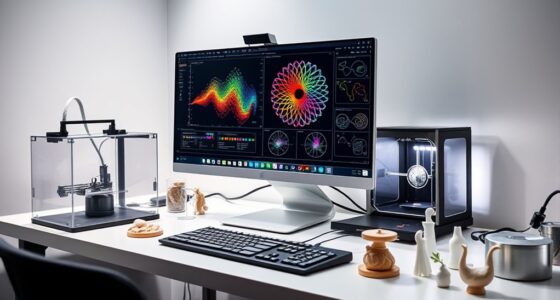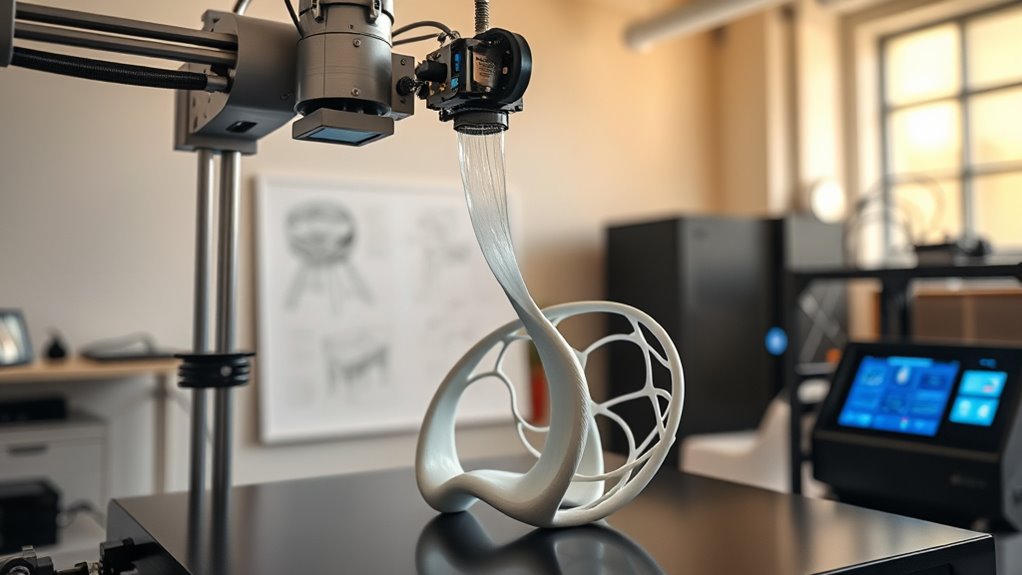

3D printing revolutionizes sculpture by transforming digital ideas into detailed physical artworks with unmatched precision and flexibility. You can design complex forms using software, experiment with different materials, and quickly modify your creations. This technology allows for intricate geometries and internal structures that traditional methods can’t easily produce. It also supports sustainable practices by reducing waste. To discover how these innovations can enhance your artistic process, explore further possibilities ahead.
Key Takeaways
- 3D printing transforms digital sculpture concepts into physical artworks through precise layer-by-layer fabrication.
- Digital design software allows artists to create complex, intricate forms before printing.
- Material flexibility enables the use of diverse substances like plastics, metals, and composites for varied artistic effects.
- Rapid prototyping and easy modifications streamline the transition from initial idea to finished sculpture.
- 3D printing enhances sustainability and realism, supporting innovative, eco-friendly artistic practices.
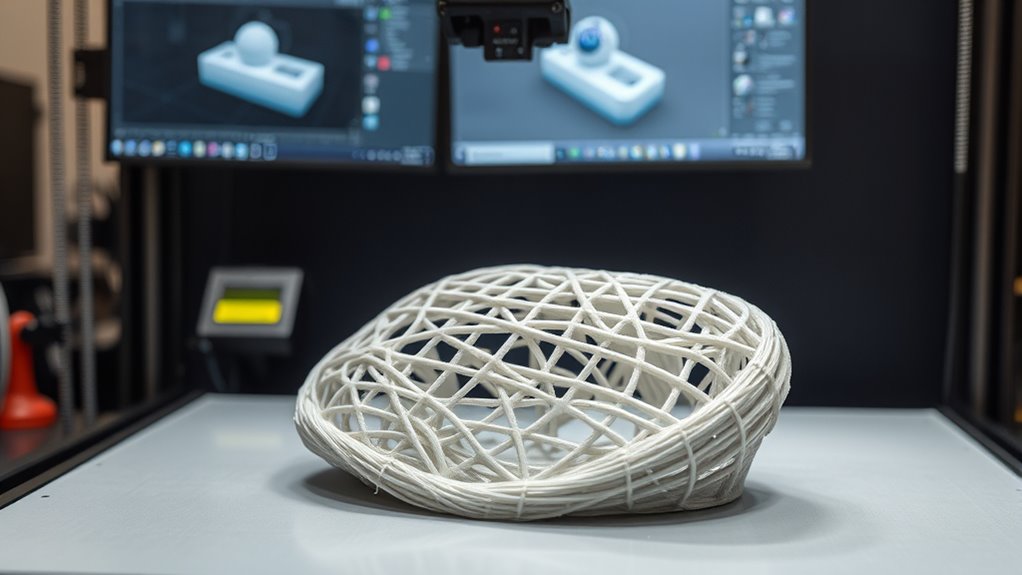
Have you ever wondered how 3D printing is transforming the world of sculpture? This technology has revolutionized the way artists approach their craft, enabling a seamless *shift* from digital concepts to tangible masterpieces. At the heart of this transformation lies digital fabrication, which allows you to design intricate forms using computer software and then bring them to life with precise 3D printers. This process opens doors to artistic innovation, pushing boundaries that traditional sculpting methods often can’t reach. Instead of working with clay or stone, you’re now able to experiment freely in a virtual space, refining your ideas until they’re perfect before any physical material is touched.
With digital fabrication, you gain the ability to create complex geometries that would be incredibly difficult or even impossible to carve by hand. The meticulous control over each layer of material means you can produce highly detailed, textured sculptures with consistency and accuracy. This level of precision encourages you to explore new styles and forms, expanding your artistic vocabulary. You can easily modify digital models, test different variations, and even iterate rapidly, saving time and resources compared to traditional sculpting. *Furthermore*, the digital aspect makes it easier to share your designs globally, receive feedback, and collaborate across distances, fostering a vibrant community of innovation. Additionally, advancements in AI security ensure that your digital files are protected from cyber threats, safeguarding your creative work. Moreover, digital fabrication techniques also support sustainable practices by minimizing waste and optimizing material use. Incorporating color accuracy into your digital designs can further enhance the realism and visual impact of your sculptures, making them more compelling.
Integrating 3D printing into sculpture also means you can experiment with diverse materials. From plastics and resins to metals and composites, the possibilities are vast, allowing you to select the most suitable medium for your artistic vision. This versatility enables you to create sculptures that are not only visually striking but also durable and functional, opening new avenues for mixed-media art and installation pieces. *Additionally*, 3D printing allows for the production of complex internal structures, such as lightweight supports or intricate lattice designs, which would be impractical with traditional techniques. These advancements empower you to push your creative limits and realize ideas that once seemed out of reach. Exploring material options is crucial to maximizing the potential of digital fabrication in sculpture.
Ultimately, 3D printing in sculpture bridges the gap between imagination and reality, transforming your conceptual sketches into concrete objects with remarkable fidelity. This fusion of digital fabrication and artistic innovation is reshaping the landscape of sculpture, making it more accessible, flexible, and expansive than ever before. As an artist, you now have a powerful tool at your fingertips—one that enhances your ability to experiment, refine, and produce. The future of sculpture is digital, and with it, your creative potential is boundless. Additionally, understanding environmental considerations ensures sustainable practices as this technology continues to evolve.

FLASHFORGE Adventurer 5M 3D Printer with Fully Auto Leveling, Max 600mm/s High Speed Printing, 280°C Direct Extruder with 3S Detachable Nozzle, CoreXY All Metal Structure, Print Size 220x220x220mm
One-Click Automatic Printing: Experience hassle-free 3D printing with the Adventurer 5M Series. Enjoy automatic bed leveling for flawless…
As an affiliate, we earn on qualifying purchases.
As an affiliate, we earn on qualifying purchases.
Frequently Asked Questions
How Does 3D Printing Influence Traditional Sculpture Techniques?
You see that 3D printing transforms traditional sculpture techniques by enabling digital modeling and rapid prototyping. You can quickly create complex designs that might be difficult with conventional methods, allowing for more experimentation and precision. This technology complements traditional skills, offering new possibilities for detail and customization. By integrating digital tools, you enhance your creative process and streamline production, making sculpture more innovative and accessible while respecting classical craftsmanship.
What Are the Environmental Impacts of 3D Printing Materials?
You might wonder about the environmental impacts of 3d printing materials. Using biodegradable plastics helps reduce plastic waste and minimizes long-term pollution. However, if you don’t manage plastic waste properly, it can contribute to environmental harm. By focusing on sustainable plastic waste management practices, you can lessen negative effects, making 3D printing more eco-friendly and aligning it with responsible environmental stewardship.
Can 3d-Printed Sculptures Be Reproduced Exactly?
Think of 3D-printed sculptures like a digital mirror—they can be reproduced exactly, much like a perfect reflection. Thanks to precise digital replication and consistent materials, each replica maintains the same details and quality. While slight variations might occur due to printer calibration or material properties, you can generally expect high accuracy and consistency, making 3D printing an excellent tool for reproducing sculptures faithfully.
What Skills Are Needed to Start 3D Printing Sculptures?
To start 3D printing sculptures, you need skills in digital modeling, which helps you create precise designs, and understanding material selection to choose the right filament or resin. You should also learn how to operate 3D printers safely and troubleshoot common issues. Developing an eye for detail and patience will improve your outcomes. With these skills, you can turn your creative ideas into tangible, impressive sculptures.
How Does 3D Printing Affect Sculpture Preservation and Restoration?
You might wonder how 3D printing impacts sculpture preservation and restoration. It enables digital preservation, creating detailed 3D scans of artworks for future reference. This technology also assists in archival restoration, allowing you to reproduce missing or damaged parts with precision. By using 3D printing, you can protect the original piece while restoring its integrity, ensuring that sculptures are preserved for future generations and enhancing conservation efforts.

The Digital Designer’s Guide to ZBrush: Pipelines for Modern Production
As an affiliate, we earn on qualifying purchases.
As an affiliate, we earn on qualifying purchases.
Conclusion
As you bring your sculpture to life with 3D printing, remember that each layer symbolizes your ideas shaping reality. Like a seed growing into a tree, your concept transforms from digital code into tangible art, rooted in creativity. Embrace the process as a journey from imagination to form, where your vision becomes a lasting monument. In this way, your sculpture stands not just as an object, but as a proof of your innovation and artistic spirit.

GIANTARM Silk Metallic Silver PLA 3D Printer Filament 1kg Spool, 1.75mm Dimensional Accuracy +/-0.03mm, 1080 Feet per Roll, Vacuum Packaging
【Shiny Silk PLA】 Smooth and shiny finish like real silk, no extra polishing needed, printing at a high…
As an affiliate, we earn on qualifying purchases.
As an affiliate, we earn on qualifying purchases.

52 Pcs Resin 3D Printing Tool Kit with 304 Stainless Steel Resin Filter Funnel,Silicone Pad, Scraper,Tweezers & Cleaning Tools | Accessories for Model Removal, Resin Recycling & Post-Processing
【Premium Stainless Steel Funnel & Filters 】 Our durable 304 stainless steel funnel ensures smooth resin pouring with…
As an affiliate, we earn on qualifying purchases.
As an affiliate, we earn on qualifying purchases.