Blockchain and NFTs offer a secure way to verify art provenance and authenticity by creating tamper-proof digital records of ownership, creator details, and exhibition history. With these technologies, you can quickly confirm an artwork’s origin and transfer rights globally, reducing fraud and disputes. The transparency and decentralization of blockchain build trust among buyers, sellers, and institutions. Keep exploring to discover how these innovations are transforming the art market and ensuring long-term security.
Key Takeaways
- Blockchain provides an immutable, transparent ledger to securely record artwork provenance and ownership history.
- NFTs serve as digital certificates of authenticity, encapsulating provenance details on the blockchain.
- Tokenizing art ensures tamper-proof verification, reducing fraud and disputes in the art market.
- Blockchain-based records are decentralized, accessible globally, and resistant to data loss or forgery.
- Integrating NFTs and blockchain enhances trust, streamlines transactions, and supports long-term provenance security.
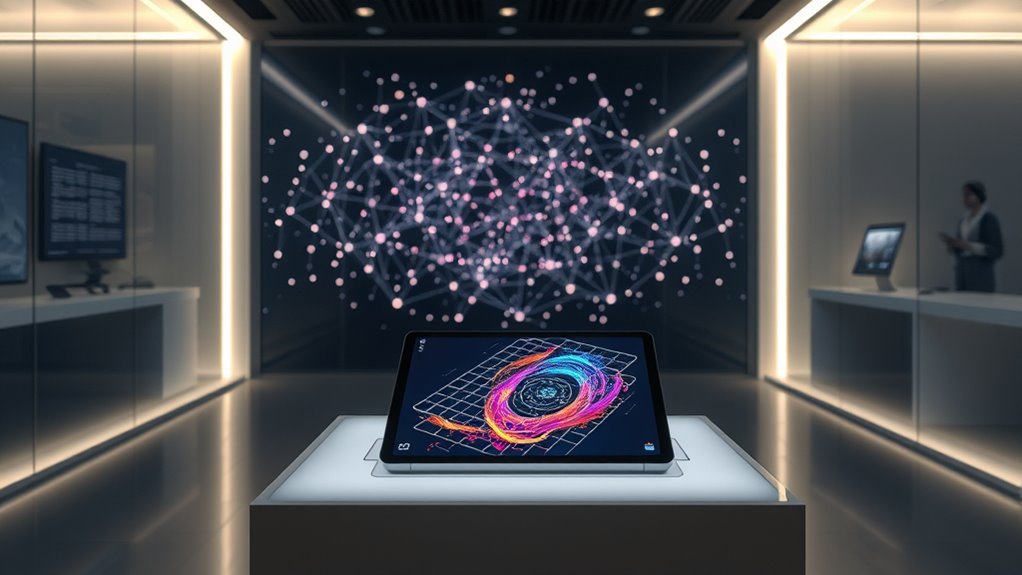
In today’s art market, verifying the provenance and authenticity of artworks can be a complex challenge, but blockchain and NFTs are transforming how these issues are addressed. As an art collector, dealer, or enthusiast, you’re likely aware of the difficulties in confirming an artwork’s history and ensuring it’s genuine. Traditional methods often rely on documentation, expert opinions, and physical inspections, which can be forged or lost over time. Blockchain technology offers a revolutionary alternative by providing a secure, transparent, and immutable ledger for recording ownership and provenance data. When an artwork is tokenized as an NFT, all relevant details—such as creator, creation date, previous owners, and exhibition history—are embedded into the digital record. This digital verification process allows you to verify the authenticity of a piece quickly and with confidence, knowing that the information is tamper-proof and easily accessible.
Ownership records stored on the blockchain serve as a definitive trail, eliminating doubts about who currently owns an artwork or its chain of custody. Every transaction involving the NFT updates the ownership record automatically and transparently, reducing the potential for disputes or fraudulent claims. With this system, you can trace an artwork back to its origin with clarity, ensuring that each transfer is recorded securely and verifiably. This transparency not only enhances trust but also streamlines transactions, making buying and selling more efficient and less risky. When you purchase an NFT tied to an artwork, you’re fundamentally acquiring a digital certificate of authenticity that’s backed by blockchain’s reliability. This certificate can be easily shared or transferred, providing a clear proof of provenance that’s recognized globally.
Moreover, because blockchain records are decentralized and resistant to alteration, they offer long-term security for your investments. Unlike paper certificates or archival records that can be lost or damaged, digital ownership records remain intact and accessible. This technology also facilitates authentication at scale, allowing galleries, collectors, and institutions to verify artworks instantaneously, regardless of geographic location. The integration of blockchain and NFTs in the art world empowers you to protect your acquisitions more effectively, minimize fraud, and establish a transparent history for each piece. As a result, the art market becomes more trustworthy, making it easier for you to make informed decisions and confidently participate in buying, selling, or showcasing artworks. Incorporating high-quality projectors with accurate color reproduction and high contrast ratios can further enhance the display of digital art pieces, ensuring they are presented in the best possible light.
Top picks for "blockchain nfts provenance"
Open Amazon search results for this keyword.
As an affiliate, we earn on qualifying purchases.
Frequently Asked Questions
How Does Blockchain Ensure the Long-Term Preservation of Art Provenance Records?
Blockchain guarantees the long-term preservation of art provenance records through digital certification and immutable records. When you record provenance data on the blockchain, it becomes a permanent, tamper-proof entry that can’t be altered or deleted. This digital certification guarantees the authenticity and history of the artwork, providing a reliable source of truth that persists over time, safeguarding the provenance for future generations and protecting against fraud.
Can NFTS Verify the Authenticity of Physical Artworks?
Yes, NFTs can verify the authenticity of physical artworks by providing a digital certification linked to the piece. When you own an NFT, it serves as proof of ownership verification, ensuring the artwork’s provenance is transparent and tamper-proof. This digital certification helps prevent forgery and supports your claim of authenticity, giving you confidence that the physical artwork matches the verified record on the blockchain.
What Are the Environmental Impacts of Blockchain-Based Art Transactions?
You’re probably aware that blockchain-based art transactions can have a notable carbon footprint due to high energy consumption. While these digital exchanges make provenance clearer, they also contribute to environmental concerns. Efforts are underway to reduce energy use, like using greener blockchain solutions. By staying informed, you can support sustainable practices in the art world and help balance innovation with environmental care.
How Can Artists Protect Their Digital Rights Using NFTS?
You can safeguard your digital rights with NFTs by minting your artwork on a blockchain, which guarantees copyright protection and proof of ownership. When you create an NFT, it acts as a digital certificate of authenticity, making it easier to enforce your rights and prevent unauthorized use. Keep control over licensing terms within your NFTs, and use smart contracts to automate royalties, so you earn whenever your art is resold.
Are There Legal Challenges Associated With NFT Ownership and Transfer?
Yes, there are legal challenges with NFT ownership and transfer. You might face legal disputes over rightful ownership, especially if provenance isn’t clear or if rights aren’t properly transferred. Ownership transfer can also be complicated by unclear smart contract terms or jurisdiction issues. To safeguard yourself, ensure contracts are transparent, and consider legal advice to navigate disputes and verify authentic transfer processes effectively.
Conclusion
By harnessing blockchain and NFTs, you harness honesty, hold history, and herald authenticity. This technological tandem transforms trust, tackling theft, tampering, and transparency troubles. As you adopt these digital defenses, you’ll appreciate art’s authentic allure and assured origin. Embrace this evolution, empowering your passion for provenance and precision. With blockchain’s boundless benefits and NFTs’ nifty novelty, you’ll step confidently into a future founded on firm, foolproof foundations.