Sculpting with sound is an emerging field where you can shape and transform environments using immersive sonic art installations. These setups use advanced spatial acoustics and interactive technologies to respond to your movements, thoughts, or presence, creating dynamic, real-time experiences. Instead of passive listening, you become part of the environment, with sound waves acting like sculpting tools. If you explore further, you’ll discover how artists creatively push the boundaries of perception and physical space through sound.
Key Takeaways
- Sonic art installations utilize spatial acoustics to manipulate environments, creating immersive and tangible sound sculptures.
- Interactive amplification enables real-time responsiveness, allowing environments to react to presence, movement, or thought.
- Advanced sound wave manipulation crafts complex 3D sound fields that shape perceived space and form illusions of physicality.
- These installations challenge traditional boundaries, blending sound and physical matter to evoke emotional and perceptual experiences.
- Technological innovations expand possibilities for participatory, adaptive environments that redefine how we perceive and sculpt space with sound.
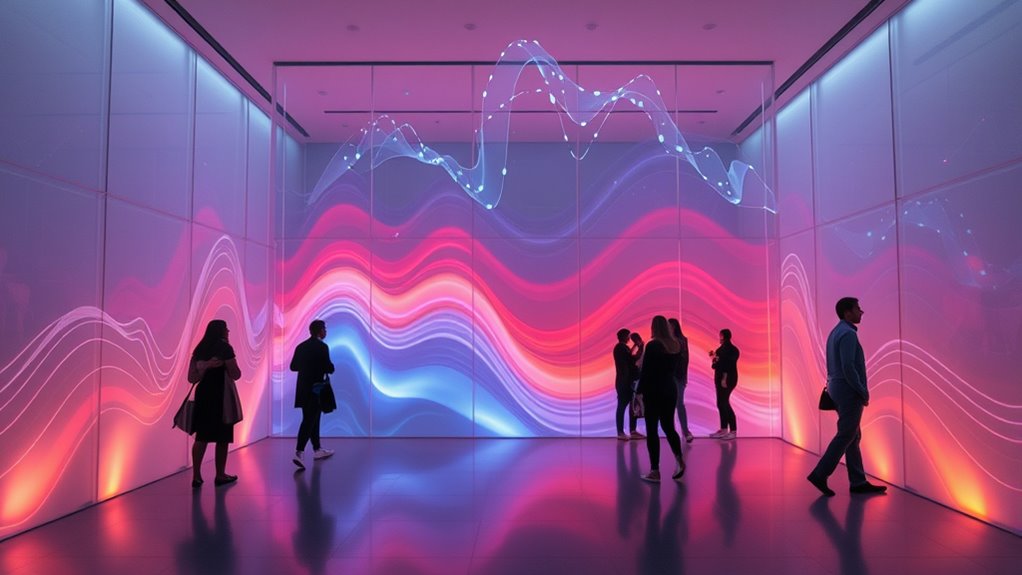
Have you ever imagined shaping solid objects with only sound waves? In the emerging field of sonic art installations, this idea is becoming a reality. Artists and scientists are now exploring how sound can do more than just fill a space; it can actively manipulate the environment around you. Central to this innovation is the concept of interactive amplification, where sound systems respond to your presence, movements, or even your thoughts, creating a dynamic dialogue between the observer and the artwork. This technology allows for real-time adjustments, making each experience unique and personalized. When combined with advanced understanding of spatial acoustics, sonic installations can craft immersive environments that seem to defy physical boundaries. Spatial acoustics, the science of controlling how sound propagates in a space, enables creators to design environments where sound waves are precisely directed and amplified to sculpt the space itself. Imagine walking into a room where your voice or movement triggers a cascade of carefully tuned sounds, shaping the atmosphere and even the perceived form of the space around you. These installations often employ arrays of speakers that work together to produce complex, three-dimensional sound fields, giving the illusion that sound is emanating from specific points or even forming tangible shapes. Through interactive amplification, the sound doesn’t just fill the space; it molds it, responding to your actions and transforming the environment in real time. This approach opens up endless possibilities for artists to craft multisensory experiences that challenge your perception of space and matter. The precise control of spatial acoustics allows for the creation of illusions where sound appears to hover, ripple, or solidify, giving the impression that you’re sculpting with intangible material. These sonic sculptures can evoke emotional responses or provoke thought by immersing you in environments that are both visual and auditory. As technology advances, the line between sound and physical matter blurs further. You might find yourself in a space where the walls seem to breathe with sound, or where your footsteps generate waves that shape the entire environment. This fusion of interactive amplification and spatial acoustics not only pushes the boundaries of traditional art but also invites you to reconsider how sound influences perception. Understanding spatial acoustics is key to unlocking these innovative experiences, as it allows creators to manipulate sound in ways that mimic physical sculpting. Moreover, the development of adaptive sound systems can further enhance the responsiveness and realism of these installations. Additionally, the integration of home improvement principles can inspire more accessible and adaptable sonic environments for diverse settings. Exploring sound wave manipulation techniques can expand the horizons of what’s possible in creating immersive environments. Incorporating person-centered design principles can help tailor these experiences to individual perceptions and needs. Ultimately, sculpting with sound transforms passive listening into an active, participatory experience—where your presence truly shapes the environment, making each encounter with sonic art a one-of-a-kind journey.
Top picks for "sculpt sound emerg"
Open Amazon search results for this keyword.
As an affiliate, we earn on qualifying purchases.
Frequently Asked Questions
How Do Artists Choose Sounds for Their Installations?
When choosing sounds for your installation, you consider how sound symbolism influences perception and the emotions it evokes. You also factor in cultural influences, ensuring the sounds resonate with your audience’s backgrounds and experiences. You might select natural, familiar, or abstract sounds to create a specific atmosphere. By blending these elements, you craft an immersive experience that communicates your artistic message effectively, engaging viewers on both emotional and cultural levels.
What Equipment Is Essential for Creating Sonic Art Installations?
They say “you are only as good as your tools,” so for sonic art installations, you need vital equipment like soundproofing techniques to prevent sound bleed and guarantee clarity. Amplification systems are indispensable for projecting sounds effectively throughout the space. Additionally, quality speakers, audio interfaces, and mixing consoles help you shape and control your sounds precisely, creating immersive experiences that captivate your audience and bring your sonic vision to life.
How Do Viewers Typically Experience These Soundscapes?
You experience these soundscapes through audience immersion, where sound surrounds you, creating an enveloping environment. As you move through the space, your emotional response deepens, influenced by the textures and rhythms of the sound. Typically, you feel transported, as the art engages your senses and imagination, making the experience personal and memorable. This immersive approach heightens your connection to the installation, evoking feelings and insights unique to your journey.
Are There Health Considerations When Engaging With Loud or Immersive Sound?
Imagine standing near a rushing river; the sound is powerful yet natural. Similarly, loud or immersive sound in art can impact your hearing safety and psychological well-being. To enjoy safely, limit exposure to high volumes and duration. Be mindful of your comfort, and take breaks if needed. Protecting your hearing safety guarantees the experience remains inspiring without risking lasting damage or negative psychological effects.
How Is Interactivity Incorporated Into Sonic Art Installations?
You engage with sonic art installations through audience participation, which makes the experience more personal and dynamic. Interactivity is incorporated by allowing you to influence sounds or visuals via movement, touch, or sound input, creating immersive environments. This active involvement transforms passive observation into a hands-on experience, blurring the line between creator and viewer, and making the sonic landscape evolve based on your actions.
Conclusion
As you explore sonic art installations, remember they’re like living sculptures made of sound, constantly shifting and evolving around you. This emerging field invites you to experience art in a new way—where your senses become the tools of creation. By immersing yourself, you’ll discover a world where sound shapes space, just like a sculptor molds clay. Embrace this innovative art form, and let your own voice and presence become part of the masterpiece.