
VR and AR exhibitions create immersive art experiences that transform how you engage with creative works. These technologies allow you to explore dynamic virtual environments, manipulate objects, and participate interactively beyond traditional gallery limits. You can access art from anywhere using devices like VR headsets or smartphones, making art more accessible and personal. If you’re curious about how these innovations are redefining exhibitions, there’s more to discover on how immersive art is shaping the future.
Key Takeaways
- VR and AR transform traditional exhibitions into immersive, interactive environments that deepen audience engagement with art.
- Virtual spaces enable unique spatial design, allowing personalized navigation and emotional connection beyond physical limitations.
- Users can manipulate objects, trigger animations, or contribute to artworks, fostering collaborative and dynamic experiences.
- Accessible via VR headsets and smartphones, virtual exhibitions remove geographic and environmental barriers.
- Integrating immersive technologies enhances art engagement, expands creative possibilities, and reduces the environmental impact of physical exhibitions.

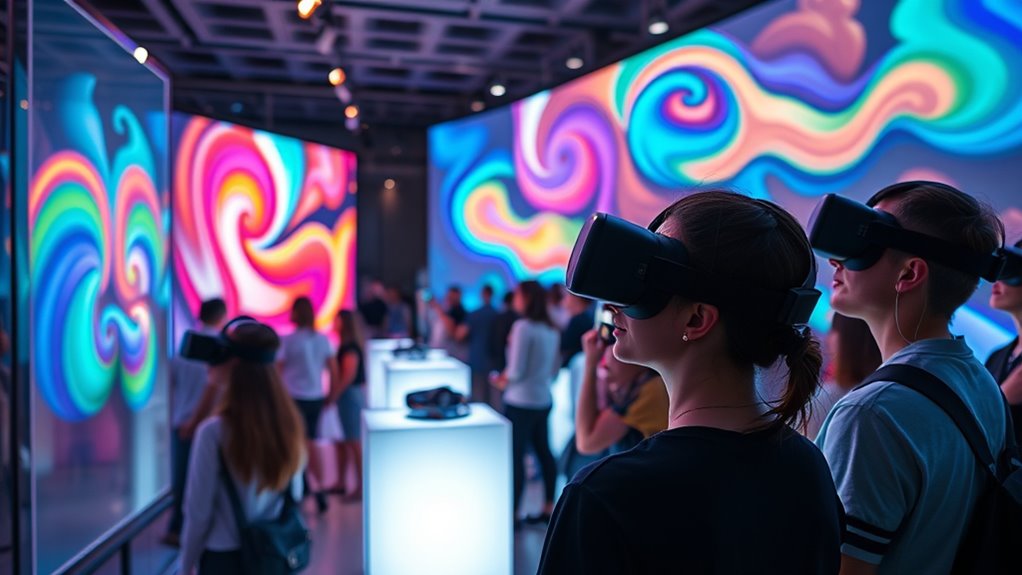
Have you ever wondered how virtual reality (VR) and augmented reality (AR) are transforming the way we experience exhibitions? These technologies are reshaping the traditional gallery experience, offering immersive environments that invite you to engage more deeply with art and exhibits. With virtual interaction playing a central role, you’re no longer just a passive observer but an active participant in the creative process. When you put on a VR headset or use AR-enabled devices, you step into a carefully crafted digital space where your movements and choices influence what you see and experience.
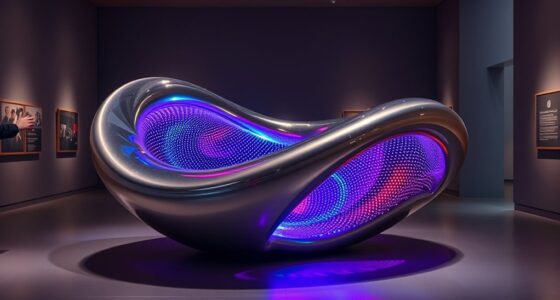
In these virtual environments, spatial design becomes essential. Artists and curators harness VR and AR to manipulate space in ways that physical exhibitions simply can’t. You might find yourself walking through a digital reconstruction of ancient cities, floating through surreal landscapes, or exploring detailed 3D models of sculptures from every angle. The spatial design in these virtual exhibitions is intentional, guiding your journey and framing your interaction with each piece. It allows for a level of intimacy and personalization that enhances your understanding and emotional connection to the artwork.
Virtual interaction in VR and AR exhibitions isn’t just about observing; it’s about engaging. You can manipulate objects, trigger animations, or even contribute to the artwork itself. For instance, in a VR art piece, your movements might change the lighting or reveal hidden details, making you feel like a collaborator rather than an outsider. AR adds another layer by overlaying digital elements onto the physical world, giving you a mixed reality experience. You could point your phone at a painting and see additional layers of information, animations, or contextual stories unfold around it.
This heightened level of interaction is redefining what exhibitions can be. It removes the physical constraints of traditional galleries, allowing for expansive, dynamic environments that can be accessed from anywhere. Whether you’re exploring a virtual museum on your living room couch or attending a live AR event in a city square, the immersive nature of VR and AR amplifies your engagement. You’re no longer just a viewer; you’re immersed in a three-dimensional space designed to spark curiosity and foster a deeper understanding of the art. Additionally, incorporating sustainable technology in virtual exhibitions can reduce the environmental impact of traditional gallery operations, making art experiences more eco-friendly.
Virtual galleries break boundaries, offering immersive, accessible experiences that deepen engagement with art from anywhere.
In essence, VR and AR are expanding the boundaries of exhibitions by integrating virtual interaction and inventive spatial design. They make art more accessible, interactive, and enthralling, transforming the way you connect with creative works and opening up new possibilities for artists and audiences alike.
Top picks for "exhibition immersive experiencesartmarketexpert"
Open Amazon search results for this keyword.
As an affiliate, we earn on qualifying purchases.
Frequently Asked Questions
How Do VR and AR Exhibitions Impact Traditional ARt Sales?
VR and AR exhibitions can boost traditional art sales by creating virtual galleries that reach a wider audience. These experiences allow you to explore and appreciate art remotely, increasing interest and demand. They also establish digital provenance, ensuring authenticity and transparency. As a result, artists and collectors benefit from enhanced exposure, while buyers feel more confident purchasing art, ultimately strengthening the connection between digital and physical art markets.
What Safety Measures Are Recommended for Vr/Ar Exhibition Visitors?
Did you know over 80% of VR/AR visitors feel safer with proper safety measures? To guarantee your safety, follow hygiene protocols like sanitizing headsets and handrails, and adhere to clear emergency procedures. Always listen to staff instructions, avoid quick movements to prevent injuries, and report any discomfort immediately. These steps help create a secure environment so you can fully enjoy the immersive experience without worries.
How Accessible ARe VR and AR ARt Experiences for Disabled Audiences?
You may face accessibility barriers when engaging with VR and AR art experiences, but many creators are working to improve inclusivity. Assistive technologies like audio descriptions, haptic feedback, and adjustable interfaces help make these experiences more approachable for disabled audiences. While progress is ongoing, it’s important to check each exhibit’s accessibility features beforehand and advocate for more inclusive design to ensure everyone can enjoy immersive art.
What Are the Costs Associated With Creating Immersive Art Exhibitions?
Imagine a blank canvas versus a vibrant mural—creating immersive art exhibitions involves significant costs. You’ll need a thorough cost analysis to balance expenses like technology investments—VR headsets, AR devices, and software development—with other costs like space and staffing. While initial investments can be high, strategic planning helps manage these costs, ensuring your innovative exhibit captures attention without overspending.
How Do ARtists Protect Their Digital Works in VR and AR Spaces?
You can protect your digital works in VR and AR spaces by securing digital copyright and establishing virtual ownership rights. Register your artwork with copyright authorities and include clear licensing terms to prevent unauthorized use. Using blockchain technology can also help verify ownership and authenticity, making it easier to defend your rights. Regularly monitor platforms for infringement, and consider legal action if someone copies or misuses your immersive art.
Conclusion
As you step into the evolving world of VR and AR exhibitions, you’re invited to embrace new dimensions of artistry. These immersive experiences gently hint at a future where boundaries blur, and perceptions shift subtly. While the journey may seem unfamiliar at first, it’s an opportunity to discover hidden depths within yourself and the art around you. Sometimes, the most profound connections come when you’re willing to see beyond the surface and explore what lies beneath.