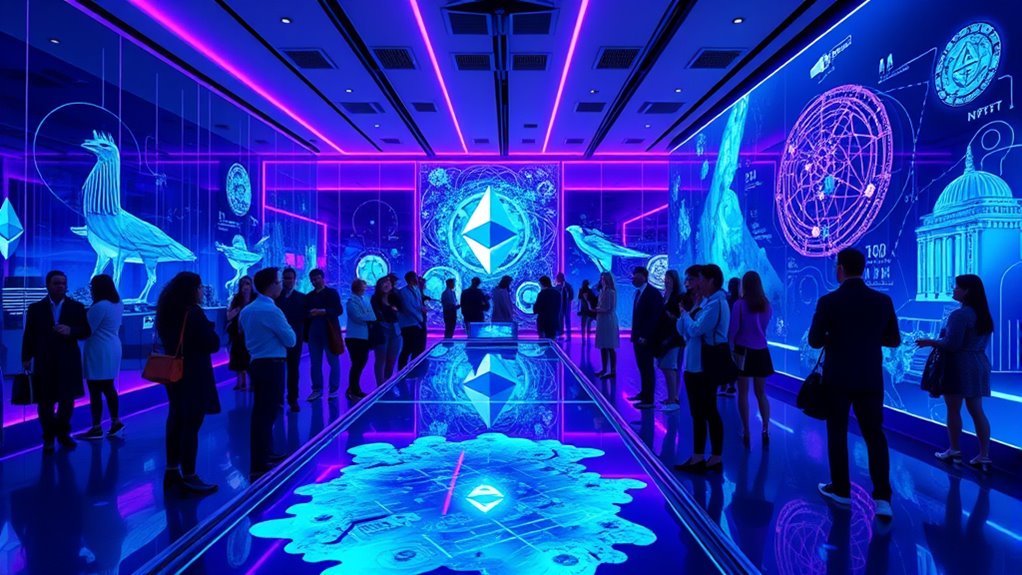
Web3 and decentralized art platforms use blockchain technology to give you more transparency, control, and fair compensation in the digital art world. As an artist or collector, you can interact on platforms that record ownership securely and enable automatic royalties on resales. This reduces fraud and connects you directly with creators globally. To discover how these innovations keep pushing the art community forward, explore further to see what’s next.
Key Takeaways
- Web3 enables artists and collectors to interact on decentralized platforms, ensuring transparent ownership and authentication of digital art.
- Smart contracts automate royalties, allowing artists to earn from secondary sales without intermediaries.
- Blockchain records provide a traceable history of artwork ownership, reducing fraud and counterfeit risks.
- Decentralized platforms foster global community engagement, supporting direct artist-collector interactions and early talent discovery.
- Environmental initiatives in Web3 promote eco-friendly blockchain solutions, ensuring sustainable digital art ecosystems.
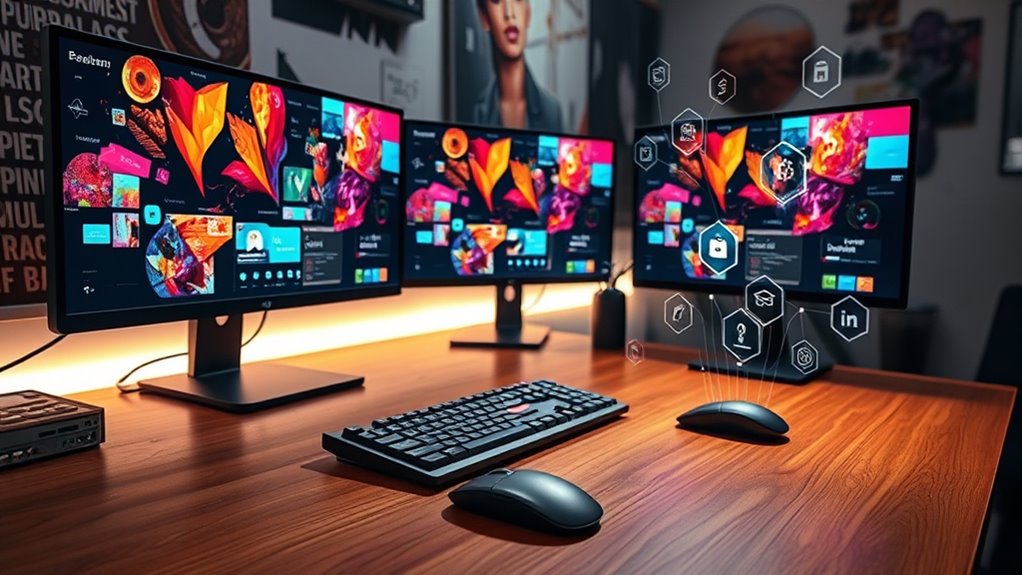
Web3 has revolutionized how artists and collectors interact with digital art by enabling decentralized platforms that put more control in creators’ hands. Instead of relying on traditional galleries or online marketplaces controlled by centralized entities, you now have direct access to blockchain-powered platforms where NFT ownership is transparent and secure. When you purchase a digital artwork as an NFT, you’re not just buying an image; you’re acquiring a unique token recorded on the blockchain that proves your ownership and authenticity. This decentralization means you can verify ownership with confidence, knowing that no one can manipulate or duplicate the original piece easily.
One of the most significant advantages of Web3 for artists is the implementation of blockchain royalties. When you buy or sell an NFT on a decentralized platform, smart contracts automatically enforce royalty payments to creators every time the artwork is resold. This feature ensures that artists continue to benefit financially from their work, even after the initial sale, fostering a more equitable ecosystem. If you’re an artist, this means you can set a percentage for royalties, and every subsequent transaction will trigger automatic payments, removing the need for intermediaries or manual processes. As a collector, you get reassurance that the artist is rewarded fairly for their creations, which encourages ongoing innovation and quality in the digital art space.
This setup also grants you more transparency and control over your digital assets. Because NFTs are recorded on a blockchain, you can trace the entire history of an artwork — from creation to current ownership — with ease. This transparency reduces the risk of fraud and counterfeit, which has long plagued the art world. Additionally, the decentralized nature of these platforms means you’re not bound by geographical or institutional restrictions. You can browse, buy, and sell art from anywhere, directly engaging with artists and other collectors without middlemen taking hefty commissions.
Furthermore, the integration of blockchain technology fosters a community-oriented environment where creators and collectors can interact more directly. Artists can showcase their work to a global audience, receiving immediate feedback and support. Collectors can discover emerging talents early, investing in pieces they genuinely believe in. This democratization of the art world is a core benefit of Web3, empowering everyone involved.
A growing number of decentralized platforms are also exploring environmentally sustainable blockchain solutions to address concerns about energy consumption and ecological impact, making participation more responsible and eco-friendly.
In short, Web3’s decentralized art platforms redefine ownership and royalty mechanisms, making the digital art market more transparent, equitable, and accessible. As you navigate this space, you’ll see that the combination of NFT ownership and blockchain royalties creates a fairer environment that benefits both artists and collectors, fostering a vibrant, innovative digital art community.
Top picks for "web3 decentraliz platform"
Open Amazon search results for this keyword.
As an affiliate, we earn on qualifying purchases.
Frequently Asked Questions
How Do Decentralized Art Platforms Verify Artwork Authenticity?
You verify artwork authenticity on decentralized platforms through digital signatures and blockchain timestamps. When an artist uploads their work, they sign it with a unique digital signature, proving ownership. The platform records a timestamp on the blockchain, creating an immutable record of the upload date. This combination guarantees the artwork’s origin and authenticity are securely stored and easily verifiable, giving you confidence in its provenance and legitimacy.
What Are the Main Security Risks for Artists on Web3 Platforms?
You face significant security risks on Web3 platforms, with nearly 40% of artists experiencing digital theft or scams. These platforms are vulnerable to scam vulnerabilities like phishing attacks and fake listings. To protect yourself, use strong, unique passwords, enable two-factor authentication, and verify platform legitimacy before sharing artwork or personal info. Staying vigilant helps prevent digital theft and reduces your chances of falling victim to scam vulnerabilities.
How Can Artists Monetize Their Work Beyond Sales?
You can monetize your work beyond sales by exploring NFT collaborations, which allow you to partner with brands or other artists for unique projects. Additionally, consider digital art licensing, where you grant permission for your work to be used in various media in exchange for royalties. These strategies help you generate ongoing income, increase exposure, and build your reputation in the digital art space.
Are There Environmental Concerns With Blockchain-Based Art Platforms?
Think of blockchain-based art platforms like a double-edged sword—while they revolutionize how you showcase your work, they also raise environmental concerns. The energy consumption involved is significant, often comparable to small countries, leading to e-waste concerns from outdated hardware. You should stay informed about greener blockchain initiatives and choose platforms that prioritize sustainability, helping reduce the environmental footprint of digital art.
How Does Copyright and Intellectual Property Work in Web3 Art?
You have digital ownership of your Web3 art, which means your rights are secured on the blockchain. Licensing frameworks help define how others can use your artwork, whether for reproduction, display, or commercial purposes. You can specify these rights in smart contracts, ensuring your copyright is protected and enforceable. This setup gives you control, transparency, and clear legal boundaries for your intellectual property in the evolving digital art landscape.
Conclusion
As you explore Web3 and decentralized art platforms, you’ll find a revolution in how artists connect with audiences. Did you know that over 80% of digital art sales now happen through blockchain-based marketplaces? This shift empowers creators with more control and transparency. Embracing these platforms means you’re part of a movement that democratizes art, making it more accessible and fair. So, immerse yourself and experience the future of art firsthand!