In Frida Kahlo’s self-portraits, she uses symbols and personal objects to express her identity, emotional struggles, and cultural pride. Things like her unibrow and indigenous attire reject Western beauty standards and celebrate her Mexican roots. Symbols such as thorn necklaces, flowers, and animals reveal pain, hope, or resilience. Each element layers meaning, connecting her personal experiences to broader cultural themes. Exploring these symbols helps you understand how Kahlo’s self-portraits tell powerful stories of self and heritage.
Key Takeaways
- Kahlo uses symbols like animals, flowers, and thorns to express personal pain, resilience, and emotional states.
- Her unibrow and indigenous motifs challenge Western beauty standards and celebrate Mexican cultural identity.
- Traditional clothing and folk art elements reflect her pride in Mexican heritage and cultural roots.
- Layered symbols in her self-portraits create complex narratives linking personal experiences to collective history.
- Visual iconography serves as a language conveying inner struggles, cultural pride, and themes of identity and resistance.
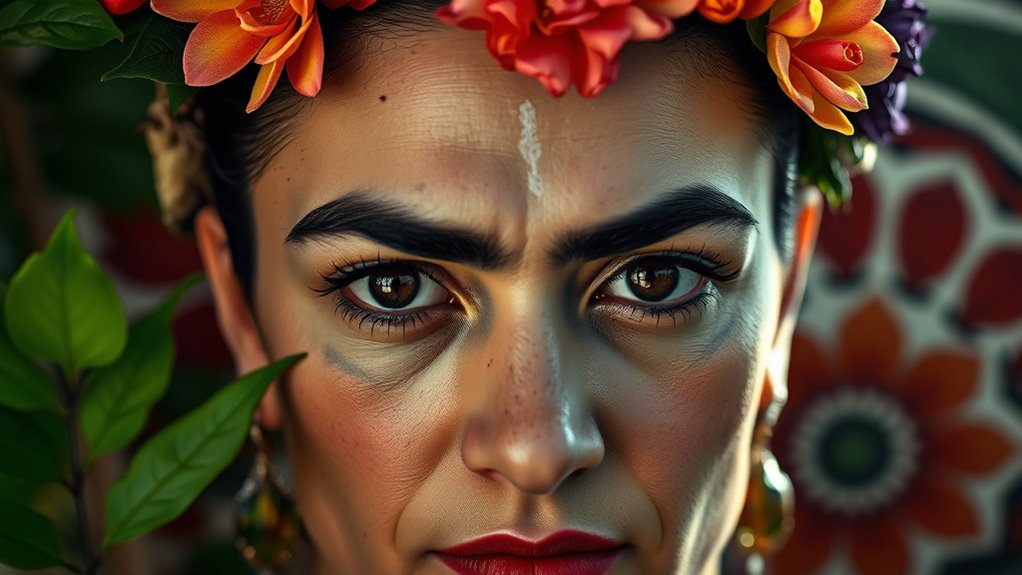
Frida Kahlo’s self-portraits are much more than simple depictions of her likeness; they are visual narratives filled with powerful symbols that reveal her inner struggles, cultural identity, and personal history. As you observe her work, you notice how she employs personal iconography—specific symbols, objects, and motifs that carry deep, individualized meaning. These symbols aren’t random; they act as a visual language through which Kahlo communicates her pain, resilience, and identity. For example, she frequently includes items like unibrows, traditional Mexican clothing, or monkeys, each carrying cultural references that connect her to her Mexican heritage and personal experiences. The unibrow, for instance, symbolizes her rejection of Western beauty standards and a celebration of her indigenous roots. Traditional Mexican garments, vibrant and richly decorated, serve as markers of cultural pride, emphasizing her connection to her homeland and its traditions.
Kahlo’s use of cultural references extends beyond clothing. She incorporates Mexican folk art elements, religious symbols like Christian iconography, and references to Mexican history, blending them seamlessly into her self-portraits. This layering of cultural symbols allows you to see her as a bridge between personal and collective identity. Her paintings become a tapestry of cultural expression, where each element is carefully chosen to evoke a sense of belonging, resistance, or reflection. She often includes symbols like thorns, flowers, or animals, each representing different facets of her emotional state or personal narrative. For example, the thorn necklace in “Self-Portrait with Thorn Necklace and Hummingbird” symbolizes pain and suffering, while the hummingbird can symbolize hope or life.
Top picks for "decod symbolism frida"
Open Amazon search results for this keyword.
As an affiliate, we earn on qualifying purchases.
Frequently Asked Questions
How Did Kahlo’S Personal Life Influence Her Symbolism?
Your personal struggles deeply influence Kahlo’s symbolism, shaping her emotional expression in her art. Her physical pain, caused by health issues and accidents, becomes a recurring theme, represented through broken or distorted imagery. Emotional turmoil from her complex relationships also fuels her work, making her self-portraits powerful reflections of her inner life. By channeling her suffering into her art, she creates symbols that reveal her resilience and vulnerability.
Are There Cultural Symbols Unique to Mexican Tradition in Her Work?
Think of Kahlo’s work as a vibrant tapestry woven with Mexican culture. You’ll notice unique symbols rooted in Mexican folk art and indigenous motifs, like the Tehuana costumes and skulls, that make her paintings resonate with local tradition. These elements serve as a bridge to her roots, making her self-portraits a celebration of Mexican identity while capturing personal and cultural stories that speak directly to your heart.
What Role Does Political Activism Play in Her Self-Portraits?
You see, political activism plays a crucial role in Kahlo’s self-portraits by serving as a form of political commentary and advocating for social justice. She uses her art to highlight issues like gender inequality, indigenous rights, and Mexican identity. Through her vivid imagery, she challenges societal norms and expresses her personal and political beliefs, making her self-portraits powerful tools for raising awareness and inspiring change.
How Did Kahlo’S Health Issues Shape Her Artistic Symbolism?
You see how Kahlo’s health issues deeply influenced her art through medical symbolism and emotional expression. Her chronic pain and injuries are reflected in her self-portraits with medical objects, scars, and prosthetics, revealing her resilience and vulnerability. These symbols convey her emotional struggles, making her work intensely personal. Her art becomes a powerful visual narrative of her suffering, transforming physical pain into profound emotional expression.
Can Viewers Interpret Her Symbols Without Prior Art Knowledge?
Did you know that 70% of art viewers can interpret basic symbols without formal training? When it comes to Kahlo’s self-portraits, your visual literacy and symbol recognition play a big role. You don’t need prior art knowledge to grasp her themes—many symbols are culturally universal or visually striking. By focusing on her use of color and familiar imagery, you can appreciate her personal stories without being an expert.
Conclusion
As you interpret Frida Kahlo’s self-portraits, you realize her vibrant colors and striking symbols contrast with her personal pain and suffering. Her artwork becomes a mirror, reflecting both her resilience and vulnerability. You see that beneath the bold imagery lies a quiet story of struggle and strength. In understanding her symbolism, you connect more deeply to her journey—finding beauty in pain and hope amid hardship, just like life itself, beautifully complex and full of surprises.