
TL;DR

Get art and craft supplies delivered free — and shop member deals
- Fast, free delivery on millions of items
- Access to Prime Big Deal Days deals on October 6–7
- Prime Video, Amazon Music and more included
Camilo Huinca, known as ONLYJOKE, unveils a collection of sculptural wooden chairs that incorporate personal memories and literary themes. The pieces serve as autobiographical narratives, blending craft with storytelling.
Chilean artist and designer Camilo Huinca, also known as ONLYJOKE, has launched a collection of sculptural wooden chairs that visually encode personal memories and literary influences, transforming everyday furniture into autobiographical storytelling objects.
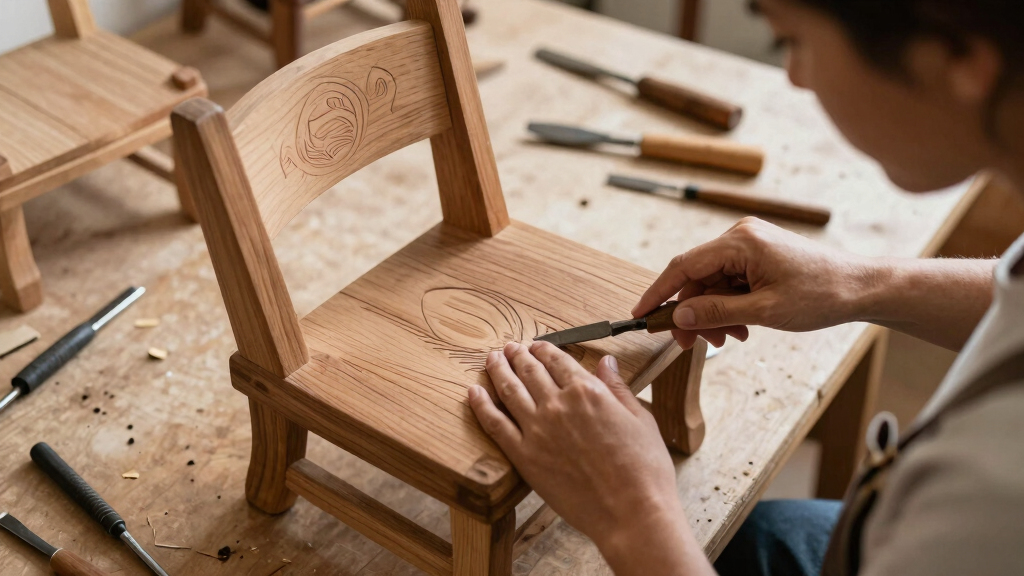
Huinca’s collection features chairs carved with faces, figures, and symbols that reflect childhood, labor, rural life, and emotional resilience. Each piece incorporates carved timber, painted details, and embedded photographs, creating narrative structures that explore themes such as identity, place, and endurance. Notable works include Palma Sucia, which references manual labor and physical marks left by work, and Monólogo al origen, inspired by Rainer Maria Rilke’s reflections on childhood as a fundamental human experience. The chairs serve as both functional objects and personal archives, with the carving marks and layered materials emphasizing the handmade, autobiographical character of each piece.
Why Personal Histories Embedded in Furniture Matter
Huinca’s work exemplifies how furniture can transcend utility to become vessels of memory and identity. By embedding personal and literary narratives into sculptural chairs, he elevates everyday objects into art that fosters reflection on individual histories, cultural roots, and resilience. This approach highlights the potential of craft and storytelling to deepen emotional connections with objects, influencing contemporary design and art practices that prioritize personal expression and cultural memory.
sculptural wooden chair with carved details
As an affiliate, we earn on qualifying purchases.
As an affiliate, we earn on qualifying purchases.
Background on Camilo Huinca’s Artistic Approach
Camilo Huinca, active as ONLYJOKE, has been blending illustration, sculpture, and design with autobiographical storytelling. His recent collection builds on previous explorations of personal mythology, rural life, and literary influences, notably drawing inspiration from poets like Gonzalo Millán and Rainer Maria Rilke. The collection, unveiled in July 2025, continues Huinca’s tradition of transforming functional objects into narrative art, emphasizing craftsmanship and emotional depth. His work aligns with contemporary movements that see furniture as a form of personal expression and cultural documentation.
“Huinca’s chairs serve as autobiographical portraits, where carving, painting, and embedded symbols turn furniture into storytelling devices.”
— an anonymous researcher
personalized handcrafted wooden furniture
As an affiliate, we earn on qualifying purchases.
As an affiliate, we earn on qualifying purchases.
Unclear Aspects of the Collection’s Broader Impact
It is not yet confirmed how widely Huinca’s approach will influence other artists or designers, or whether these pieces will be exhibited publicly beyond initial presentations. Details about the full scope of the collection’s reception and its integration into broader art or design contexts remain unclear.
As an affiliate, we earn on qualifying purchases.
Future Exhibitions and Developments for Huinca’s Work
Huinca is expected to showcase more of his sculptural chairs in upcoming exhibitions, potentially exploring new themes and expanding his narrative vocabulary. Further insights into how audiences and critics respond to his autobiographical approach are anticipated, alongside possible collaborations or commissions that incorporate this storytelling methodology into larger projects.
literary inspired wooden furniture
As an affiliate, we earn on qualifying purchases.
As an affiliate, we earn on qualifying purchases.
Key Questions
What inspired Camilo Huinca to create these sculptural chairs?
Huinca’s work is inspired by his personal experiences, literary influences, and a desire to transform everyday furniture into narrative objects that reflect identity, memory, and resilience.
Are these chairs functional or purely artistic?
While designed as functional furniture, these chairs primarily serve as sculptural and narrative art pieces, emphasizing their autobiographical and symbolic significance.
Will these chairs be exhibited publicly?
Yes, Huinca has announced plans to showcase more pieces in upcoming exhibitions, though details about specific venues and dates are still to be confirmed.
What materials does Huinca use in his chairs?
He primarily uses carved timber, often painted and layered with embedded photographs and symbolic details to enhance the storytelling aspect.
How does Huinca’s work compare to traditional furniture design?
Unlike conventional furniture, Huinca’s pieces prioritize narrative and emotional expression over practicality, blending art, craft, and storytelling in each object.
Source: designboom
Halloween Picks
halloween
As an affiliate, we earn on qualifying purchases.