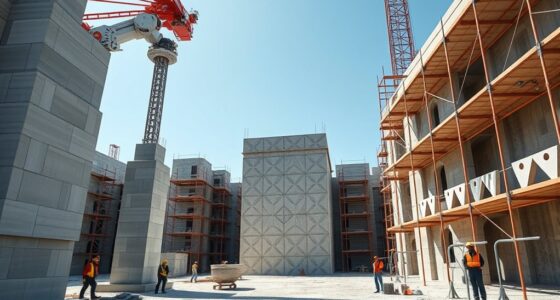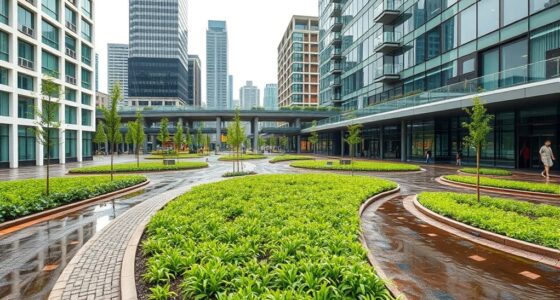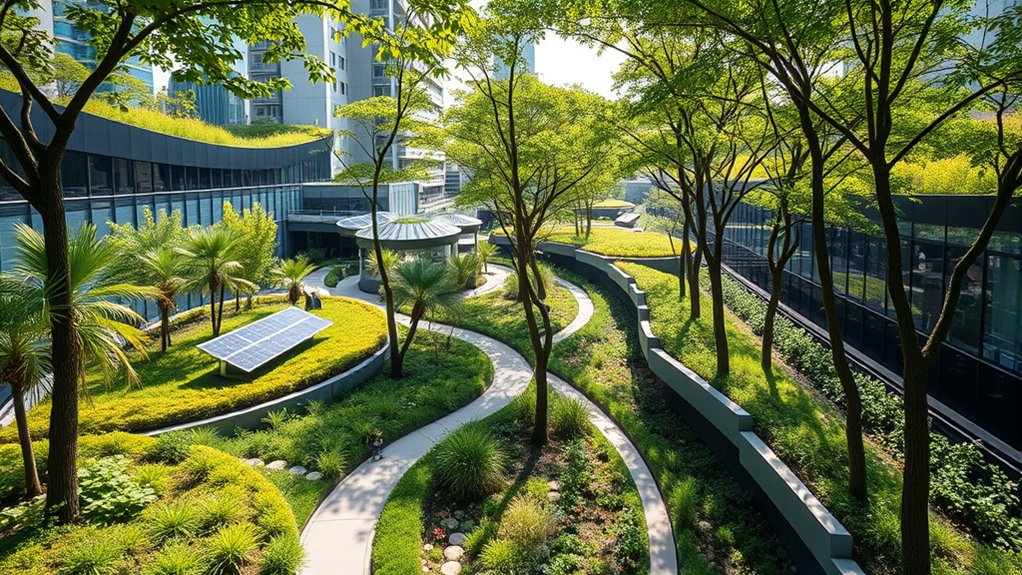

Green infrastructure and ecological urban planning help you turn cities into sustainable, resilient places by integrating natural systems into design. You can create green spaces like parks, rain gardens, and green roofs that improve biodiversity, combat urban heat, and reduce flooding. These strategies support healthy ecosystems and enhance residents’ well-being. By applying these approaches, you guarantee urban growth respects nature’s needs. Keep exploring to discover how these practices can transform your community into a thriving, balanced environment.
Key Takeaways
- Green infrastructure integrates natural systems into urban planning to enhance sustainability and resilience against climate challenges.
- Biodiversity corridors connect green spaces, supporting wildlife migration, ecological health, and urban ecosystem stability.
- Incorporating green elements like trees, green roofs, and rain gardens reduces urban heat islands and manages stormwater.
- Community-accessible green spaces promote health, recreation, social interaction, and mental well-being.
- Strategic natural system integration in urban design preserves biodiversity and enhances city resilience to future environmental stresses.
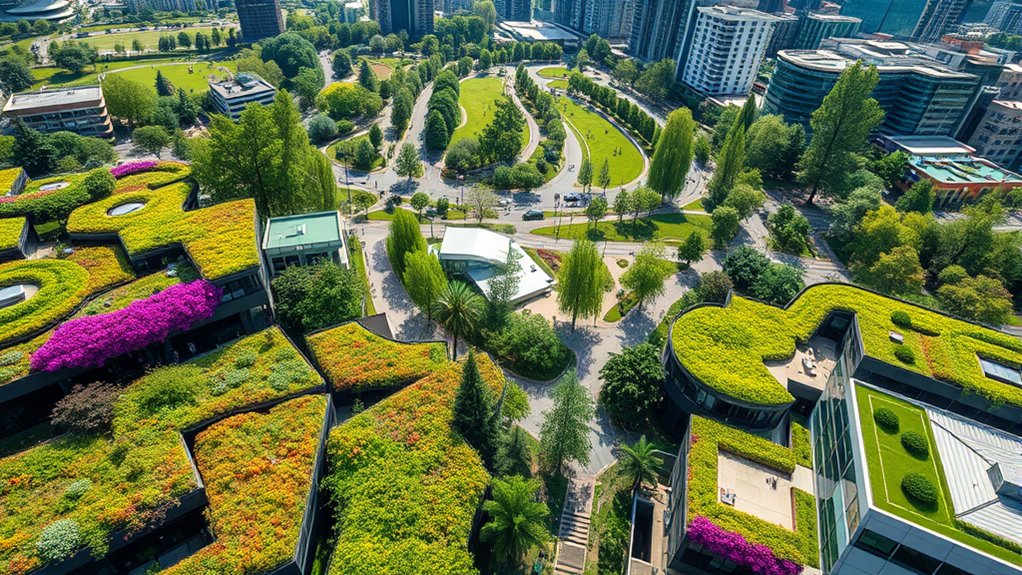
Green infrastructure is transforming urban landscapes by integrating natural systems into city planning, making cities more sustainable and resilient. As you explore this approach, you’ll see how it enhances urban resilience—your city’s ability to withstand and recover from challenges like climate change, flooding, and heatwaves. By weaving green spaces into the urban fabric, you create a network that supports both ecological health and human well-being. One of the key strategies in this effort is establishing biodiversity corridors—continuous strips of natural habitat that connect parks, wetlands, forests, and other green spaces. These corridors serve as essential pathways for wildlife, allowing species to migrate, breed, and find food, even amid dense urban development. As you incorporate biodiversity corridors into city planning, you’re not just protecting local ecosystems; you’re also fostering a more resilient urban environment capable of adapting to environmental stresses.
Imagine walking through a city where natural elements like trees, rain gardens, and green roofs are seamlessly integrated into buildings and streetscapes. These features do more than beautify; they tackle urban heat islands by providing shade and cooling, absorb rainwater to reduce flooding, and improve air quality. When you prioritize green infrastructure, you’re actively reducing the city’s vulnerability to extreme weather events. It’s about designing spaces that work with nature, not against it, so that your city can bounce back quickly from disruptions. Biodiversity corridors play an indispensable role here—they connect isolated green patches, creating a continuous habitat that supports a wide range of species. This interconnectedness enhances ecological stability, ensuring that ecosystems remain functional and resilient over time. Incorporating native plant species into these corridors can further boost their effectiveness by supporting local wildlife and reducing maintenance needs.
Furthermore, green infrastructure fosters community engagement and health. When you include parks, community gardens, and greenways, you offer residents accessible spaces for recreation, socializing, and relaxation. These areas also help mitigate pollution and improve mental health, contributing to a more vibrant urban life. As cities grow denser, these natural networks become even more essential—they serve as ecological lifelines that preserve biodiversity and ensure sustainable development. By advocating for policies that prioritize green infrastructure and biodiversity corridors, you help shape resilient cities that can face future environmental challenges with strength and adaptability. Ultimately, integrating natural systems into urban planning isn’t just an aesthetic choice; it’s a strategic move toward creating sustainable, resilient communities where both people and nature can thrive.

6 x 10 ft Greenhouse, Greenhouses for Outside, Polycarbonate Greenhouse with Aluminum Frame, Lockable Door and Ajustable Roof Vent for Backyard, Green Houses for Outside Garden Backyard, Patio
【Effortless Assembly】Create your beautiful gardening space quickly with our greenhouse kit. The package comes with a clear instruction…
As an affiliate, we earn on qualifying purchases.
As an affiliate, we earn on qualifying purchases.
Frequently Asked Questions
How Cost-Effective Is Green Infrastructure Compared to Traditional Urban Development?
Green infrastructure is often more cost-effective than traditional urban development when you consider the full cost analysis. You’ll see significant economic benefits through reduced stormwater management expenses, lower energy costs, and improved public health. Although initial investments might be higher, the long-term savings and environmental advantages outweigh these costs. Overall, embracing green infrastructure offers a smarter, more sustainable choice for your city’s growth and resilience.
What Are the Best Practices for Integrating Ecological Planning in Existing Cities?
To effectively integrate ecological planning in existing cities, you should prioritize urban greening initiatives like planting trees and creating green rooftops. Develop ecological corridors that connect parks and natural areas, enhancing biodiversity and movement. Engage local communities to support these efforts, ensuring projects are sustainable and well-maintained. Combining these strategies allows you to improve urban resilience, air quality, and overall livability, seamlessly blending ecological functions into the cityscape.
How Does Green Infrastructure Impact Urban Heat Island Effects Long-Term?
Imagine city streets transformed into lush green corridors, where vegetation benefits create pockets of shade and moisture. Green infrastructure reduces the urban heat island effect by promoting urban cooling, which lowers temperatures over time. The widespread presence of trees and plants absorbs heat, reflects sunlight, and enhances air flow. Long-term, these strategies help cities stay cooler, improve air quality, and foster healthier urban environments for residents.
What Policies Support the Widespread Adoption of Ecological Urban Planning?
You can support widespread ecological urban planning by advocating for policy incentives that encourage green infrastructure projects and implementing zoning reforms that prioritize sustainable development. These policies motivate developers and city planners to incorporate ecological principles into new and existing urban spaces. By actively pushing for such reforms, you help create healthier, more resilient cities that effectively manage environmental challenges like urban heat islands and promote long-term sustainability.
How Can Communities Participate in Green Infrastructure Projects Effectively?
You can participate in green infrastructure projects by engaging in community meetings and workshops, sharing your ideas, and voicing your needs. Get involved in participatory planning processes to guarantee your perspectives shape the projects. Volunteer for local initiatives, collaborate with planners, and support policies promoting community-driven ecological urban planning. Your active involvement helps create sustainable, resilient spaces that reflect your community’s unique environmental and social needs.

Rain Bird LNDDRIPKIT Drip Irrigation Landscape/Garden Watering Kit with Drippers, Micro-Bubblers, Micro-Sprays
Comprehensive 108-piece kit for flower beds, gardens and landscaped areas; eliminates hand watering, saves time and money
As an affiliate, we earn on qualifying purchases.
As an affiliate, we earn on qualifying purchases.
Conclusion
Think of your city as a living, breathing organism—each green space and eco-friendly design act as its essential organs. By embracing green infrastructure and ecological planning, you’re giving your urban landscape a new heartbeat—one that sustains, heals, and thrives. Like tending a garden, your efforts nurture a resilient, vibrant city where nature and people grow in harmony. Together, you can cultivate a future where urban life blossoms alongside the earth.

Eco-Corridors and Wildlife Passages: Habitat Connectivity, Wildlife Movement, Biodiversity Preservation
As an affiliate, we earn on qualifying purchases.
As an affiliate, we earn on qualifying purchases.

Green: Simple Ideas for Small Outdoor Spaces
As an affiliate, we earn on qualifying purchases.
As an affiliate, we earn on qualifying purchases.