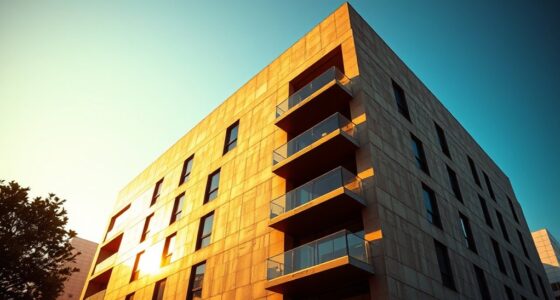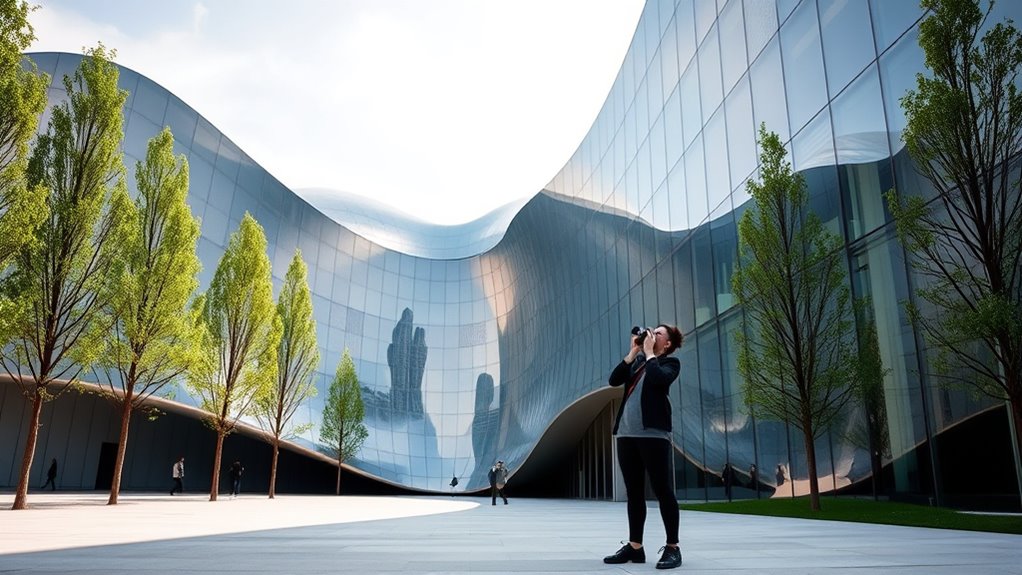

Museum architecture now turns the building itself into an interactive exhibit. You experience walls that respond to your movements and exhibits that change based on your interactions, making the space engaging and immersive. Sustainable materials, like reclaimed wood and eco-friendly concrete, enhance both the environment and the visitor experience. This innovative approach redefines what a museum can be, blending design, technology, and sustainability. Keep exploring to discover how these ideas shape the future of museum spaces.
Key Takeaways
- Interactive design elements transform the building into an engaging, participatory experience for visitors.
- Sustainable materials enhance both aesthetic appeal and environmental responsibility within museum architecture.
- Architecture integrates storytelling, making the building itself a dynamic exhibit that evolves with visitor interaction.
- Innovative construction techniques seamlessly blend form and function, elevating the building beyond traditional structures.
- The building embodies values of sustainability and innovation, actively contributing to cultural and environmental preservation.
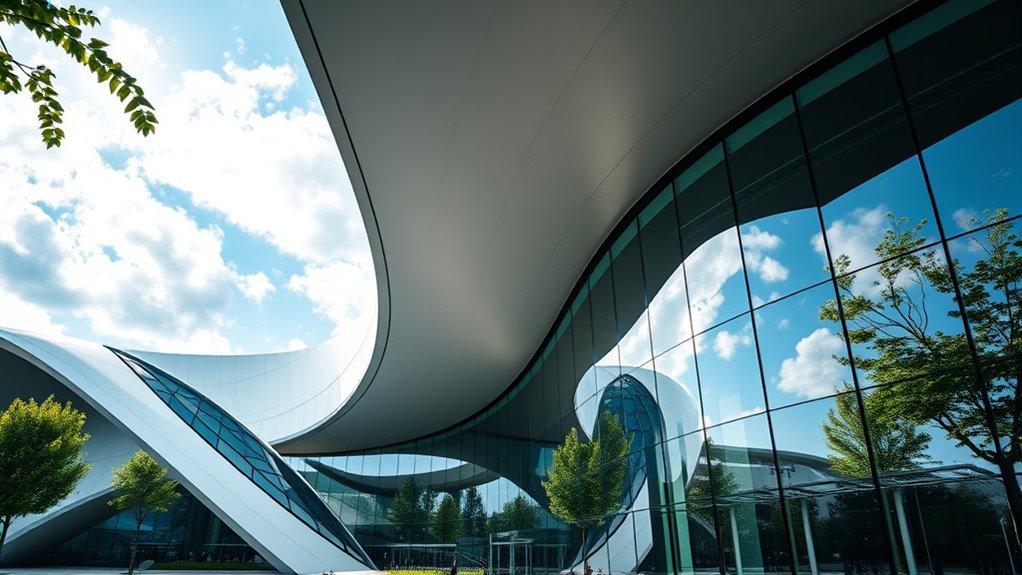
Have you ever wondered what makes a museum’s architecture truly stand out? It’s not just about creating a building that houses exhibits; it’s about designing a space that captivates visitors from the moment they arrive. Modern museum architecture often integrates interactive design elements, transforming passive observation into engaging experiences. Imagine walking through a gallery where walls respond to your movements or exhibits that change based on your interactions. These features draw you deeper into the story being told, making the architecture itself an active participant in the experience. This approach encourages visitors to explore more, fostering a sense of discovery that extends beyond the exhibits themselves.
Sustainable materials play an essential role in achieving this innovative architecture. When designing a museum, you’re not just thinking about aesthetics but also about environmental impact. Using sustainable materials like recycled steel, reclaimed wood, or eco-friendly concrete reduces the carbon footprint of construction and operation. These choices reflect a commitment to environmental responsibility, resonating with visitors who value eco-conscious practices. Plus, sustainable materials often enhance the tactile and visual appeal of a building, adding texture and warmth that make the space more inviting. Incorporating sustainable materials into the design ensures that the building ages gracefully while maintaining its integrity and purpose. Additionally, integrating energetic alignment principles can help optimize energy efficiency and create a harmonious environment within the space.
Incorporating interactive design and sustainable materials isn’t just a trend; it’s a way to reimagine what a museum can be. You want the architecture to serve as a bridge between the past and the future—respecting history while embracing innovation. These elements make a building more than just a container for artifacts; they turn it into an immersive environment that educates and inspires. The use of sustainable materials underscores a commitment to preserving the environment for future generations, echoing the museum’s role in safeguarding cultural and natural heritage. Meanwhile, interactive design creates dynamic spaces that adapt to the needs and curiosity of visitors, making each visit unique. Leveraging innovative construction techniques can further enhance the integration of these elements seamlessly into the architecture.
Ultimately, when a museum’s architecture combines interactive design with sustainable materials, it elevates the entire experience. The building becomes a living, breathing part of the story, inviting you to participate actively rather than passively observe. It’s a space that not only showcases history and art but also embodies the values of innovation, sustainability, and engagement. This approach guarantees that the architecture itself leaves a lasting impression—one that inspires visitors to think differently about museums, design, and the environment long after they’ve left the building.
Frequently Asked Questions
How Do Architects Balance Aesthetics and Functionality in Museum Design?
You balance aesthetics and functionality by carefully integrating lighting design and structural engineering into your museum. You guarantee the space is visually appealing while protecting exhibits with ideal lighting and unobtrusive support. You prioritize seamless design that enhances visitor experience without sacrificing structural integrity. By collaborating with specialists, you create a building that’s both beautiful and practical, making the architecture itself an engaging part of the exhibit.
What Sustainable Practices Are Common in Modern Museum Architecture?
You might think sustainable practices limit design creativity, but modern museums prove otherwise. They often incorporate green roofs to improve insulation and reduce heat, while solar shading minimizes energy use by controlling sunlight. These strategies not only lower environmental impact but also enhance visitor experience. Embracing such eco-friendly techniques shows that sustainability and innovative architecture go hand in hand, creating spaces that are both functional and inspiring.
How Do Museums Accommodate Accessibility for All Visitors?
You’ll find that museums prioritize accessibility by creating adaptive pathways that easily guide all visitors through exhibits. They use accessible signage with clear, simple visuals and text, making navigation straightforward. Many museums also install ramps, elevators, and tactile guides to accommodate different needs. By designing inclusive spaces, you can explore exhibits comfortably, knowing the environment supports diverse mobility and sensory requirements for everyone.
What Are the Latest Technological Innovations in Museum Building Design?
You’ll find that the latest innovations in museum design include interactive displays and immersive environments that engage visitors deeply. These technologies use augmented reality, virtual reality, and smart building systems to create dynamic spaces. You can explore exhibits in a more personalized way, making the experience memorable. These advancements transform buildings into active exhibits, blending architecture with technology to enhance understanding and enjoyment for everyone who walks through the doors.
How Do Cultural Contexts Influence Museum Architectural Styles?
You see that cultural contexts shape museum architectural styles through cultural symbolism and regional influences. When designing, you incorporate local traditions, materials, and symbols to create a sense of identity and connection. This approach guarantees the building resonates with the community’s heritage, making it more meaningful. By reflecting regional influences, your design celebrates diversity and fosters a deeper appreciation for the culture it represents.
Conclusion
As you explore museum architecture, remember that buildings become more than mere backdrops; they embody the essence of exhibits, engaging your senses and sparking your curiosity. When design and display dance together, they deliver a dynamic, delightful experience. So, step inside, observe the outstanding structure, and see how the space itself becomes a stunning story, shaping your sightseeing and shaping your understanding. Truly, a masterpiece of modern museology, where architecture and art meet beautifully.