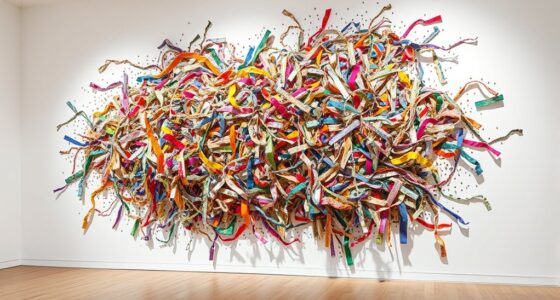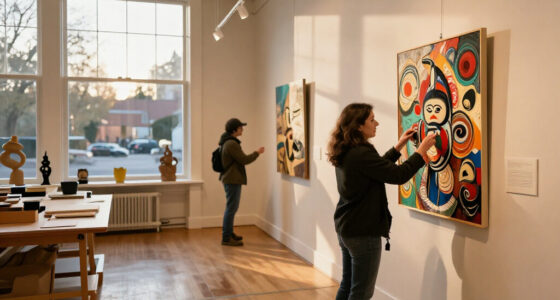
From 1950 to 2000, Paris thrived as a hub for Black artistic movements where artists, writers, musicians, and performers used their work to celebrate their racial identities and challenge stereotypes. You’ll see how cultural fusion infused jazz, visual arts, and nightlife, creating a vibrant scene that promoted resilience and innovation. These movements reshaped Paris’s cultural landscape and sparked global influence, revealing powerful stories of creativity and pride. Keep exploring to uncover how these Black voices truly transformed the city’s artistic fabric.

Get art and craft supplies delivered free with Prime
- Fast, free delivery on millions of items
- Prime Video, Amazon Music and more included
- Member-only deals all year
Key Takeaways
- Black artists in Paris used their work to affirm racial identity and challenge societal stereotypes from 1950 to 2000.
- Paris became a cultural hub blending African, Caribbean, and African-American influences in music, art, and nightlife.
- Artistic movements served as activism, promoting pride, resilience, and social commentary within Black communities.
- Key locations like Saint-Germain-des-Prés fostered cultural exchange and showcased Black creativity and narratives.
- These movements transformed Paris into a global epicenter for Black artistic innovation and cultural expression.

Have you ever wondered how Paris’s vibrant nightlife and rich cultural history intertwine to create a city that feels both enchanting and mysterious after dark? During the period from 1950 to 2000, Paris became a hub for Black artistic movements, where racial identity and cultural influence played crucial roles in shaping the city’s dynamic creative landscape. You might notice how artists, musicians, writers, and performers used their work to explore and assert their identities in a society that was often complex and layered. Their racial identity wasn’t just a personal aspect; it was a powerful statement against marginalization and a source of inspiration that infused their art with authenticity and resilience.
Paris’s nightlife and culture thrived through Black artists asserting identity and resilience after 1950.
In these movements, cultural influence was an indispensable force. Paris, already a symbol of artistic freedom, became a melting pot where African, Caribbean, and African-American cultures mingled with French traditions. This blending created a vibrant rhythm that resonated through jazz clubs, galleries, and literary salons. You could hear the influence of jazz in the improvisational music scenes or see it reflected in visual arts that celebrated African aesthetics and narratives. These artists challenged stereotypes, redefined beauty standards, and used their cultural roots as a foundation for innovation. The city’s cafés and nightclubs served as spaces where Black artists could express their identities openly, sharing their stories with others who understood the importance of cultural roots in shaping personal and collective histories.
You might also observe how these movements fostered a sense of community and pride. Leaders and pioneers like Frantz Fanon and Léopold Sédar Senghor inspired a generation to view racial identity not as a barrier but as a source of strength and creativity. Artistic expression became a form of activism, pushing boundaries and demanding recognition. The influence of these movements extended beyond France’s borders, shaping global perceptions of Black culture and art. Additionally, advances in deep-sky imaging and related technologies parallel the creative breakthroughs seen in these artistic movements, highlighting how innovation drives cultural and scientific progress. As you walk through areas like Saint-Germain-des-Prés or the Latin Quarter at night, you can almost feel the echoes of this vibrant cultural exchange, where Black voices and visions left an indelible mark on Paris’s artistic fabric.
In essence, the Black artistic movements from 1950 to 2000 in Paris were about more than just art—they were about asserting identity, celebrating cultural influence, and transforming the city into a stage for powerful stories of resilience and innovation. You’re invited to see Paris not just as a city of romance and history but as a beacon of Black creativity that challenged and enriched its cultural landscape, making the city’s nightlife a reflection of its diverse and vibrant heritage.
As an affiliate, we earn on qualifying purchases.
Frequently Asked Questions
How Did Paris Influence African American Artists’ Careers During This Period?
During this period, Paris profoundly influenced your career by offering vibrant expatriate communities and extensive artistic networks. You found a welcoming environment where Black artists like yourself could explore new styles, gain recognition, and connect with other creatives. The city’s cultural openness provided opportunities to showcase your work, build collaborations, and challenge racial barriers, ultimately helping you develop your unique voice and expand your artistic horizons in ways often unavailable back home.
What Were the Main Challenges Faced by Black Artists in Paris?
You face significant challenges as a Black artist in Paris, including racial discrimination and cultural isolation. These obstacles can make it hard to gain recognition and feel connected to the local art scene. Despite this, many artists find ways to thrive by building supportive communities and showcasing their unique voices. Overcoming these barriers requires resilience, but Paris’s vibrant atmosphere still offers opportunities for artistic growth and cultural exchange.
How Did Black Artistic Movements Impact Paris’s Broader Cultural Landscape?
Imagine Paris as a vibrant mosaic, with black artistic movements adding bold, unexpected tiles. Your efforts fostered cultural integration, transforming the city’s artistic scene. Through collaborations, black artists challenged stereotypes and enriched Paris’s cultural landscape, making it more diverse and dynamic. This influence rippled beyond art circles, inspiring broader societal change and redefining what it means to be Parisian—proof that true culture thrives on inclusion and shared creativity.
Who Were the Key Figures Pioneering Black Art in Paris From 1950 to 2000?
You’ll want to learn about Black Pioneers like Frantz Fanon, Samuel Fosso, and Kehinde Wiley, who helped shape black art in Paris from 1950 to 2000. These artists and intellectuals served as Cultural Bridges, connecting African roots with French culture and inspiring new perspectives. Their work challenged stereotypes and enriched Paris’s artistic landscape, making them essential figures in the city’s vibrant, diverse art scene.
What Role Did Paris Noir Play in Shaping Global Black Artistic Identities?
Paris Noir played a vital role in shaping your global black artistic identities by fostering cultural exchange and providing a platform for expression. You experience how these movements challenged stereotypes, celebrated black culture, and influenced international art scenes. The vibrant Parisian environment allowed you and other artists to develop a unique artistic identity rooted in your heritage, inspiring future generations worldwide and transforming perceptions of black art across the globe.
As an affiliate, we earn on qualifying purchases.
Conclusion
You might think Paris’s Black artistic movements were just about culture, but they also challenged the idea that Paris was only for the French. Evidence shows these movements profoundly shaped global art scenes, proving that Black artists in Paris weren’t just participants—they were pioneers. So, consider this: what if Paris’s true artistic revolution was fueled by these vibrant, overlooked voices, redefining the city’s cultural identity forever?
As an affiliate, we earn on qualifying purchases.
As an affiliate, we earn on qualifying purchases.
Columbus Day / Indigenous Peoples' Day Picks
long weekend sales
As an affiliate, we earn on qualifying purchases.