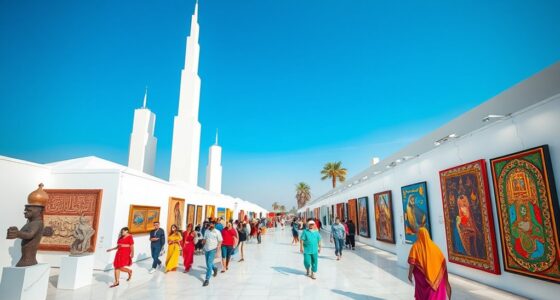
Contemporary Indigenous artists are redefining tradition by blending ancient techniques with innovative styles, challenging stereotypes, and showcasing cultures as vibrant and evolving. They incorporate storytelling, symbols, and materials like beadwork, carving, or natural pigments to preserve their identity while pushing creative boundaries. Their work addresses issues like land rights and resilience, making tradition relevant today. Keep exploring to discover how these artists are creating powerful connections between past and present.
Key Takeaways
- They blend traditional techniques like beadwork and carving with modern artistic styles to create innovative visual expressions.
- Indigenous artists incorporate storytelling through symbols and motifs, addressing themes of identity, history, and resilience.
- They utilize contemporary materials and methods while maintaining respect for cultural heritage and traditional knowledge.
- Art serves as a medium for cultural preservation, reclamation, and addressing social issues such as land rights and sovereignty.
- These artists challenge stereotypes and demonstrate that Indigenous culture is dynamic, relevant, and adaptable in contemporary contexts.
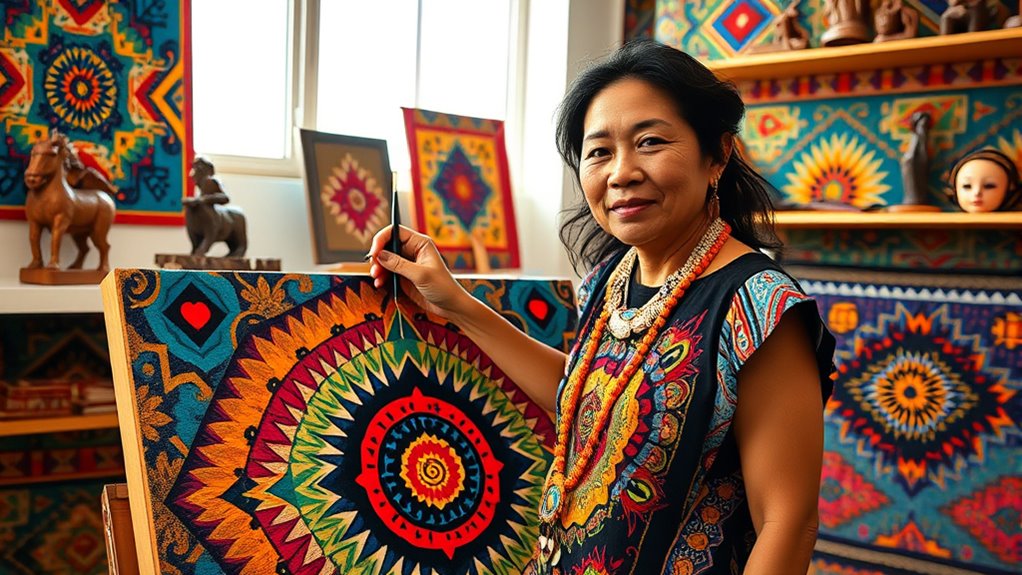
Contemporary Indigenous artists are reshaping the art world with powerful stories, vibrant visuals, and innovative techniques rooted in their cultural traditions. By blending age-old Indigenous art techniques with modern expression, they challenge conventional boundaries and invite you to see their world through a new lens. You might notice how their work weaves traditional motifs with contemporary themes, creating a dialogue between the past and present. These artists utilize cultural storytelling methods that are deeply embedded in their communities, guaranteeing their messages carry authenticity and resonance. Through their art, they share stories of history, identity, and resilience, transforming personal and collective experiences into compelling visual narratives. Incorporating traditional materials and methods allows these artists to maintain a deep connection to their cultural roots while exploring new artistic frontiers. Additionally, leveraging cultural storytelling techniques helps them communicate complex histories and values effectively to diverse audiences. Their use of Indigenous art techniques often involves traditional materials and methods, such as beadwork, carving, painting with natural pigments, or weaving. These techniques are more than just aesthetic choices; they’re expressions of cultural identity and knowledge passed down through generations. When you observe their work, you can sense the reverence for these methods, even as they innovate and adapt them for contemporary contexts. This blending of tradition and innovation allows them to preserve cultural heritage while making it relevant to today’s audience. It’s a way of reclaiming their narratives, especially in a world that has historically marginalized Indigenous voices. By integrating cultural storytelling methods, these artists ensure their messages resonate on both personal and collective levels. Recognizing the importance of cultural preservation helps contextualize their work within broader efforts to safeguard Indigenous identities. Cultural storytelling methods are central to their artistic practice. Indigenous stories are often conveyed through symbols, patterns, and allegories, making their art a form of language that speaks across generations. You’ll find that these stories serve multiple purposes—they educate, honor ancestors, and critique ongoing social issues. By integrating storytelling into visual art, they ensure their messages aren’t just seen but felt. These stories often address themes like land rights, sovereignty, environmental stewardship, and cultural survival. You may notice how their art acts as a bridge, connecting viewers to Indigenous worldviews and histories that are often overlooked or misunderstood. Additionally, the incorporation of predictive modeling techniques can help artists understand audience engagement and adapt their storytelling strategies effectively. Ultimately, these artists are redefining tradition by honoring their roots while pushing boundaries. They use Indigenous art techniques and cultural storytelling methods not just to preserve their heritage but to challenge stereotypes and foster understanding. Their work invites you to experience Indigenous cultures as dynamic, evolving, and deeply relevant today. Through their innovative approaches, they demonstrate that tradition isn’t static but a living, breathing force that shapes their identity and artistic expression in powerful ways.

Indigenous Beadwork Coloring Book: Native American Beading & Weaving Patterns Art Coloring pages for Kids & Adults, Mindfulness Relaxation Stress & … Activity (Indigenous Coloring Books Series)
As an affiliate, we earn on qualifying purchases.
As an affiliate, we earn on qualifying purchases.
Frequently Asked Questions
How Do Indigenous Artists Balance Tradition and Innovation?
You balance tradition and innovation by embracing cultural preservation while exploring artistic experimentation. You honor your roots through traditional symbols and techniques, ensuring cultural continuity. At the same time, you push boundaries by incorporating new materials, styles, and ideas, creating dynamic artwork. This approach allows you to keep your heritage alive in fresh, meaningful ways, connecting past and present while inspiring others to appreciate and understand Indigenous cultures in contemporary contexts.
What Materials Are Commonly Used in Contemporary Indigenous Art?
Did you know that over 60% of contemporary Indigenous artists incorporate traditional techniques alongside modern mediums? You’ll often see materials like natural pigments, beadwork, and wood in their work, blending age-old methods with new technologies like digital art and mixed media. This fusion allows you to appreciate their rich cultural heritage while embracing innovation, creating powerful pieces that honor tradition and push artistic boundaries simultaneously.
How Is Indigenous Identity Expressed Through Modern Art Forms?
You see that indigenous identity is expressed through modern art forms by embracing cultural expression and artistic evolution. Artists incorporate traditional symbols, stories, and techniques, blending them with contemporary styles to showcase their heritage in new ways. This dynamic approach allows you to witness how indigenous communities celebrate their roots while adapting to modern influences, fostering a deeper understanding and appreciation of their cultural identity in today’s art scene.
Are There Specific Themes That Dominate Indigenous Contemporary Artworks?
Did you know that over 60% of Indigenous contemporary artworks focus on themes of symbolism and storytelling? You’ll notice these themes dominate, as artists use vivid imagery to express cultural identity and history. Through powerful symbolism, they preserve traditions, while storytelling helps share personal and collective experiences. This blend of ancient and modern creates a dynamic dialogue, allowing Indigenous artists to redefine their heritage while engaging a global audience.
How Do Indigenous Artists Navigate Cultural Appropriation Issues?
You navigate cultural boundaries and authenticity challenges by actively engaging with your community’s traditions and seeking permission before using cultural symbols. You educate others about their significance and challenge stereotypes, ensuring respect for your culture. This approach helps you avoid cultural appropriation, maintaining integrity in your work. By being mindful and transparent, you protect your cultural identity while sharing your art on a global stage.

Natural Earth Paint Pigment Sample Pack – 20 Non-Toxic, Archival Earth & Mineral Pigments for DIY Paint – Eco-Friendly, Sustainably Sourced Colors – No Fillers or Additives
20 Natural Earth & Mineral Pigments – Create your own non-toxic, archival paint with 20 pure pigments. No…
As an affiliate, we earn on qualifying purchases.
As an affiliate, we earn on qualifying purchases.
Conclusion
As you explore the work of contemporary Indigenous artists, you realize how they’re redefining tradition in unexpected ways. It’s almost like a coincidence—how their innovative expressions emerge from the very roots of their culture, blending the old with the new effortlessly. This seamless harmony reminds you that tradition isn’t static; it’s alive and evolving, shaped by those who carry it forward while embracing change. In their art, you see the beautiful coincidence of heritage and innovation intertwining naturally.

OriGlam 10pcs Professional Wood Carving Chisel Set – Carbon Steel Woodworking Tools, Power Grip Chisels Great for Carving and Woodworking
√ Heat Treated – Made from heat-treated, chrome vanadium steel alloy with a ground finish and narrow side…
As an affiliate, we earn on qualifying purchases.
As an affiliate, we earn on qualifying purchases.

Eastern Print Native American Wall Art, Set Of 9 Pcs Unframed Posters, Native American Tribal Artwork, Indigenous Indian Pictures, America Indian Decor for Bedroom, Livingroom, UNFRAMED
💥UNFRAMED PRINTS💥: The preview images are examples of what the art prints will look like when framed: We…
As an affiliate, we earn on qualifying purchases.
As an affiliate, we earn on qualifying purchases.