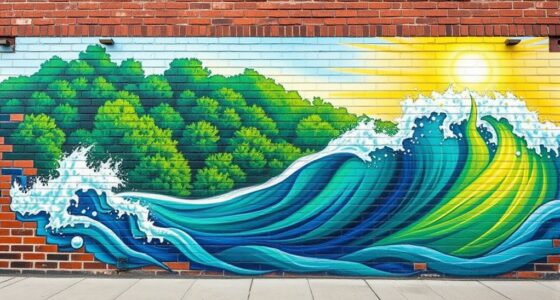
Augmented reality murals are transforming public art by blending physical walls with digital elements that you can access through your smartphone or AR glasses. As you explore, you’ll discover animations, soundscapes, and stories that deepen your connection to the artwork. These interactive murals make urban spaces more engaging, accessible, and dynamic, offering personalized experiences that respond to your presence or preferences. If you stay tuned, you’ll uncover how this innovative art form continues to evolve and inspire.
Key Takeaways
- AR murals blend physical art with digital layers, creating immersive, multi-dimensional public artworks.
- Interactive features like animations and responses to viewer actions revolutionize engagement.
- AR enhances storytelling, education, and cultural understanding of murals through layered digital content.
- Accessibility improves as AR makes murals more captivating and inclusive via smartphones and AR glasses.
- Continuous technological innovation drives a dynamic, evolving future for public art experiences.

Have you ever wondered how murals are transforming with technology? Today, augmented reality murals are changing the way you experience public art, bringing static images to life in ways that once seemed impossible. Instead of simply viewing a mural on a wall, you can now use your smartphone or AR glasses to access layers of digital content that deepen the story or message behind the artwork. This blend of physical and digital creates a new domain of public art innovation, allowing artists to push boundaries and viewers to engage more interactively. As you walk past a mural, an app might reveal hidden animations, soundscapes, or additional visuals that weren’t visible before. This technology not only makes murals more captivating but also makes art more accessible and engaging for everyone. Incorporating cost‑of‑ownership math concepts helps artists and communities plan sustainable and impactful projects.
Augmented reality transforms murals into interactive, immersive experiences that bring static art to life and deepen public engagement.
Augmented reality murals open up a world of possibilities for artists, who can now craft multi-dimensional pieces that evolve over time or respond to your presence. For example, a mural depicting a historical scene could animate with moving figures, providing a dynamic storytelling experience right on the wall. Or, a street art piece might incorporate elements that change based on the viewer’s angle or the time of day, creating a personalized encounter. This innovation fosters deeper connections between the public and the artwork, transforming a simple visual into an interactive experience. It also invites you to explore the city in new ways, encouraging discovery and curiosity beyond traditional murals.
Public art innovation through augmented reality isn’t just about making murals more visually exciting; it also serves educational and cultural purposes. You might point your device at a mural and learn about the artist’s inspiration, the community’s history, or environmental issues related to the scene. This layered storytelling enriches your understanding and appreciation of public spaces. Furthermore, augmented reality murals can be updated remotely, giving artists the ability to keep their work fresh or adapt it to current events without repainting. This flexibility ensures that public art remains relevant and lively, capturing your attention over time.
In essence, augmented reality murals are redefining how you interact with public art. They turn everyday walls into immersive galleries, engaging your senses and imagination. By integrating cutting‑edge technology into urban environments, artists and communities are pioneering a new form of public art innovation that’s more dynamic, inclusive, and memorable. As you continue to explore cityscapes, you’ll notice how these digital layers enhance your experience, making each mural a unique story waiting to be uncovered. This exciting fusion of art and technology isn’t just the future—it’s already happening, shaping how you see and connect with the world around you.
Top picks for "augment reality mural"
Open Amazon search results for this keyword.
As an affiliate, we earn on qualifying purchases.
Frequently Asked Questions
What Devices Are Needed to Experience Augmented Reality Murals?
To experience augmented reality murals, you’ll need a smartphone compatible with AR apps or AR glasses like HoloLens or Magic Leap. Most modern smartphones support AR features through apps you can download, making it easy to view interactive murals. If you want a more immersive experience, AR glasses provide a hands-free way to explore murals in 3D. Both options bring these murals to life right in your environment.
How Do Artists Create Augmented Reality Murals?
You create augmented reality murals by blending digital painting techniques with projection mapping. First, you design the artwork digitally, then use projection mapping to align the visuals onto physical surfaces. You develop an AR app or experience that overlays interactive elements when viewed through a device. This process allows your mural to come alive, engaging viewers with dynamic, layered visuals that combine physical art with digital enhancements.
Are Augmented Reality Murals Accessible to People With Disabilities?
You might worry that augmented reality murals aren’t accessible, but they can be designed to overcome accessibility barriers. By integrating features like audio descriptions, adjustable text sizes, and compatibility with screen readers, you provide disability accommodations. This inclusive approach allows people with disabilities to experience AR murals fully, ensuring everyone can enjoy the interactive art. With thoughtful planning, augmented reality murals become accessible and engaging for all audiences.
How Do Augmented Reality Murals Impact Local Communities?
Augmented reality murals boost community engagement by creating interactive experiences that draw people together. They foster cultural preservation by highlighting local history and stories in innovative ways. As you explore these murals, you help strengthen community identity and pride. Plus, AR murals encourage diverse participation, making public art more inclusive. Overall, they transform public spaces into vibrant hubs of connection, education, and cultural appreciation for everyone involved.
What Are the Costs Associated With Developing Augmented Reality Murals?
You’re curious about the costs of creating augmented reality murals, and it’s more intricate than it seems. Cost estimation involves hardware, software, and artist fees, while funding sources vary from grants to sponsorships. Unexpected expenses can arise, making planning essential. By understanding these factors, you can navigate the financial landscape and bring your interactive public art idea to life, transforming spaces and engaging communities in ways you never imagined.
Conclusion
So, next time you see a boring wall, don’t just walk by—imagine waving your phone and entering a whole new world. Augmented reality murals promise to turn dull cityscapes into interactive masterpieces, because who needs plain old art when you can have a digital party on every brick? Embrace the future, where your daily stroll might just be a secret adventure—just don’t forget your phone, or you’ll miss all the fun!