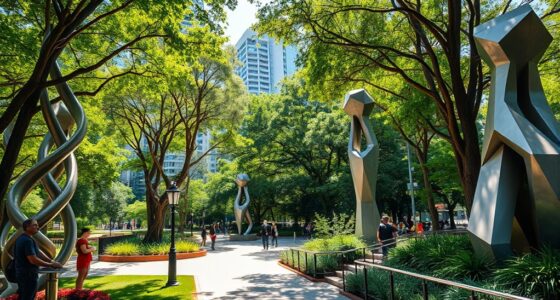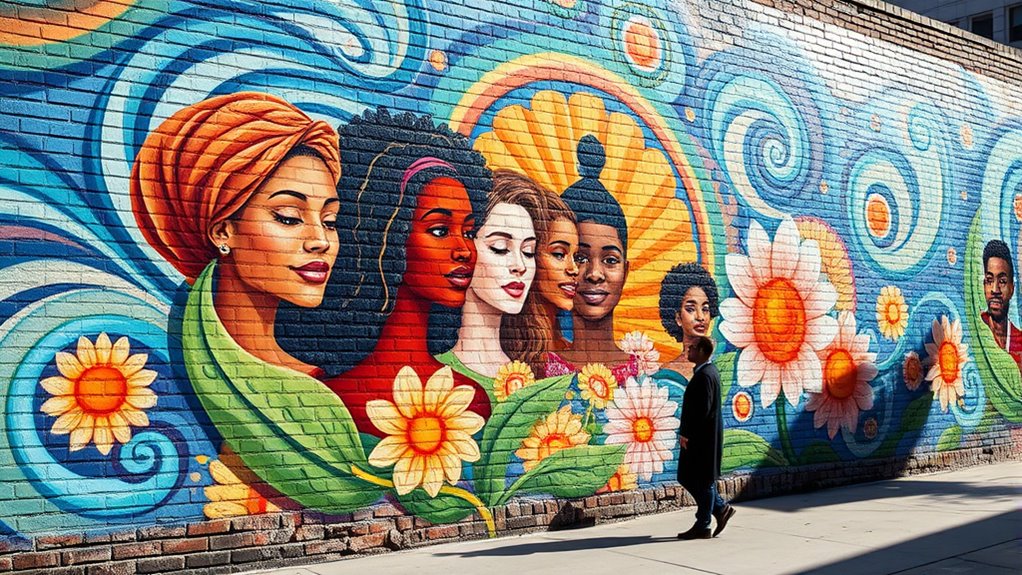

Public art, especially mental health murals, can be a powerful tool for community healing. When you see vibrant murals and graffiti, they often symbolize resilience, hope, and collective strength. These artworks foster connection, challenge stigma, and create safe spaces for honest conversations about mental health. Participating or supporting such projects helps build community pride and resilience. Keep exploring to discover how these vibrant visuals transform spaces into beacons of hope and recovery.
Key Takeaways
- Public murals facilitate community dialogue around mental health, promoting awareness and reducing stigma.
- Collaborative mural projects foster social bonds and collective resilience through shared artistic expression.
- Vibrant public art transforms spaces into symbols of hope, healing, and mental health support.
- Murals serve as visual tools for processing trauma and encouraging open conversations about mental well-being.
- Community involvement in creating murals empowers individuals and enhances collective healing efforts.
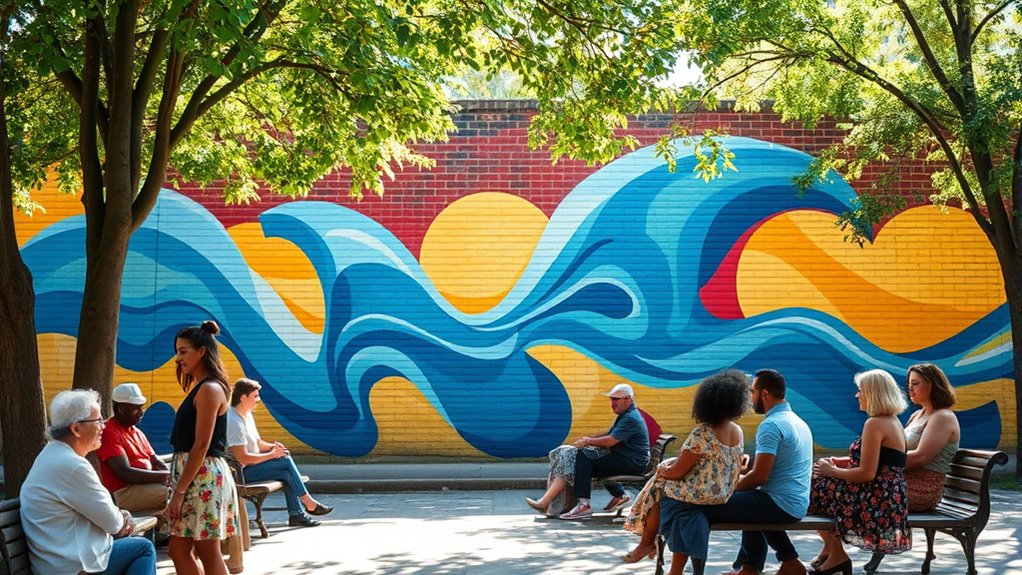
Public art has the power to transform communities by fostering connection and healing, especially in times of hardship. When you walk through neighborhoods adorned with vibrant graffiti art or striking murals, you’re not just observing creative expression—you’re witnessing tools that can help communities process collective trauma and promote mental well-being. Graffiti art, often dismissed as vandalism, can become a powerful form of mural activism. It allows residents to voice their struggles, hopes, and resilience in a public space, turning blank walls into canvases of collective healing. As you engage with these artworks, you may find that they serve as mirrors for shared experiences and catalysts for dialogue, breaking down social barriers that hinder mental health conversations.
Public art transforms communities into spaces of healing and shared resilience.
Mural activism, in particular, exemplifies how public art fosters a sense of ownership and pride among community members. When murals are created through collaborative efforts, they become symbols of unity, demonstrating that mental health issues are not faced alone. These murals often address themes like mental health awareness, healing from trauma, or overcoming adversity, giving viewers a visual reminder that healing is possible. As you witness these murals, you might notice how they provide comfort and validation to those struggling quietly, showing that their pain isn’t invisible. The act of creating or supporting such art can empower individuals, encouraging them to seek help and connect with others who understand their experiences.
In neighborhoods where mental health stigma runs deep, graffiti art and mural activism serve as accessible, engaging platforms for education and empathy. They challenge misconceptions and open space for honest conversations. You could see community-led mural projects involving local artists, mental health advocates, and residents working together, which strengthens social bonds and reduces feelings of isolation. These projects often include messages of hope, resilience, and recovery, reminding everyone that healing is a collective journey. By participating in or supporting these efforts, you contribute to a culture that values mental health and recognizes the importance of community support.
Additionally, understanding the role of color accuracy in visual representations helps emphasize the importance of vibrant, emotionally resonant murals that can evoke hope and empathy. Ultimately, public art rooted in mural activism and graffiti art transforms physical spaces into symbols of healing. It invites you to see mental health as a shared concern and encourages community members to come together around common goals of understanding and recovery. When you witness or engage with these artworks, you’re reminded that art isn’t just aesthetic—it’s a crucial tool for connection, resilience, and hope in times of hardship. Through public murals and graffiti, communities foster a sense of solidarity, helping everyone feel seen, heard, and supported on their path toward mental wellness.

Mental Health Wall Art Child Psychology Canvas Poster Therapy Office Wall Decor Inspirational Prints Motivational Pictures Affirmations Artwork Counselor Painting for Classroom 8x10x9 Inch Unframed
Mental Health Canvas Wall Art: Mental Health Canvas painting set size: 12*16 inches (30*40 cm) * 9 pieces,…
As an affiliate, we earn on qualifying purchases.
As an affiliate, we earn on qualifying purchases.
Frequently Asked Questions
How Do Mental Health Murals Influence Individual Well-Being?
Mental health murals positively influence your well-being by encouraging emotional expression and fostering connection. When you see these murals, they can help reduce stigma around mental health issues, making you feel less isolated. This public art invites you to share your feelings and experiences, promoting healing. By normalizing conversations about mental health, murals empower you to seek help and support, ultimately enhancing your emotional resilience and overall mental wellness.
What Funding Sources Support Community Mural Projects?
You can find funding for community mural projects through grant opportunities offered by local governments, arts organizations, and health foundations. Sponsorship programs from businesses or community groups also support these initiatives, providing financial resources and materials. Reach out to arts councils or nonprofit organizations that focus on mental health and community development. Applying for multiple grants and sponsorships increases your chances of securing the necessary funds to bring your mural project to life.
How Are Community Members Involved in Mural Design?
Think of a mural as a giant, collaborative artwork where your community becomes the palette. You’re involved through workshops, surveys, and brainstorming sessions, sharing ideas and stories. For example, in a recent project, residents sketched their visions, shaping the design together. Your participation guarantees the mural reflects local voices, fostering community ownership and healing. Active involvement makes the artwork a true reflection of your neighborhood’s spirit.
Do Murals Have Lasting Effects on Community Mental Health?
Murals can have lasting positive effects on your community’s mental health by fostering artistic expression and strengthening cultural significance. When you engage with these vibrant artworks, you create a sense of pride and connection that supports emotional well-being. Over time, murals serve as visual reminders of community resilience, promoting healing and unity. Their enduring presence helps cultivate a supportive environment where mental health is openly valued and celebrated.
How Can Schools Incorporate Mental Health Murals Into Education?
Think of murals as vibrant bridges connecting students’ minds and hearts. You can incorporate mental health murals into education through art therapy sessions and mural workshops, where students express their feelings creatively. This hands-on approach transforms walls into windows of understanding and empathy. By engaging students in creating these murals, you foster emotional resilience, promote open dialogue, and embed mental health awareness directly into the fabric of the school environment.

Walls That Speak: How to Build a Professional Mural Painting Business in Your Community – From Pricing and Prep to Storytelling Walls
As an affiliate, we earn on qualifying purchases.
As an affiliate, we earn on qualifying purchases.
Conclusion
By engaging with mental health murals, you become part of a healing process that transforms communities. Imagine a neighborhood where a vibrant mural depicting hope and resilience sparks conversations and brings people together. For instance, a city that installed such murals saw increased community support and reduced stigma around mental health. When you support or participate in these projects, you’re helping foster understanding, empathy, and collective healing—making your community a stronger, more compassionate place to live.

Evolve Elite 12 pack, Medium Pressure – Assorted Colors 12 oz Cans – Spray Paint Set
As an affiliate, we earn on qualifying purchases.
As an affiliate, we earn on qualifying purchases.
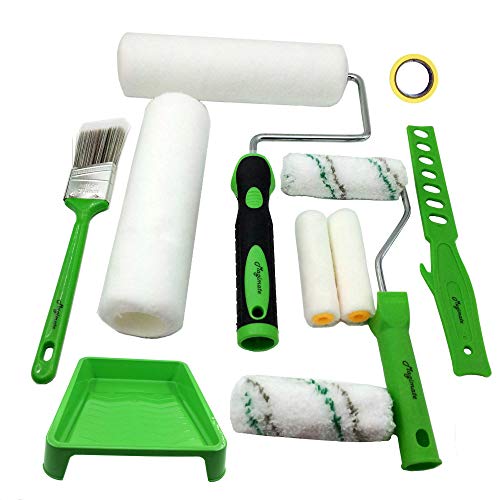
Magimate Paint Roller Kit with Tray Large Paint Roller Small Stain Roller and Brush Assorted for Painting Walls Decks Houses, Roller Handle Threaded Extendable Rollers Set 9 Inch -12PK
【Paint Tray Set includes】Large Microfiber Paint Roller Covers 9inch x 3/8” naps x 2; Small Microfiber Paint Rollers…
As an affiliate, we earn on qualifying purchases.
As an affiliate, we earn on qualifying purchases.