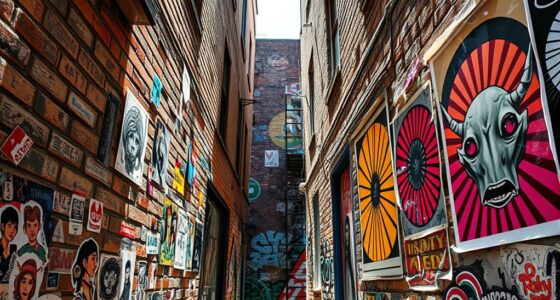
Calligraffiti is redefining urban scripts by blending traditional calligraphy techniques with street art styles, turning simple walls into expressive canvases. It elevates graffiti from mere vandalism to a respected cultural form, showcasing creativity and cultural identity. Artists experiment with dynamic strokes, vibrant colors, and rich symbols, making urban spaces into powerful storytelling platforms. If you keep exploring, you’ll discover how this fusion continues to transform perceptions and expand the possibilities of urban art forms.
Key Takeaways
- Calligraffiti merges traditional calligraphy with graffiti, challenging conventional boundaries and elevating urban scripts as artistic expressions.
- It transforms blank city walls into meaningful canvases that tell cultural stories through intricate and expressive lettering styles.
- The movement integrates diverse cultural symbols and scripts, fostering a dialogue between tradition and modern urban identity.
- Calligraffiti’s innovative techniques and digital tools enhance complexity, legitimacy, and artistic quality of street-based scripts.
- By redefining graffiti from vandalism to respected art, it promotes cultural appreciation and dialogue within urban environments.
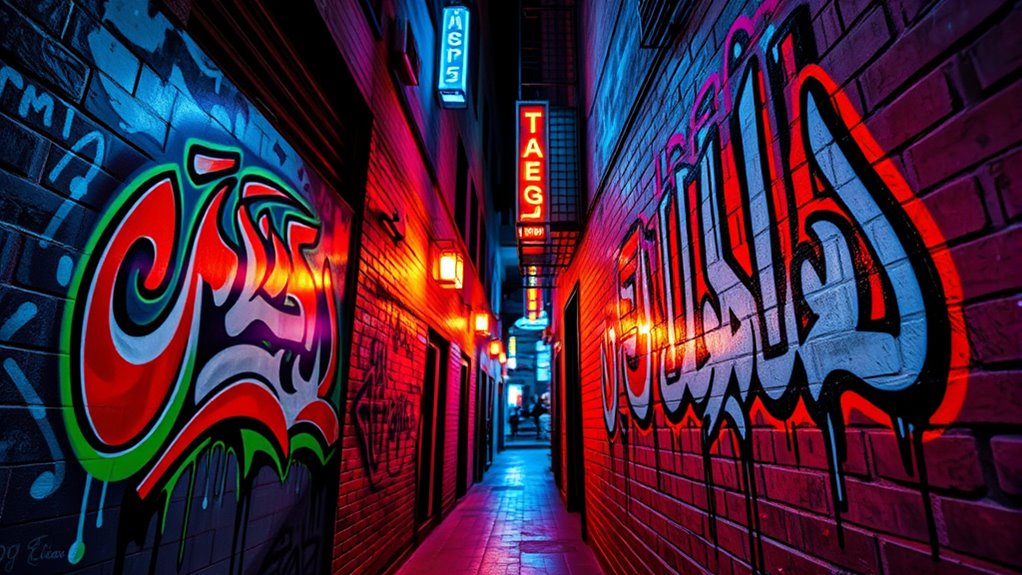
Have you ever wondered how street art transforms ordinary urban spaces into vibrant galleries? Calligraffiti and urban scripts do just that by merging the fluidity of traditional calligraphy with the rebellious spirit of graffiti. This art form challenges conventional boundaries, turning blank walls into canvases that tell stories through a blend of styles and meanings. What makes calligraffiti so compelling is its ability to incorporate innovative techniques that push the limits of visual expression. Artists experiment with brush strokes, spray paints, stencils, and digital tools, creating layered textures and intricate details that captivate passersby. These techniques aren’t just about aesthetics; they serve as a language that communicates cultural influences, blending global traditions with local narratives. You’ll notice how urban scripts often draw inspiration from diverse cultural backgrounds—Arabic calligraphy, East Asian brushwork, Latin lettering—all intertwined into a single piece that reflects a city’s multicultural identity. This synthesis of styles invites viewers to explore the deeper stories embedded within each piece, fostering a richer understanding of the community’s history and values. Additionally, recognizing the cultural significance behind these artworks can deepen appreciation and promote respect for the diverse identities they represent. Furthermore, many artists incorporate traditional art forms into their work, elevating street art to a new level of artistic legitimacy. Incorporating archival and contemporary techniques allows artists to blend old and new methods, enriching the visual narrative of their pieces. Exploring the symbolic meanings embedded in these scripts can reveal the hidden messages and intentions behind each piece.
By using innovative techniques, calligraffiti artists redefine what urban spaces can be. They challenge the idea that graffiti is merely vandalism, transforming it into a respected form of artistic expression. Techniques like dynamic line work, vibrant color palettes, and precise lettering elevate their work beyond simple tags, turning walls into powerful statements. Digital technology also plays a role, allowing artists to design complex compositions and preview how they’ll interact with their environment before committing to paint. This process results in highly personalized and innovative works that resonate with viewers on multiple levels. Cultural influences further deepen the significance of calligraffiti, as artists often embed symbols, motifs, and scripts from their heritage. These elements evoke a sense of identity and pride, making each piece a visual dialogue between tradition and contemporary urban life. For example, a mural might feature Arabic calligraphy intertwined with modern street art styles, creating a bridge between past and present that speaks to the city’s evolving cultural landscape. Engaging with these artworks can also inspire viewers to explore their own cultural roots and stories.
Ultimately, calligraffiti redefines urban scripts by turning them into dynamic, culturally rich expressions. You’re witnessing a movement that blends innovative techniques with cultural influences to challenge perceptions and inspire dialogue. It’s an art form that transforms everyday cityscapes into open-air galleries, inviting everyone to experience the layered stories they contain. As you walk through these vibrant spaces, you realize that calligraffiti isn’t just about decoration; it’s a form of communication that celebrates diversity, creativity, and the limitless potential of urban art. It’s a testament to how tradition and innovation can come together to reshape the way we see and understand our shared spaces.
calligraphy brush pens
As an affiliate, we earn on qualifying purchases.
As an affiliate, we earn on qualifying purchases.
Frequently Asked Questions
How Does Calligraffiti Influence Local Communities Beyond Art?
Calligraffiti influences your local community by fostering engagement and inspiring social activism. When you see or participate in calligraffiti projects, you become more connected and aware of community issues. It encourages dialogue, empowering residents to voice their concerns creatively. This art form transforms public spaces into platforms for positive change, making your neighborhood more vibrant, inclusive, and active in addressing social challenges through collaborative expression and community involvement.
What Materials Are Unique to Calligraffiti Artists?
They say, “You are only limited by your imagination,” and calligraffiti artists prove this daily. You’ll find unique materials like metal spray paints that add metallic sheen and luminous inks that glow in the dark. These tools help you create vibrant, dynamic designs. With such specialized materials, you can push the boundaries of urban scripts, transforming ordinary walls into mesmerizing art that captures attention and sparks conversations.
How Do Cultural Differences Shape Calligraffiti Styles?
You see that cultural expressions and regional aesthetics deeply influence calligraffiti styles. When you create, you incorporate local symbols, language nuances, and artistic traditions, making each piece unique. These cultural differences inspire variations in letter forms, color choices, and motifs, reflecting diverse urban stories. By embracing regional influences, you help redefine urban scripts, blending traditional art with contemporary street culture to produce dynamic, meaningful art that resonates across communities.
What Are the Legal Challenges Faced by Calligraffiti Artists?
You face legal hurdles like unauthorized graffiti, risking fines or arrest. Copyright disputes often challenge calligraffiti artists because their work blends art and text, making it hard to protect. You must navigate local laws that may not recognize street art legally. To succeed, you should understand these legal challenges, seek permissions when possible, and stay aware of copyright issues to avoid trouble while pushing creative boundaries.
How Does Technology Impact the Evolution of Calligraffiti?
Technology drives the evolution of calligraffiti through digital innovation and augmented reality. You can now experiment with new styles using digital tools, making your work more precise and dynamic. Augmented reality lets you bring your artwork to life, adding interactive layers for viewers. This fusion of tech and art pushes boundaries, enabling you to create immersive, innovative pieces that redefine urban scripts and expand artistic possibilities.
graffiti spray paint set
As an affiliate, we earn on qualifying purchases.
As an affiliate, we earn on qualifying purchases.
Conclusion
As you explore how calligraffiti is transforming urban scripts, you’ll see it’s more than just art—it’s a movement shaping cityscapes and cultural conversations. This innovative blend of calligraphy and graffiti proves that change is the only constant, and creative expression can break barriers. So, keep an eye on these evolving streets, because when art meets rebellion, you never know what masterpiece might emerge next. It’s truly a case of the proof being in the pudding.
digital art tablet for street art
As an affiliate, we earn on qualifying purchases.
As an affiliate, we earn on qualifying purchases.
stencil art supplies kit
As an affiliate, we earn on qualifying purchases.
As an affiliate, we earn on qualifying purchases.