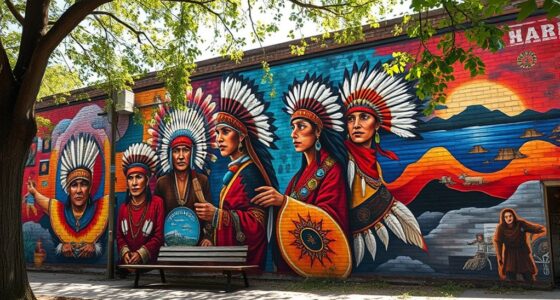
The rise of sticker art and wheat-pasting has transformed urban spaces into dynamic, accessible canvases that foster community participation and challenge traditional art boundaries. You’ll see street artists using witty phrases, striking images, and social commentary to quickly and anonymously communicate messages. These ephemeral artworks turn ordinary walls into temporary galleries, encouraging spontaneous creativity and activism. Continuing to explore this movement reveals how these urban interventions reshape public space and inspire collective urban expression.
Key Takeaways
- Sticker art and wheat-pasting have emerged as accessible, spontaneous urban expression tools transforming public spaces into temporary creative platforms.
- These practices enable rapid, large-scale coverage of surfaces with social, political, or cultural messages, challenging traditional art venues.
- They promote community participation and democratize art, allowing anyone to engage in public space redefinition without formal galleries.
- The ephemeral nature of these artworks fosters immediacy and resistance to commercialization, keeping street art dynamic and relevant.
- Their rise reflects a shift toward participatory, guerrilla art that enhances urban environments and encourages social dialogue.

Sticker art and wheat-pasting have become popular forms of street expression that transform urban spaces into dynamic canvases. These art forms are more than just creative outlets; they serve as powerful tools for urban expression and public space innovation. When you see a series of bold stickers or large wheat-pasted posters, you’re witnessing a deliberate effort to communicate messages, challenge norms, and redefine how communities interact with their environment. Instead of traditional murals or gallery exhibitions, these ephemeral artworks are quick, accessible, and often guerrilla in nature, making them a compelling means for artists and activists to make their voices heard.
You might notice how sticker art allows you to engage with the city in a personal way. Each sticker, whether it’s a witty phrase, striking image, or social commentary, becomes a mini billboard on the streets. It’s a form of urban expression that’s immediate and portable, able to appear overnight and disappear just as quickly. This transient quality offers a sense of spontaneity and resistance to commercialization, keeping street art fresh, unpredictable, and rooted in the local context. It also invites you to look closer, to decipher hidden messages, or simply enjoy the visual impact of stickers that cut through the clutter of everyday city life. Additionally, the use of public space innovation in these practices highlights their role in reimagining how communities can actively participate in shaping their environment.
Wheat-pasting broadens this concept further by allowing artists and activists to cover large surfaces with detailed posters and collages. It’s a method that transforms vacant walls, alleyways, or billboards into temporary galleries, pushing the boundaries of public space innovation. When you walk past these large-scale paste-ups, you’re witnessing a dialogue between art and environment. The posters often incorporate social, political, or cultural themes, turning public spaces into sites of conversation and critique. Wheat-pasting offers a rapid, scalable way to protest, celebrate, or provoke thought in the urban landscape, making art accessible to everyone and challenging traditional notions of where art belongs.
In both cases, these practices democratize artistic expression, bypassing galleries and official channels. They turn everyday city features into vibrant, participatory environments. If you pay attention, you’ll see how sticker art and wheat-pasting foster a sense of community, activism, and creativity. They encourage you to reconsider the potential of public space—not just as a backdrop for daily life but as a living, breathing canvas where ideas can flourish. By redefining urban spaces through these innovative forms, you’re witnessing a shift toward more inclusive, spontaneous, and engaging ways of experiencing the city.
Frequently Asked Questions
How Has Digital Technology Influenced Sticker Art Techniques?
Digital technology has transformed sticker art techniques by enabling digital augmentation, which allows you to create intricate and vibrant designs more easily. Virtual sticker platforms give you access to a vast library of images and tools, making it simple to customize and experiment without physical constraints. You can also share your work instantly online, gaining feedback and exposure, which fuels your creativity and helps you refine your style.
What Legal Issues Surround Wheat-Pasting in Urban Areas?
Wheat-pasting in urban areas often walks a tightrope over legal issues, much like a tightrope walker balancing between creativity and chaos. You should be aware that vandalism concerns and property rights are at the forefront. Authorities often see it as defacement, risking fines or arrest, especially if you don’t have permission. Respect private property and local laws to keep your street art both bold and lawful.
Who Are the Most Influential Artists in This Movement?
You should look at artists like Blek le Rat, Shepard Fairey, and Invader, who’ve shaped urban identity and fueled artistic rebellion through sticker art and wheat-pasting. They challenge traditional art boundaries, turning city walls into canvases that speak to social issues and personal expression. Their influence inspires others to use urban spaces as platforms, making their work pivotal figures in this movement’s evolution and cultural impact.
How Do Communities Perceive Sticker Art Installations?
You’ll find that community acceptance varies; some see sticker art as vibrant, creative expressions, while others view them as vandalism. Many neighborhoods embrace the artistic aspect, appreciating the culture and message behind the stickers. However, some residents and authorities perceive it as vandalism, leading to restrictions or removal efforts. Your perception depends on how the community views street art’s role—whether as a form of urban expression or unwelcome defacement.
What Environmental Impacts Are Associated With Wheat-Pasting?
You might not realize that wheat-pasting can contribute to environmental issues. When you create or encounter these installations, urban waste increases as leftover adhesives and paper accumulate. Additionally, chemical runoff from the adhesives can seep into soil and water sources, harming ecosystems. To minimize these impacts, consider using eco-friendly adhesives and responsibly disposing of leftover materials, helping to protect the environment while enjoying street art.
Conclusion
As you explore the world of sticker art and wheat-pasting, you’re quietly witnessing a subtle shift in urban expression. These small, unassuming designs carry powerful messages, gently challenging the status quo. Just like whispers in a noisy room, they invite you to see familiar spaces differently. So, next time you pass by a sticker or pasted poster, remember—it’s not just art, but a delicate nudge encouraging you to pause and reconsider what’s around you.