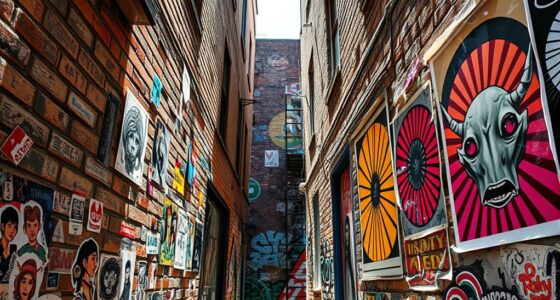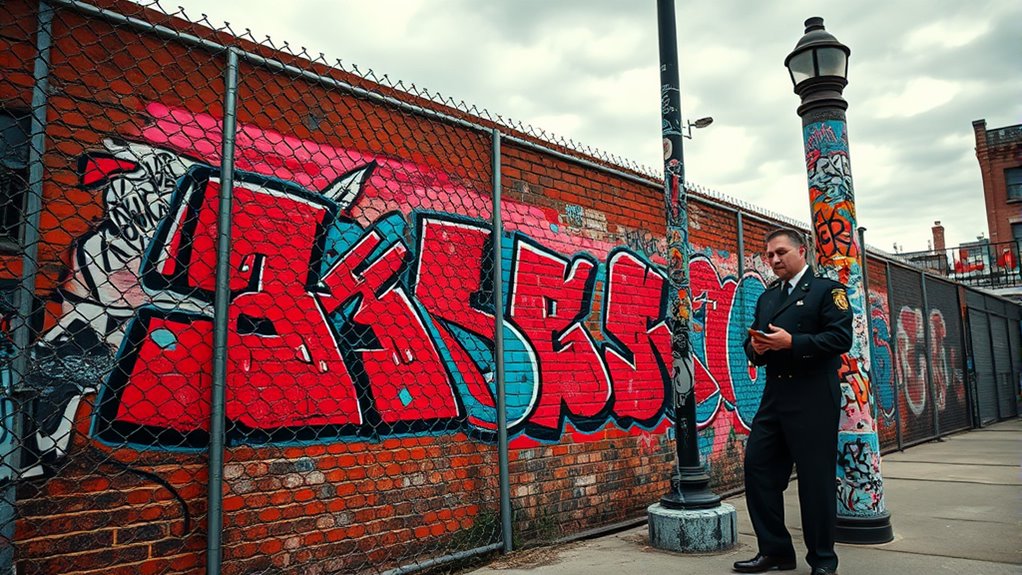

Balancing property rights and artistic freedom in street art means understanding legal boundaries and respecting owners’ control over their land. Unauthorized graffiti can be considered vandalism, leading to fines or criminal charges, but creating art in designated legal zones offers a safe and lawful space to express yourself. By knowing where and what’s allowed, you can avoid legal issues while still sharing your artistry. If you want to learn how artists navigate these challenges, keep exploring this topic further.
Key Takeaways
- Legal street art requires property owner permission; unauthorized work risks vandalism charges and property disputes.
- Designated legal zones allow artists to create freely while respecting property rights and avoiding legal issues.
- Distinguishing between artistic expression and vandalism is vital to maintain legal protection and avoid criminal charges.
- Using copyrighted images without permission can lead to intellectual property infringement claims.
- Sustainable practices and awareness of environmental impacts support responsible street art within legal and community standards.
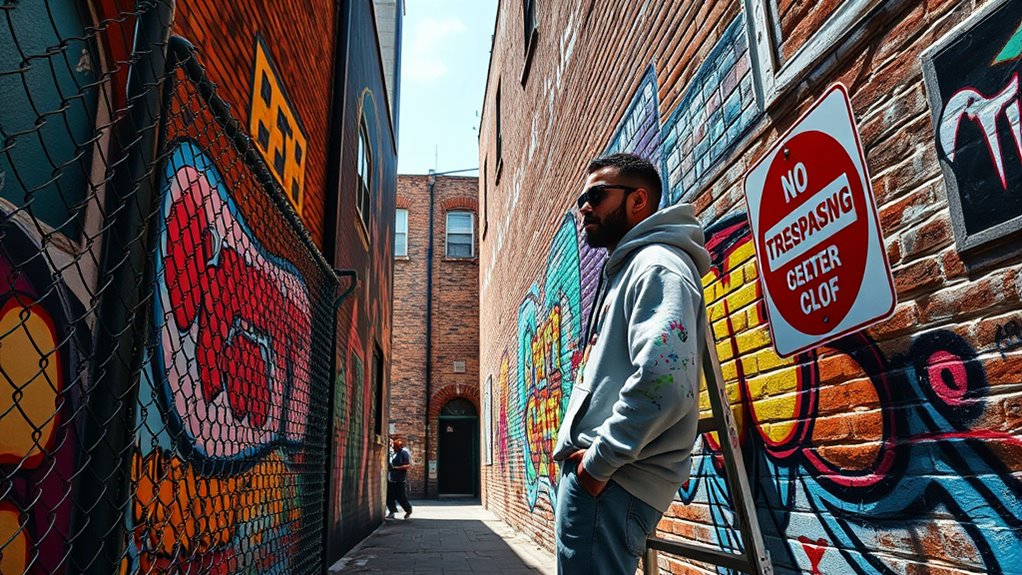
Street art often brings vibrant creativity to urban landscapes, but maneuvering its legal landscape can be tricky. When you create graffiti or murals, you might assume your work is protected as a form of artistic expression, but in many cases, it can be viewed as graffiti vandalism if done without permission. This label carries serious legal consequences, as authorities often see unauthorized spray paint on property as defacement rather than art. While some cities embrace street art, others strictly enforce laws against vandalism, making it essential for you to understand local regulations. Even if your intent is artistic, if you don’t have the property owner’s consent, you risk legal action. Furthermore, you might be surprised to learn that street art can sometimes infringe on intellectual property rights. If your work closely mimics a copyrighted logo, character, or branded image, it could lead to legal disputes over copyright infringement. Conversely, if others copy your original design without permission, you might have grounds to defend your intellectual property rights. Balancing these competing interests—property rights and artistic freedom—can be complex. Property owners have the legal right to control what happens on their land, and unauthorized graffiti may be considered trespassing or vandalism, leading to fines or even criminal charges. On the other hand, many cities and communities recognize the cultural value of street art and may designate legal walls or areas for artists to work freely. These designated spaces serve as a legal outlet for creative expression, helping artists avoid vandalism charges while respecting property rights. Still, even within these zones, you should be mindful of intellectual property laws. Using copyrighted images or trademarks without permission can cause legal trouble, regardless of where you create your art. It’s important to distinguish between inspiration and imitation, ensuring that your work doesn’t infringe on someone else’s rights. Additionally, considering the environmental impact of materials used in spray paint and other mediums is increasingly relevant as communities push for sustainable art practices. This balance requires you to be aware of local laws and respect property owners’ wishes, while also advocating for the recognition of street art as a legitimate form of artistic expression. Navigating these legal issues isn’t always straightforward, but understanding the fine line between vandalism, intellectual property, and authorized public art can help you stay on the right side of the law. By doing so, you can continue to contribute to urban culture without risking penalties or damaging your reputation as an artist. Ultimately, respecting property rights and understanding intellectual property laws are vital steps toward fostering a space where street art can thrive legally and creatively.

Evolve Elite 12 pack, Medium Pressure – Assorted Colors 12 oz Cans – Spray Paint Set
As an affiliate, we earn on qualifying purchases.
As an affiliate, we earn on qualifying purchases.
Frequently Asked Questions
Can Street Artists Claim Ownership of Their Artwork?
You can claim ownership rights over your street art, especially regarding creative attribution. However, these rights are often complicated by property laws and local regulations. As the artist, you might hold moral rights or copyright if recognized, but physically owning the artwork depends on agreements with property owners. It’s essential to document your work and understand local laws to safeguard your ownership rights and ensure proper attribution.
How Do Local Laws Differ Worldwide Regarding Street Art?
You’ll find that around the world, urban regulation varies wildly—some cities treat street art like sacred ground, protecting it fiercely, while others see it as vandalism waiting to happen. Laws differ from lenient permits to strict bans, all reflecting local cultural impact. So, if you’re planning your next masterpiece, remember: in some places, your art might be embraced as cultural expression, and in others, you might face fines or arrest.
Are There Legal Ways to Get Permission for Street Art?
You can get permission for street art by seeking community approvals or applying for artistic permits. Start by contacting property owners or local authorities to discuss your project. Many cities have specific processes for granting permits, which might include submitting artwork proposals and demonstrating community support. Doing this guarantees your street art remains legal, respects property rights, and helps you build a positive relationship with the community.
What Penalties Exist for Illegal Graffiti?
If you’re caught vandalizing property with graffiti, you face vandalism penalties that can include fines, community service, or even jail time. Local graffiti ordinances often set clear rules and penalties for illegal graffiti, making it essential to understand and follow them. Ignoring these laws risks significant legal consequences, so always seek permission or choose legal outlets for your art to avoid penalties and support artistic freedom responsibly.
How Do Copyright Laws Apply to Street Art?
You should know that copyright laws protect street art from copyright infringement, meaning you can’t reproduce or distribute it without permission. As the artist, your moral rights guarantee you maintain attribution and integrity of your work, even if it’s legally on public property. If someone uses your street art without authorization, they could face legal consequences for copyright infringement, and you have the right to defend your moral rights.

DOODLREAM 11.8"x11.8" Street Graffiti Wall Stencil Templates, Street Art Reusable Plastic Stencils for Painting on Wood Wall Floor Tile Fabric Glass Furniture DIY Home Decor Template
Street Graffiti Pattern Stencils: Can meet your different needs, well made and fun to creat craft projects for…
As an affiliate, we earn on qualifying purchases.
As an affiliate, we earn on qualifying purchases.
Conclusion
So, here you are, caught between respecting property rights and embracing artistic freedom. Ironically, while street art brings vibrancy and culture to our cities, it often faces legal barriers that threaten its existence. You might think freedom of expression is limitless, but in reality, it’s carefully balanced on the edge of legality. Perhaps the true masterpiece is how society struggles to find harmony—proving that even art, like law, isn’t immune to contradictions.

Chroma Mural Paint, Assorted Primary Colors, Pints, Set of 6
Mural paint offers lasting results on both outdoor and indoor murals, canvas, and other mediums
As an affiliate, we earn on qualifying purchases.
As an affiliate, we earn on qualifying purchases.

Rust-Oleum Rust-O Acrylic Spray Paint | Street Artist Spray Paint for Murals | Weather Resistant for Concrete, Wood, Brick and Other Surfaces | 11 Ounce | Matte White Noise
VERSATILE APPLICATION AND ULTIMATE CONTROL: Achieve precise, controlled strokes with ease on concrete, brick, wood, metal, canvas, wicker…
As an affiliate, we earn on qualifying purchases.
As an affiliate, we earn on qualifying purchases.