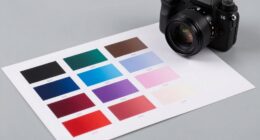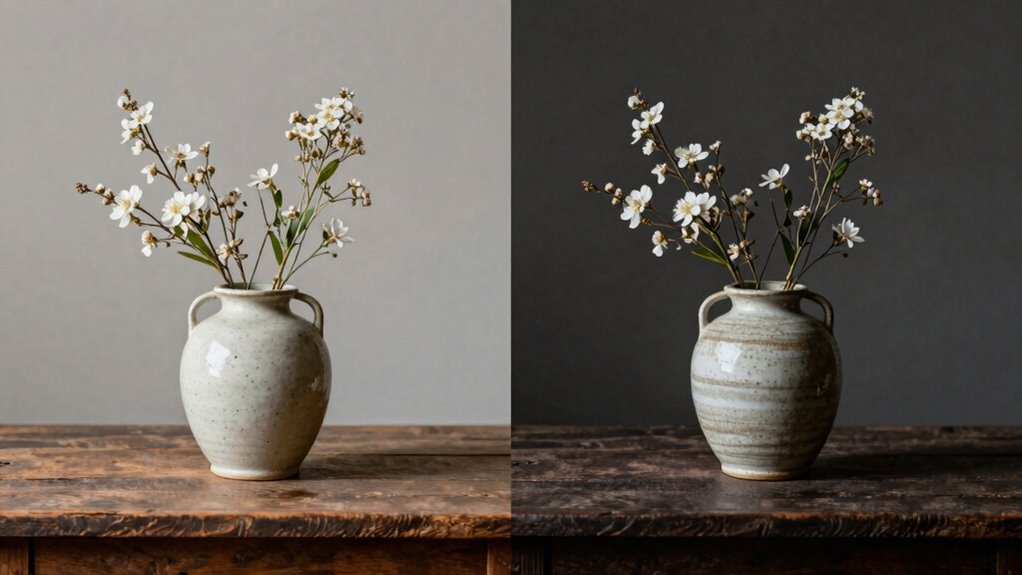
If you want art photos with true-to-life color and consistent reproduction, continuous lighting is your best choice. It offers stable color temperature, steady spectral output, and easier control, helping you avoid color shifts and glare. While strobes excel at capturing sharp details and freezing motion, they might cause slight color inaccuracies. To learn more about how to choose the right lighting for your artwork, explore the full details ahead.
Key Takeaways
- Continuous lights provide stable, consistent color temperature, ensuring more accurate and true-to-life color reproduction of artwork.
- Spectral stability of continuous lighting maintains spectrum fidelity, reducing color shifts that can distort artwork colors.
- Strobes emit brief, intense bursts that may cause spectral shifts, potentially impacting color accuracy in artwork photography.
- Continuous lighting allows real-time adjustments and previews, helping achieve precise color matching and accurate details.
- Proper spectrum management and setup are crucial with both types, but continuous lights generally offer better control over color fidelity.

2-Pack Photography Lighting Kit, NiceVeedi 25W LED Video Light Kit, 2900-7000K Dimmable Studio Light with Tripod Stand, 73" Stream Light for Video Recording
【MULTIPLE COLOR TEMPERATURE & ADJUSTABLE BRIGHTNESS】Provide 3 Color temperatures (2900K, 4800K & 7000K)to create various lighting atmosphere; This…
As an affiliate, we earn on qualifying purchases.
As an affiliate, we earn on qualifying purchases.
Understanding Artwork Photography Lighting: Continuous Lights vs. Strobes
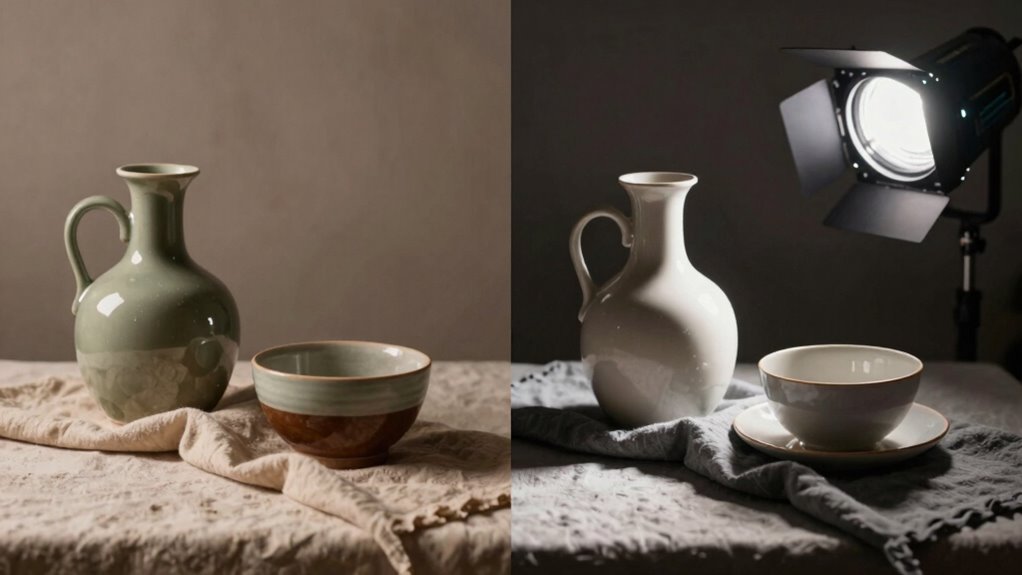
When it comes to lighting artwork, choosing between continuous lights and strobes can considerably impact your workflow and results. Continuous lights provide steady illumination, making it easier to assess how light interacts with your art, especially when focusing on color calibration. They also allow you to see how light diffusion affects the final image, so you can adjust angles and modifiers in real-time. This real-time feedback helps guarantee accurate color reproduction, which is crucial for capturing true-to-life artwork. Additionally, the type of light influences color temperature adjustments, which can be critical for achieving the most accurate representation of colors in your artwork. Understanding how each type influences light quality and color calibration helps you select the right lighting setup for your artwork photography needs. Moreover, the consistency of continuous lighting can be particularly advantageous when working on projects that require meticulous detail and precision. Proper understanding of lighting fundamentals ensures you make informed decisions that enhance both the accuracy and quality of your artwork images.

Godox Professional Studio Flash Kit for Photography, Strobe Lights Softbox Lighting Kit, 2x180W 5600K Compact Monolights with Flash Trigger, Softbox, Light Stands
【2x 180W Studio Flash Kit】 Godox K180A 2-light studio flash kit for Photography: features 75W 3200K yellow color…
As an affiliate, we earn on qualifying purchases.
As an affiliate, we earn on qualifying purchases.
How Lighting Type Affects Color Accuracy and Reproduction in Art Photos
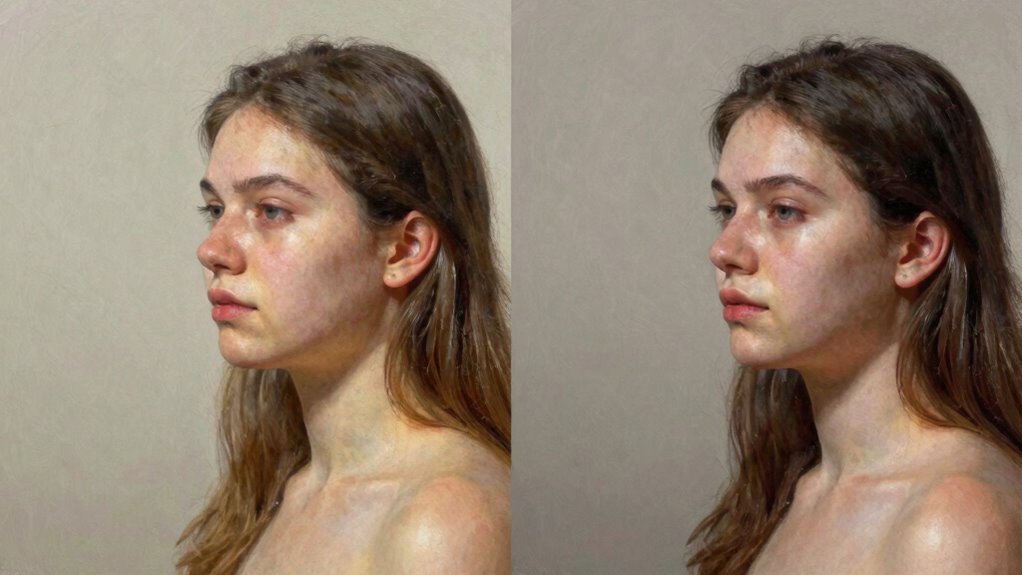
The type of lighting you choose can considerably impact the color accuracy and reproduction in your art photos. Continuous lights often offer stable color temperature and consistent exposure, making it easier to capture true colors. Strobes, on the other hand, can provide a broader light spectrum but may require more adjustments to maintain color fidelity.
Color Temperature Stability
Continuous lights generally maintain a more consistent color temperature than strobes, which can fluctuate during firing. This stability helps guarantee accurate color reproduction in your art photos, preventing shifts that can distort hues. When your lighting has stable color temperature, it maintains spectral consistency, meaning the light’s wavelengths stay uniform over time. This spectral stability directly influences the color accuracy of your images, ensuring your artwork’s hues are true to life. When your lighting has stable color temperature, it is easier to match colors precisely and reduces the need for extensive post-processing adjustments. Additionally, spectral consistency in continuous lighting minimizes color shifts caused by temperature fluctuations, leading to more reliable results. The spectral output of continuous lights remains steady, further supporting consistent color rendering. Overall, continuous lighting offers a more reliable environment for capturing true-to-life colors, making it the better choice when color accuracy and spectral consistency are priorities in your art photography.
Exposure Consistency
Lighting type considerably impacts exposure consistency, which in turn affects color accuracy and reproduction in art photos. Continuous lights provide steady output, making it easier to maintain proper exposure and guarantee accurate color calibration. Strobes, however, emit brief, intense bursts that may lead to slight fluctuations if not properly synchronized, risking inconsistencies. To illustrate, consider the following:
| Aspect | Effect on Art Photos |
|---|---|
| Light Diffusion | Softens shadows, improves exposure uniformity |
| Consistent Output | Ensures stable exposure and accurate colors |
| Color Calibration | Easier with steady light sources |
| Flicker Risk | Higher with certain strobes, affecting consistency |
| Post-Processing | Less correction needed with stable lighting |
Additionally, the flicker risk associated with some strobes can cause subtle changes in exposure over time, making it harder to achieve perfect color fidelity. Using light diffusion techniques can further enhance exposure uniformity and color accuracy. Properly managing lighting consistency is crucial for reliable, well-calibrated images, essential for true art reproduction. Implementing quality control measures and equipment vetting can greatly improve the accuracy of art photos.
Light Spectrum Range
Ever wonder how the type of lighting affects the accuracy of colors in your art photos? The light spectrum range plays a vital role in color fidelity and spectrum coverage. Continuous lights often provide a broader, more natural spectrum, helping your camera capture true-to-life colors. Strobes, on the other hand, may have a narrower spectrum, potentially causing color shifts or inaccuracies. This difference impacts how accurately your art is represented. To guarantee vibrant, true colors, choose lighting that offers full spectrum coverage. Keep in mind that consistent spectrum coverage minimizes color distortions. Additionally, understanding the impact of artificial light sources on spectrum coverage can help you select the best lighting for accurate color reproduction. Recognizing the light spectrum range of your lighting setup allows for better control over color accuracy. By understanding how each lighting type affects the spectrum, you can improve your art photography’s accuracy and authenticity. Proper lighting selection is key to capturing your artwork’s true essence.

Kelepu Portable Color Temperature Light Wand, Rechargeable 6 Modes 2700K-6000K Photography Light Wand for Decoration Designer Use
Precise Color Control: This versatile lighting tool offers a wide range of color temperatures from 2700K warm white…
As an affiliate, we earn on qualifying purchases.
As an affiliate, we earn on qualifying purchases.
Controlling Exposure: Which Lighting Method Offers Better Flexibility?
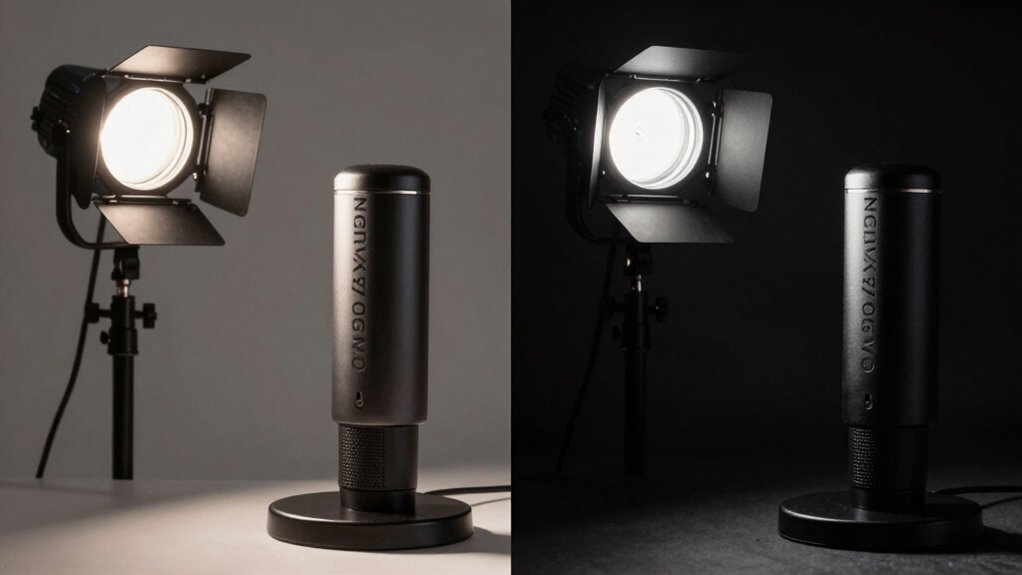
When it comes to controlling exposure, the choice between continuous lights and strobes can substantially impact your flexibility. Continuous lights let you see exactly how your scene will look, giving you precise control over exposure adjustments. They often allow for quick tweaks to light intensity and color temperature, adapting easily to different environments. Strobes, however, require adjustments through power settings, which can take time but offer higher output consistency. Understanding how passive voice detection functions can help you write clearer, more direct descriptions of lighting techniques.

Skytex Softbox Lighting Kit(1-2Pack),16x16in Soft Box|Upgrade 135W 2700-6400K 100V-240V E27 LEDBulb Continuous Photography Lighting,Photo Studio Light Equipment for Camera Shooting Video Recording
Comprehensive Studio Softbox Light Kit:Includes 16" x 16"/40cm x 40cm Softbox +135W 2700-6400K 100V-240V LED Light Bulb +…
As an affiliate, we earn on qualifying purchases.
As an affiliate, we earn on qualifying purchases.
Capturing Realism and Detail: Which Lighting Technique Works Best?
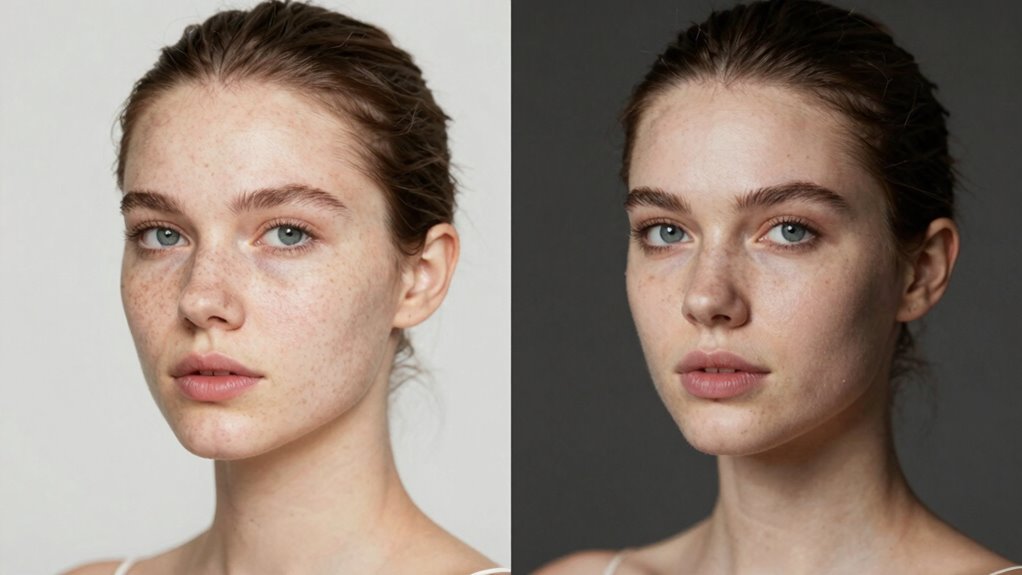
Capturing realism and fine detail depends greatly on the lighting technique you choose. Continuous lights excel at showcasing true-to-life color fidelity, allowing you to see how the final image will appear. They also aid in detail preservation, revealing subtle textures and nuances without extensive post-processing. Strobes, on the other hand, deliver powerful bursts that freeze motion and highlight intricate details instantly. This results in sharper images with vibrant color accuracy when properly managed. To maximize realism:
- Use diffuse lighting for even illumination
- Adjust your light’s color temperature for accurate hues
- Pay attention to shadows for depth
- Ensure proper light positioning to enhance fine details
Choosing the right technique depends on your goal: natural realism versus crisp detail.
Pros and Cons of Using Continuous Lights for Artwork Photography
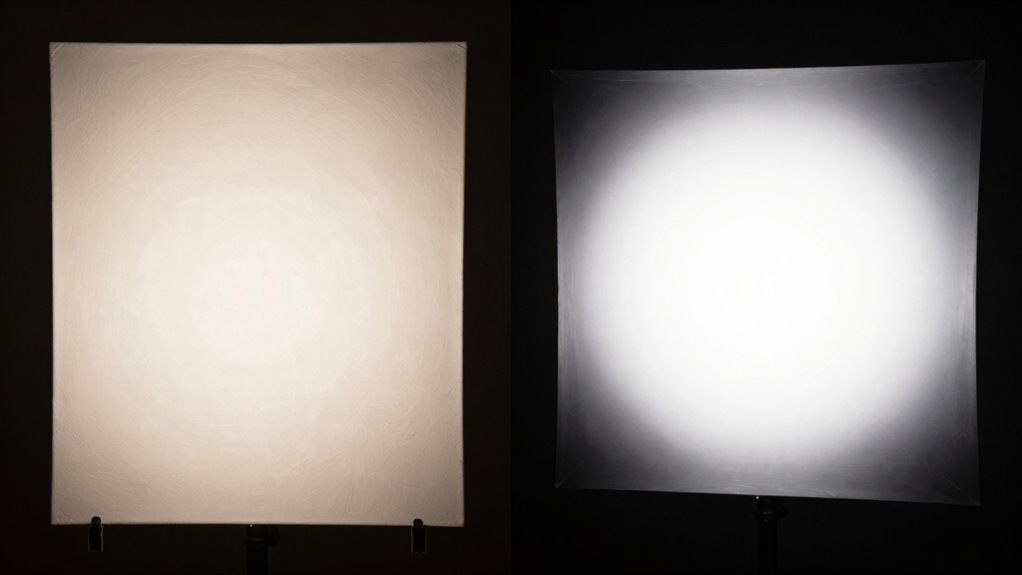
Using continuous lights for artwork photography offers several advantages, but it also comes with notable drawbacks. One benefit is improved color rendering, allowing you to see how colors truly appear without guesswork. Continuous lighting also provides steady illumination, making it easier to adjust exposure and composition in real-time. Additionally, the consistent light source helps artists and photographers visualize the final look more accurately during the shoot. Proper light diffusion techniques are crucial to achieve soft, even lighting and prevent unwanted shadows. Diffusing the light effectively can also reduce the risk of glare or reflections that might obscure fine details in artwork. Proper light diffusion not only enhances image quality but also helps maintain the integrity of delicate artworks by controlling light intensity. Additionally, continuous lights generally consume more power and may require larger setups, limiting portability. Despite these challenges, if you prioritize accurate color reproduction and real-time adjustments, continuous lighting can be a valuable tool—just be mindful of its limitations and the importance of proper light diffusion. Implementing burnout prevention measures can help protect both the equipment and artwork during prolonged sessions.
When Should You Use Strobes Instead of Continuous Lighting?
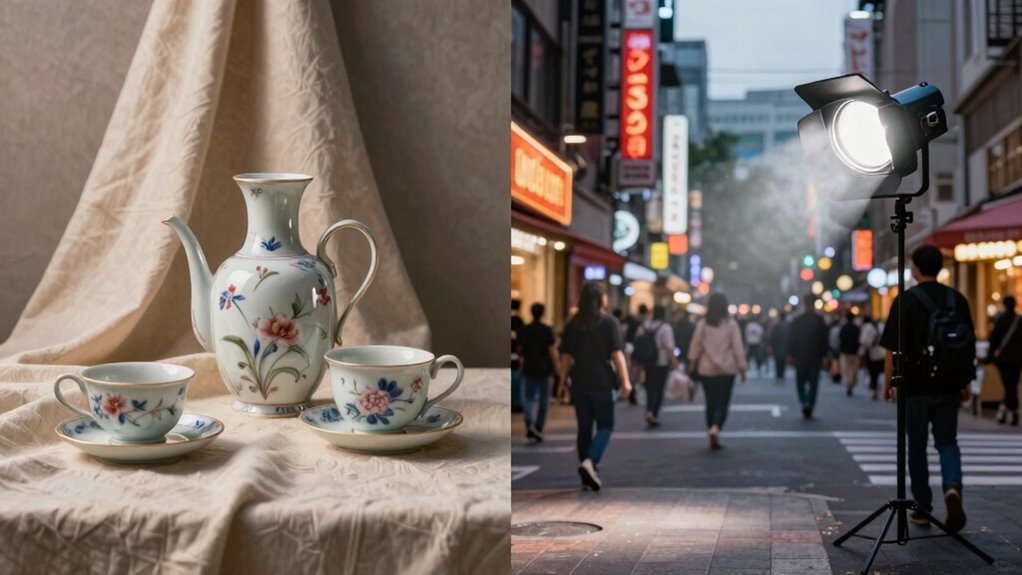
You should consider using strobes when freezing fast motion is essential, as they can produce sharp, clear images without blur. Strobes also give you greater control over light power, allowing you to fine-tune your setup for different scenes. If your shoot demands precise lighting and motion stoppage, strobes are often the better choice. Additionally, advanced lighting gear can help achieve more accurate color rendering and consistency in your images. For optimal results, understanding color temperature accuracy can be crucial in matching lighting conditions seamlessly. Moreover, employing consistent light output ensures your images maintain uniformity across different sessions.
Motion Freezing Capabilities
Strobes excel at freezing fast-moving action because of their ability to produce extremely short, intense bursts of light. This makes them ideal when you want sharp images with minimal motion blur, especially in fast-paced scenes. Their quick flash duration captures crisp details and preserves accurate color rendition, even in high-speed situations. Use strobes when you need to stop motion in sports, dance, or dynamic events, ensuring every detail is sharp and vibrant. They effectively eliminate motion blur, creating a sense of clarity and precision. Additionally, strobes allow you to control the timing precisely, syncing perfectly with your camera. This control makes them invaluable for situations requiring perfect motion freezing, where clarity and accurate color are paramount.
Light Power Control
Have you ever needed precise control over light intensity to achieve the perfect exposure? Strobes excel here because their power modulation is quick and consistent, unlike continuous lights that can introduce light flicker. When you need sharp, predictable lighting, strobes are ideal. Use them when working with fast motion or when you require consistent light levels across multiple shots. Consider this visual:
| Situation | Benefit of Strobes |
|---|---|
| High-speed action | Precise power control for freezing motion |
| Consistent lighting | No flicker, stable exposure |
| Short duration shots | Fast recycling, instant re-ignition |
| Fine-tuned light intensity | Adjustments via power setting |
| Avoiding light flicker | Steady output with minimal flicker |
Strobes allow precise light control, making them perfect for demanding scenarios.
Top Tips for Setting Up Lighting to Achieve True-to-Life Artwork Photos
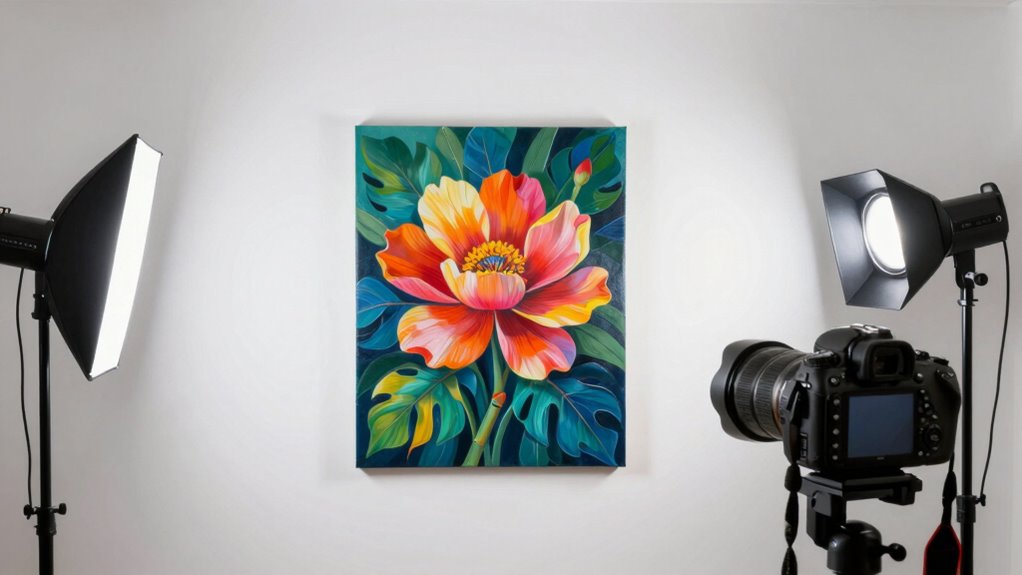
Achieving true-to-life artwork photos starts with thoughtful lighting setup. To guarantee accurate color fidelity and effective shadow control, pay attention to your light placement and quality. Use diffusers to soften harsh shadows and preserve detail, preventing color distortion. Balance your light sources to evenly illuminate the artwork without glare or hotspots. Adjust your camera’s white balance to match your lighting environment, maintaining true colors. Keep the background neutral to avoid color casts. Remember, consistent lighting helps reveal the artwork’s true details and hues. Proper setup minimizes reflection issues and enhances shadow softness, making your photos look more natural.
- Use diffusers or softboxes for even, gentle light
- Position lights at 45-degree angles to control shadows
- Check your camera’s white balance regularly
- Keep background neutral for true color representation
Choosing the Right Lighting Method to Match Your Artistic and Technical Goals
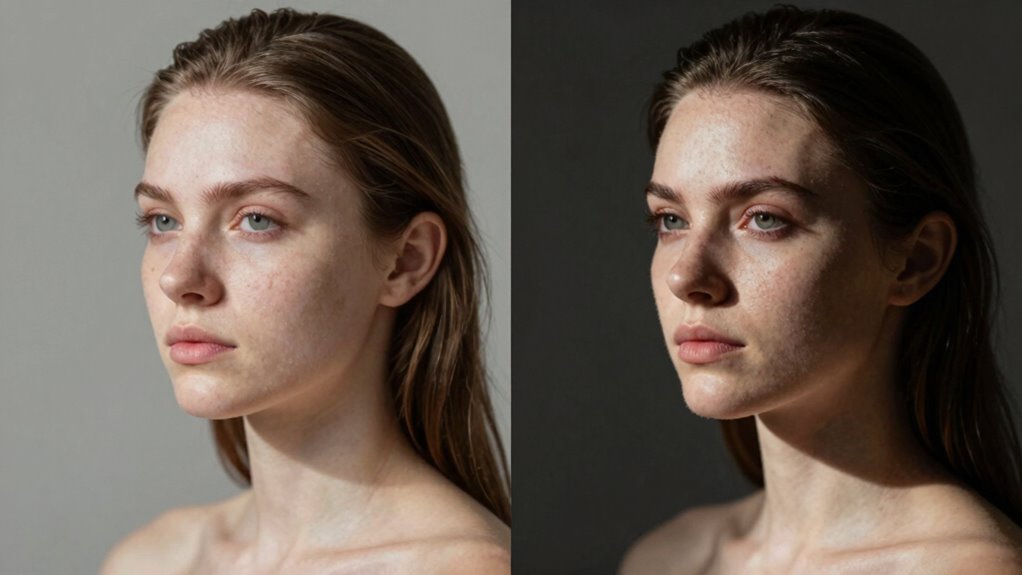
Choosing the right lighting method depends on your artistic vision and technical needs. If color rendering is vital, opt for continuous light, which allows you to see how colors will appear in real-time. This helps guarantee accurate representation and consistent results. Consider light diffusion too; softer light with good diffusion minimizes harsh shadows and enhances color accuracy, making your artwork look true-to-life. Strobes, on the other hand, often produce more intense, controlled bursts of light, which can be advantageous for freezing motion or achieving high contrast. However, they can be less forgiving when it comes to evaluating color and diffusion during setup. Ultimately, select the method that aligns with your goals, balancing the importance of real-time visualization, color fidelity, and light softness.
Frequently Asked Questions
How Do Lighting Choices Impact the Viewer’s Perception of Artwork?
Lighting choices directly influence how you perceive artwork by affecting lighting consistency, which guarantees colors and details appear true to life. When lighting is well-balanced, it enhances viewer engagement, drawing your attention to key elements without distortion. Poor lighting can create shadows or glare, misleading your perception. As a result, selecting the right lighting setup helps you appreciate the artwork’s true essence, making your viewing experience more authentic and immersive.
Can Different Light Temperatures Alter the Artwork’s Appearance?
Did you know that changing the color temperature by just a few hundred kelvins can substantially alter how your artwork appears? Different light temperatures, like warm or cool tones, can make colors seem more vibrant or subdued. You need consistent light to accurately showcase your art, as variations in color temperature can mislead viewers or distort your intended perception. Keeping light consistent ensures your artwork looks true to life.
Is It Easier to Correct Color Issues With Continuous Lights or Strobes?
You’ll find it easier to correct color issues with strobes because they offer better control over light modulation, ensuring consistent color output. Continuous lights can sometimes cause flickering or slight color shifts, making color consistency harder to maintain. With strobes, you can fine-tune settings and achieve more precise color rendering, simplifying post-processing adjustments and ensuring your artwork looks true to life.
What Are the Cost Considerations Between Continuous Lighting and Strobes?
You might think continuous lights are cheaper upfront, but think again. Strobes often come with a higher initial cost, yet they tend to be more durable and last longer, saving you money over time. If budget constraints are tight, continuous lighting can seem appealing, but consider equipment longevity. In the long run, investing in strobes could be smarter, offering better value and fewer replacements down the road.
How Does Ambient Light Influence Artwork Photography Quality?
Ambient light considerably impacts your artwork photography quality by affecting artwork color consistency and overall image accuracy. If you don’t control ambient light, colors may appear washed out or overly warm, compromising the artwork’s true tones. To achieve consistent results, you should use light control tools like diffusers or blackout curtains, ensuring the ambient light doesn’t distort your colors. This way, your photos better represent the artwork’s true essence.
Conclusion
Choosing between continuous lights and strobes ultimately depends on your artistic goals and technical needs. Do you want the most accurate color reproduction and detail? If so, understanding each lighting type’s strengths and limitations helps you make better choices. Experiment with both to see which delivers the true-to-life results you desire. After all, isn’t creating art that faithfully represents your vision worth exploring different lighting methods?