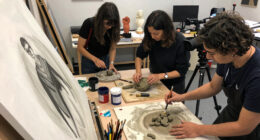
Understanding composition involves more than just applying the rule of thirds; it’s about intentionally arranging elements to create balance and focus. You can use techniques like lines, framing, and asymmetry to guide the viewer’s eye and add interest. Balance isn’t only about even distribution but also visual weight. By exploring beyond the rule of thirds, you’ll discover how to craft dynamic, engaging layouts that tell a compelling story—there’s much more to learn to perfect your composition skills.
Key Takeaways
- The rule of thirds divides the frame into nine sections to position key elements for balanced, dynamic compositions.
- Focal points placed at intersections draw viewers’ attention and guide visual flow naturally.
- Additional techniques like leading lines, framing, and asymmetry enhance balance and visual interest beyond the rule of thirds.
- Visual hierarchy and balancing elements create emphasis and clarity within a composition.
- Effective composition combines multiple techniques to tell a compelling visual story and engage viewers.

Have you ever wondered what makes a piece of art or a written work feel balanced and complete? The answer often lies in understanding composition, particularly how you use balance techniques and focal points to guide the viewer’s eye and create harmony. Composition isn’t just about arranging elements; it’s about intentionally directing attention and establishing a visual rhythm that feels natural and engaging. One of the most fundamental balance techniques is the rule of thirds, which involves dividing your frame into nine equal parts using two horizontal and two vertical lines. By placing key elements along these lines or at their intersections, you create a sense of balance that’s both dynamic and pleasing to the eye. This technique helps prevent your work from feeling too centered or static, encouraging viewers to explore the entire scene or page.
Focal points are central to creating effective composition. They serve as visual anchors that instantly draw attention, guiding viewers through your work in a deliberate sequence. When you identify and emphasize your focal points, you help viewers understand what’s most important, making your message clearer and more impactful. Balance techniques, like the rule of thirds, support this by positioning your focal points in spots that naturally attract the eye. For example, placing a subject at a third intersection can generate a sense of movement and interest, avoiding the dullness of a perfectly centered subject. Beyond the rule of thirds, other balance techniques include leading lines, framing, and asymmetry. These methods work together to create a composition that feels intentional rather than haphazard. Incorporating visual hierarchy can further enhance how viewers interpret and engage with your work.
As you develop your skills, keep in mind that balance doesn’t mean everything is evenly distributed. Instead, it’s about creating a visual weight that feels stable and harmonious. Sometimes, asymmetry can produce a more dynamic composition because it draws attention to specific areas while maintaining overall equilibrium. For instance, balancing a large object on one side with smaller elements on the other can produce a lively, engaging layout. The key is understanding how focal points and balance techniques interact—by deliberately positioning elements, you can craft a composition that feels complete and compelling. Additionally, understanding composition techniques can help you adapt your approach to different contexts and content types, enhancing your overall effectiveness. Remember, good composition isn’t just about following rules; it’s about understanding how to use balance techniques to highlight your focal points and tell your story effectively.

Rule of Thirds Directors Viewfinder Card
Rule of Thirds Viewfinder — classic nine-zone composition grid for photography, video, and art; use as an artist…
As an affiliate, we earn on qualifying purchases.
As an affiliate, we earn on qualifying purchases.
Frequently Asked Questions
How Does the Rule of Thirds Influence Viewer Perception?
The rule of thirds guides your eye, creating visual balance that makes images more engaging. When you place key elements along the grid lines or at intersections, it enhances emotional impact by drawing attention naturally. This technique helps you perceive scenes more clearly, making your composition feel harmonious and compelling. By understanding this rule, you improve how viewers experience your photos, ensuring they connect emotionally with your work through better visual balance.
Can Composition Techniques Be Applied in Digital Editing?
Like a painter adding symbolic layers to a canvas, you can use composition techniques in digital editing to deepen your work’s meaning. Digital editing allows for endless compositional experimentation, letting you reframe, crop, and arrange elements creatively. This flexibility means you can apply traditional principles like the rule of thirds or push boundaries, enhancing your visual storytelling and creating more compelling, thought-provoking images.
What Are Common Mistakes to Avoid in Composition?
When working on composition, avoid common mistakes like unbalanced framing errors that distract from your subject. Don’t neglect the importance of balance; overloading one side can throw off the whole shot. Be mindful of framing errors, such as cutting off important elements or poor angles. Keep an eye on these issues, and you’ll create more compelling, well-composed images that draw viewers in naturally.
How Do Different Cultures Interpret Composition Rules?
You’re really on to something when you realize that different cultures see composition rules through unique lenses. Cultural symbolism influences how images tell stories, so what’s balanced in one culture might be misunderstood in another. When you pay attention to these differences, you enhance your visual storytelling, respecting diverse perspectives. It’s like walking a tightrope—balancing universal principles with cultural nuances to create compelling, meaningful images.
Are There Specific Genres That Benefit From Unique Compositional Approaches?
You’ll find that certain genres, like abstract art or experimental film, benefit from unique compositional approaches. Genre-specific framing helps evoke specific moods, while stylistic experimentation pushes creative boundaries. For example, in abstract art, unconventional framing emphasizes emotion over realism, and in experimental film, breaking traditional rules creates a fresh narrative style. Embracing these approaches allows you to craft more engaging, genre-appropriate visuals that resonate deeply with your audience.

Photography Composition Rules Poster Guide to Rule of Thirds Framing Leading Lines Canvas Wall Art for Living Room Home Studio Office Decor(Unframed,08x12inch(20x30cm))
We have reserved a 0.6in (1.5cm) white margin for you, which is convenient for you to frame with…
As an affiliate, we earn on qualifying purchases.
As an affiliate, we earn on qualifying purchases.
Conclusion
Now that you’ve glimpsed the secrets behind composition, remember it’s like painting with a map in hand. The rule of thirds guides your brush, but don’t be afraid to break the lines and explore new horizons. Composition is the melody that turns a photo into a story, a dance between balance and chaos. So, keep experimenting, let your creativity soar, and watch your images bloom into enthralling works of art.

The Ultimate Eyeshadow Application Guide: Step-by-Step Techniques for Hooded Eyes, Mature Skin, & Beginners to Master Smokey, Natural, and Vertical Gradient Looks
As an affiliate, we earn on qualifying purchases.
As an affiliate, we earn on qualifying purchases.

The Operational Excellence Library; Mastering Visual Hierarchy
As an affiliate, we earn on qualifying purchases.
As an affiliate, we earn on qualifying purchases.