
Light-based public art and luminous installations turn urban spaces into mesmerizing, interactive environments that heighten visual interest and community engagement. You’ll see how innovative lighting transforms ordinary areas into vibrant canvases, using effects like shadow, glow, and flicker to shape perception. These installations encourage active participation, making the experience memorable and immersive. As you explore further, you’ll discover how these dynamic designs continue to evolve, adding new layers of excitement to cityscapes.
Key Takeaways
- Light-based public art transforms urban spaces into dynamic, immersive environments through innovative illumination techniques.
- Luminous installations encourage active participation, fostering social engagement and personal connections with the artwork.
- Urban illumination highlights architectural features, creating landmarks and enhancing city identity after dark.
- Advanced lighting technology enables interactive displays that respond to movement, touch, or weather, enriching public experiences.
- These installations inspire new perceptions of spaces, blending creativity, technology, and community to make environments extraordinary.
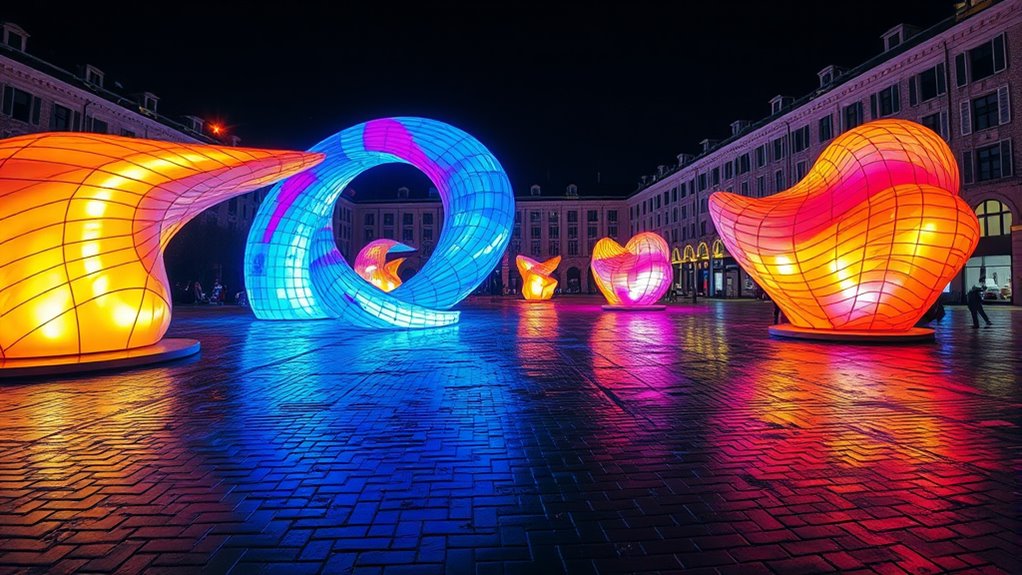
Have you ever wondered how light can transform public spaces into mesmerizing works of art? It’s a powerful tool that artists and city planners alike use to create immersive experiences, turning ordinary environments into extraordinary visual spectacles. Light-based public art, especially through luminous installations, harnesses the dynamic qualities of light to engage viewers on a deeper level. When you walk through a city illuminated by these installations, you become part of a living canvas where every shadow, glow, and flicker has a role in shaping your perception of the space. This art form isn’t static; it evolves with time, weather, and your movement, making each encounter unique.
One of the most fascinating aspects of modern light-based public art is the use of interactive exhibits. These installations invite you to participate actively rather than passively observe. Imagine standing in front of a luminous sculpture that responds to your touch or movement, changing colors or patterns as you interact. These exhibits break down the traditional barrier between art and viewer, transforming spectators into participants. By doing so, they foster a sense of engagement and personal connection, making the experience memorable. Interactive exhibits also encourage social interaction, as people gather around, collaborate, or compete to influence the display. This collective participation breathes life into urban illumination projects, making public spaces more vibrant and inclusive.
Urban illumination, in particular, plays an essential role in redefining cityscapes. When cities invest in luminous installations, they don’t just light up streets—they create visual landmarks that define a community’s identity. These lighting schemes can highlight architectural features, transform parks after dark, or animate facades with pulsating colors. The strategic use of light enhances safety, guides pedestrians, and elevates the aesthetic appeal of urban environments. More importantly, it creates a sense of wonder and curiosity, encouraging residents and visitors to explore and engage with their surroundings after sunset. You might find yourself wandering through a city square illuminated by a swirling light display, feeling a renewed sense of connection to the space around you. The integration of interactive lighting technology in urban design further amplifies these effects, making public art a dynamic part of city life.
Ultimately, light-based public art and luminous installations do more than decorate—they inspire. They challenge you to see your environment in new ways and invite you to participate in the ongoing conversation between space and observer. By blending technology, creativity, and community, these projects transform ordinary public areas into mesmerizing, interactive experiences that leave lasting impressions. Whether through stunning visual effects or engaging exhibits, light art brightens your city and your perspective, making everyday spaces feel extraordinary.

ASENTE LED Lighted Display Base – Illuminate and Showcase Your Crystal Art, Sculptures, and More! Perfect for Glass, Trophies, and Paperweights – Programmable Color Changing LED – 2.5 Inch Light Base
SLEEK AND COMPACT DESIGN: Enjoy a modern and stylish design that complements any decor! The Asente LED light…
As an affiliate, we earn on qualifying purchases.
As an affiliate, we earn on qualifying purchases.
Frequently Asked Questions
How Do Artists Ensure Safety With Luminous Installations?
You guarantee safety with luminous installations by carefully managing electrical wiring, making certain it’s properly insulated and grounded to prevent shocks or fires. You also select durable, weather-resistant materials that withstand environmental conditions, reducing the risk of damage or malfunction. Regular inspections and maintenance further help identify potential hazards early. By following safety standards and using quality components, you create a safe, mesmerizing experience for viewers and protect your artwork over time.
What Maintenance Is Required for Light-Based Public Art?
Maintaining your luminous installation is like tending a garden—you need regular care. You should check material durability to prevent wear and tear, replace or repair damaged parts promptly, and guarantee electrical components stay safe and functional. Additionally, stay on top of technological updates, like software or LED improvements, to keep your artwork vibrant and efficient. Regular cleaning and inspections will keep your luminous art shining brightly for years to come.
Are There Environmental Concerns With Luminous Materials?
Yes, luminous materials can raise environmental concerns. You should consider their environmental impact and sustainability challenges, as some rely on hazardous chemicals or non-biodegradable substances. These materials may pose risks to ecosystems if not properly managed or disposed of. To minimize harm, choose eco-friendly, energy-efficient options and ensure safe maintenance practices. Prioritizing sustainability helps reduce negative effects and supports responsible public art that respects the environment.
How Is Audience Interaction Incorporated Into Light Art?
You engage with light art through interactive technology that encourages audience participation, making your experience dynamic and personal. Artists incorporate sensors, motion detectors, and touch interfaces that respond to your movements or inputs, allowing you to influence the illumination or patterns. This active involvement transforms viewers into co-creators, fostering a deeper connection with the artwork and enhancing the communal, immersive atmosphere of the installation.
What Funding Sources Support Luminous Public Art Projects?
You can secure funding for luminous public art through sources like public art grants, which support community-focused projects, or corporate sponsorships that align brands with innovative installations. For example, a city might partner with a tech company to fund a vibrant luminous sculpture. These collaborations provide essential resources, helping artists realize their vision and engage audiences with mesmerizing light displays.

BN-LINK 7 Day Outdoor Heavy Duty Digital Programmable Timer, Outdoor Timer Outlet Waterproof, 2 Grounded Electrical Outlets for Christmas Lights, 15A 1/2HP,ETL Listed
✓ VERSATILE & CUSTOMIZABLE: Easily set up to 8 on/off programs for the timer’s two grounded outlets. Outlets…
As an affiliate, we earn on qualifying purchases.
As an affiliate, we earn on qualifying purchases.
Conclusion
As you stand before these luminous creations, remember they’re more than just lights—they’re symbols of connection, hope, and innovation. Each glow guides you through darkness, reminding you of the power of human creativity to illuminate our shared space. These artworks become beacons, inspiring unity and reflection. So, let their light ignite your spirit, proving that even in the darkest times, brilliance and community can shine together, forever transforming the city’s soul.

Northern Galaxy Light Aurora Projector,33 Light Effects Night Lights LED Star Projector,Nebula Lamp for Bedroom with Remote Control,White Noise,Bluetooth Speaker for Bedroom,Party,Holiday Decoration
【4 Colors with Multiple Dynamic Lighting Modes】The Aurora Projector features built-in dynamic aurora effects in 4 colors (red,…
As an affiliate, we earn on qualifying purchases.
As an affiliate, we earn on qualifying purchases.

DESOOP Wireless Brass Picture Lights for Wall Motion Activated, Motion Sensor Art Lights Auto-Off Gallery Lights for Portraits Display 24 Inch 5W Warm White
Motion Sensor Picture Light: Turn the switch to the right to activate motion sensor mode. When a motion…
As an affiliate, we earn on qualifying purchases.
As an affiliate, we earn on qualifying purchases.