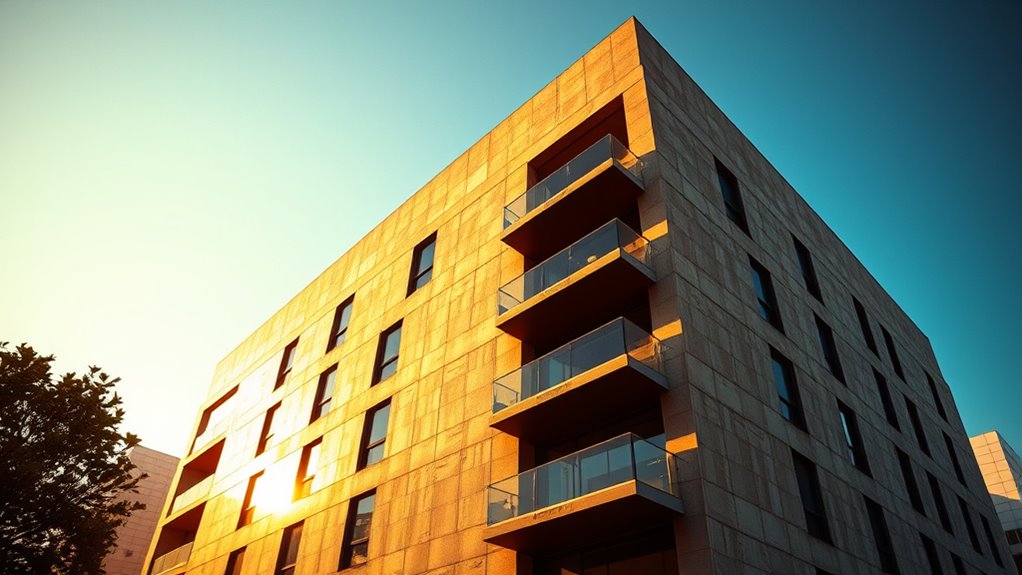

In contemporary architecture, you see designers skillfully use light and shadow to create spaces that are lively, inviting, and visually striking. They harness natural light to shape interiors that feel open and dynamic, while shadows add depth, contrast, and drama to facades. Techniques like overhangs, screens, and strategic openings help guide perception and enhance the building’s purpose. Keep exploring to discover how these principles transform everyday structures into inspiring environments.
Key Takeaways
- Contemporary architecture employs innovative techniques like overhangs, screens, and louvers to create dynamic shadow patterns.
- Natural light is strategically integrated to enhance sustainability, visual interest, and emotional impact within spaces.
- Designers manipulate light and shadow to define spatial experiences, evoke moods, and highlight architectural features.
- Modern projects use light and shadow to respond to natural rhythms, creating environments that evolve throughout the day.
- The interplay of light and shadow is used both aesthetically and functionally to improve comfort, privacy, and aesthetic expression.
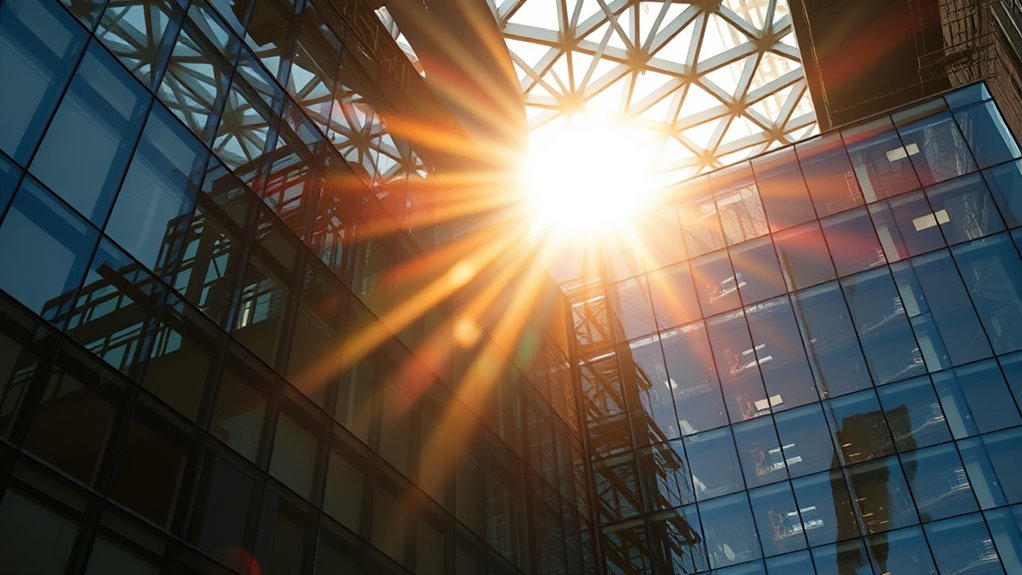
Light and shadow are powerful tools architects use to shape spaces, evoke emotions, and highlight architectural features. In contemporary design, harnessing natural illumination is key to creating vibrant, dynamic environments. When you consider how sunlight filters through windows or skylights, you’re not just illuminating a space—you’re bringing it to life. Natural illumination enhances the sensory experience, making interiors feel more open and welcoming. By carefully positioning openings and choosing materials that maximize daylight, you can reduce reliance on artificial lighting, promoting sustainability and well-being. The interplay of light and shadow creates a rhythm within a space, transforming mundane environments into engaging experiences. Lighting control systems can further optimize how natural light is managed throughout the day, enhancing comfort and energy efficiency.
Light and shadow shape spaces, evoke emotions, and highlight features for vibrant, dynamic, and sustainable environments.
Shadow play, in particular, is a compelling technique that architects use to add depth and drama. As the sun moves throughout the day, shadows shift, revealing different facets of a building’s design. You can manipulate this effect by designing overhangs, screens, or louvers that cast patterned shadows, turning static facades into living canvases. These shadows don’t just serve aesthetic purposes—they also function practically, providing shade and regulating temperature. When you integrate shadow play into your design, you’re able to guide how occupants perceive and interact with a space. Shadows can frame views, accentuate textures, or create a sense of mystery, inviting curiosity and exploration.
In contemporary architecture, the skillful use of natural illumination and shadow play often results in a harmonious balance between light and dark. You might design a space where sunlight floods in during the morning, gradually giving way to softer, shadowed areas as the day progresses. This dynamic lighting not only enhances visual interest but also influences mood and activity. For example, a bright, sunlit living area can energize occupants, while a shadowed corner offers a quiet retreat. The key lies in understanding how to choreograph these effects, so light and shadow work together to support the building’s purpose and aesthetic.
Ultimately, mastering the use of light and shadow empowers you to craft environments that are both functional and emotionally resonant. By thoughtfully integrating natural illumination and shadow play, you create spaces that respond to the natural rhythm of the day, enriching human experience. Light and shadow aren’t just design elements—they’re fundamental tools that shape how people feel and move within the architecture you conceive. When used skillfully, they transform ordinary structures into inspiring, living works of art.

Designing with Light: The Art, Science, and Practice of Architectural Lighting Design
As an affiliate, we earn on qualifying purchases.
As an affiliate, we earn on qualifying purchases.
Frequently Asked Questions
How Do Architects Predict Natural Light Patterns Throughout the Year?
You predict natural light patterns by using solar modeling and daylight forecasting techniques. These tools analyze the sun’s movement, taking into account your location, building orientation, and local climate. By simulating sunlight throughout the year, you can optimize window placement, shading devices, and interior layouts. This proactive approach helps you create spaces that maximize natural light and minimize glare, ensuring comfort and energy efficiency in your architectural designs.
What Are the Environmental Impacts of Extensive Light Use in Architecture?
You might not realize it, but extensive light use in architecture can cause serious environmental impacts. It contributes to light pollution, disrupting the natural night sky and harming wildlife. Excessive artificial lighting also leads to ecological disruption, affecting animal behaviors and plant growth. By reducing unnecessary lighting and using energy-efficient solutions, you can help minimize these impacts, protecting ecosystems and maintaining the balance between urban development and the environment.
How Does Shadow Influence the Perception of Space in Urban Design?
Shadow influences your perception of space by creating depth and contrast, making areas feel larger or more intimate. When shadows are deep, they add a sense of mystery and spatial ambiguity, encouraging you to explore further. Light and shadow work together to define boundaries and forms, guiding your movement through urban environments. This interplay shapes your overall experience, emphasizing certain features and making spaces feel dynamic and engaging.
What Innovative Materials Enhance Light and Shadow Effects in Buildings?
Imagine a modern-day Da Vinci wielding dynamic glazing and reflective surfaces. These innovative materials amplify light and shadow effects, creating dramatic visual experiences. Dynamic glazing adjusts transparency with sunlight, enhancing shadow play, while reflective surfaces bounce light to sculpt striking patterns. Together, they push architectural boundaries, allowing buildings to interact dynamically with their environment. This synergy transforms ordinary facades into living canvases of light, shadow, and innovation.
How Can Light and Shadow Be Used to Improve Energy Efficiency?
You can improve energy efficiency by using light and shadow strategically. Incorporate daylight harvesting systems that adjust artificial lighting based on natural light levels, reducing energy use. Additionally, design with passive solar principles, like shading devices and window placement, to maximize sunlight during winter and minimize heat gain in summer. These techniques optimize natural light, cut energy costs, and create comfortable, sustainable spaces.

Frost King AWS1025SP WB Marvin Adjustable Window Screen, 10in High x Fits 15-25in Wide
10-inches high and easy to adjust
As an affiliate, we earn on qualifying purchases.
As an affiliate, we earn on qualifying purchases.
Conclusion
As you explore contemporary architecture, you’ll notice how masterful use of light and shadow transforms spaces. Remarkably, a 2022 survey revealed that 78% of architects believe lighting dramatically enhances a building’s emotional impact. By understanding and applying these elements, you can create environments that inspire, comfort, and surprise. Embrace the play of light and shadow in your designs, and watch how they breathe life into even the simplest structures, making them truly unforgettable.

Exterior Solutions Standard Louver Exterior Vinyl Shutter, Paintable (Pair), 15 Inch x 47 Inch
One Piece Injection Molded Polypropylene Construction
As an affiliate, we earn on qualifying purchases.
As an affiliate, we earn on qualifying purchases.

FYDRCC Smart Blue Sky Light Ceiling Lamp, Clear Sky Light, Sunlight Lamp, Natural Light Skylight, Simulate a Sunlight Irradiation Room, Living Room, Office (1x2FT)
【MIX THE LIGHT OF NATURE】For basement, houses and offices, wellness centres, airports, even narrow spaces, Reproduce sunlight in…
As an affiliate, we earn on qualifying purchases.
As an affiliate, we earn on qualifying purchases.