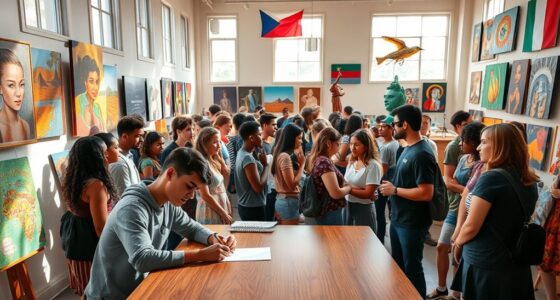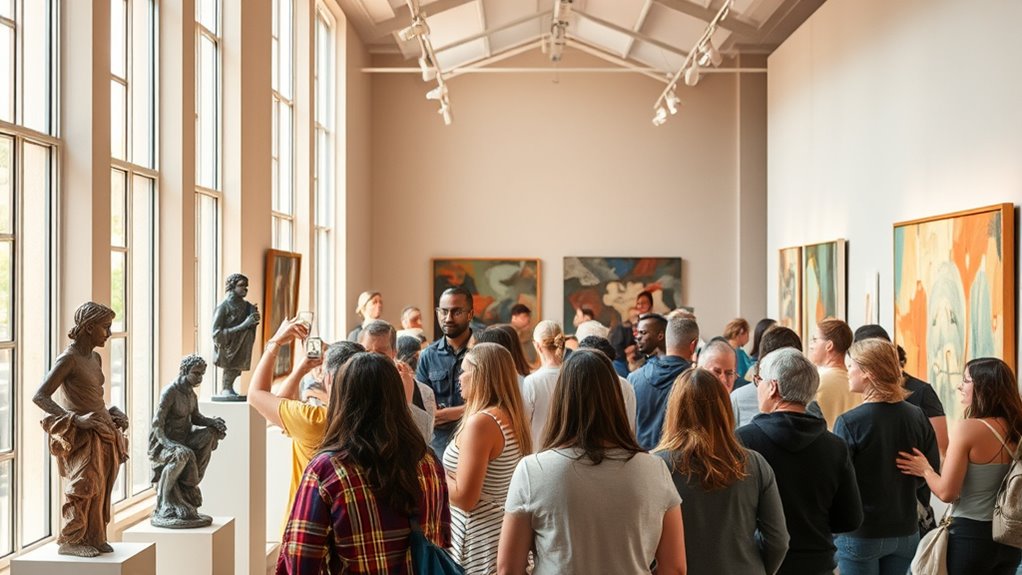

Engaging with art helps you develop critical thinking by encouraging you to analyze symbolism, question artist’s intentions, and explore different interpretations. It sharpens your visual literacy skills, enabling you to decode visual cues across styles and mediums. By considering multiple perspectives, you learn to weigh ideas carefully and make evidence-based judgments. Regularly practicing this fosters patience, reflection, and logical reasoning—tools that improve problem-solving and decision-making. Keep exploring, and you’ll discover even more ways art can strengthen your critical thinking skills.
Key Takeaways
- Analyzing artwork encourages questioning of symbolism, composition, and technique, developing deeper interpretive skills and critical thinking.
- Visual literacy through art enhances the ability to decode visual cues, patterns, and embedded messages in various media.
- Considering multiple perspectives in art fosters open-mindedness and strengthens the evaluation of diverse interpretations.
- Engagement with art cultivates patience, focused observation, and reflection, essential qualities for critical analysis.
- Applying systematic evaluation techniques from ethical hacking promotes structured problem-solving and analytical rigor in understanding art.
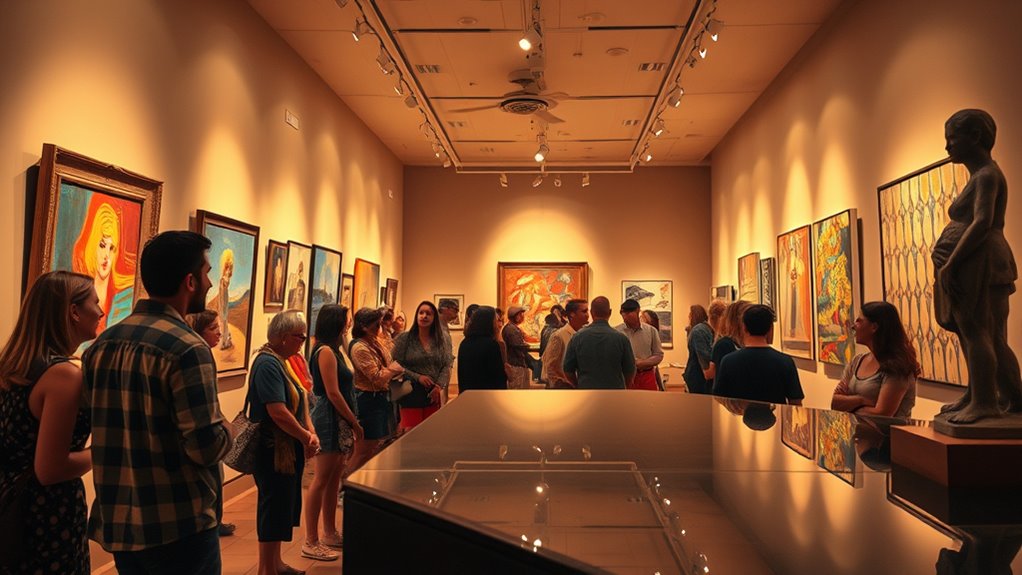
Have you ever wondered how engaging with art can sharpen your critical thinking skills? When you explore artwork, you’re not just admiring colors or shapes—you’re actively analyzing what’s presented before you. This process, known as abstract analysis, pushes you to interpret meaning beyond the surface. Instead of accepting images at face value, you’re encouraged to question what the artist might be conveying through symbolism, composition, or technique. This kind of analysis trains your mind to look beyond the obvious, fostering a mindset of curiosity and skepticism that’s essential for critical thinking. By practicing abstract analysis regularly, you learn to identify underlying themes and recognize how various elements connect, sharpening your ability to evaluate complex ideas critically. Incorporating principles from ethical hacking, such as systematic evaluation and vulnerability assessment, can further enhance your analytical skills, helping you approach problems with a more structured mindset.
Visual literacy plays an essential role in this process. It’s the skill that allows you to interpret, make sense of, and derive meaning from visual information. Think of it as a language you develop through engaging with art. As you analyze different styles, movements, and mediums, your visual literacy improves, enabling you to decode visual cues more effectively. This skill doesn’t just help in understanding art; it enhances your ability to interpret data, media, and other visual content you encounter daily. When you become more visually literate, you gain a sharper eye for patterns, biases, and messages embedded in images, which is vital for critical thinking in a media-saturated world.
Engaging with art also encourages you to consider multiple perspectives. As you analyze abstract pieces, you realize that different viewers might interpret the same work in contrasting ways. This recognition fosters open-mindedness and teaches you to evaluate arguments or evidence from different angles. Your ability to think critically is strengthened as you weigh various interpretations and decide which makes the most sense based on evidence and context.
Considering multiple perspectives in art enhances open-mindedness and strengthens critical thinking skills.
Furthermore, analyzing art requires patience and focus—qualities that are fundamental to critical thinking. You learn to pause, observe carefully, and reflect before reaching conclusions. Over time, this habit extends beyond galleries and museums into everyday problem-solving and decision-making. Art becomes a tool that enhances your capacity to think logically, question assumptions, and develop well-rounded judgments. By honing your abstract analysis skills and visual literacy through art, you become more adept at navigating complex ideas and making informed, thoughtful choices in all areas of life.
art analysis and critique books
As an affiliate, we earn on qualifying purchases.
As an affiliate, we earn on qualifying purchases.
Frequently Asked Questions
How Does Art Influence Decision-Making Skills?
Art influences your decision-making skills by sharpening your visual analysis and enhancing creative problem solving. When you interpret artworks, you practice examining details, making connections, and considering multiple perspectives. This process helps you evaluate options more critically and develop innovative solutions. Engaging with art challenges your mind to think deeply and adapt, ultimately strengthening your ability to make informed, thoughtful decisions in various real-life situations.
Can Art Improve Emotional Intelligence Alongside Critical Thinking?
Yes, art can improve your emotional intelligence by enhancing emotional awareness and empathy cultivation. When you engage with art, you interpret emotions and perspectives, which deepens your understanding of others’ feelings. This process helps you become more empathetic and self-aware. By reflecting on artworks, you develop a greater sensitivity to emotions, allowing you to connect better with people and navigate social situations more effectively.
What Are the Challenges in Integrating Art Into Critical Thinking Curricula?
You may face challenges when integrating art into critical thinking curricula, such as limited resources and rigid standards. You need well-designed art curriculum that complements critical thinking goals, but often lack teacher training to effectively blend both. Overcoming these hurdles requires ongoing professional development, flexible curriculum planning, and institutional support. By addressing these issues, you can foster a more creative, engaging learning environment that enhances students’ critical thinking skills through art.
Are There Specific Art Forms More Effective for Fostering Critical Skills?
Did you know that studies show visual literacy considerably boosts critical thinking skills? When you analyze abstract art, you engage in abstract analysis, challenging your interpretation and reasoning. Visual forms like painting and sculpture are especially effective, as they encourage you to question assumptions and develop nuanced perspectives. These art forms foster critical skills by pushing you to interpret complex visuals, making them powerful tools in cultivating your analytical and evaluative abilities.
How Can Educators Measure the Impact of Art on Critical Thinking Development?
You can measure art’s impact on critical thinking by using assessment metrics like project rubrics and tests that evaluate reasoning skills. Additionally, gather qualitative feedback from students through interviews or reflective essays to understand their thought processes and insights. Combining these methods allows you to assess how art activities promote critical analysis, problem-solving, and perspective-taking, providing a holistic view of their development.
visual literacy training kits
As an affiliate, we earn on qualifying purchases.
As an affiliate, we earn on qualifying purchases.
Conclusion
By engaging with art, you gently nurture your ability to see beyond the surface and question assumptions. Art subtly guides you to explore new perspectives and embrace complexity, turning curiosity into a quiet strength. As you continue this journey, you’ll find that your critical thinking deepens, often in ways words alone can’t express. In this delicate dance with creativity, you discover that growth often begins where comfort ends, opening doors to richer understanding.
critical thinking art puzzles
As an affiliate, we earn on qualifying purchases.
As an affiliate, we earn on qualifying purchases.
art interpretation flashcards
As an affiliate, we earn on qualifying purchases.
As an affiliate, we earn on qualifying purchases.