Emily Kam Kngwarray’s work showcases how Aboriginal art evolves by blending traditional Dreamtime stories and symbols with contemporary techniques like dot painting. She maintains cultural continuity while adapting her style to modern artistic expressions, ensuring her stories remain relevant today. Her art reflects a living tradition that honors the past yet embraces growth and change. If you explore further, you’ll discover how her innovative approach continues to shape Aboriginal art today.
Key Takeaways
- Emily Kam Kngwarray’s work exemplifies the blending of traditional Dreamtime symbolism with contemporary art techniques.
- Her art reflects the evolution of Aboriginal storytelling through innovative visual expressions like dot painting.
- Kngwarray’s artworks preserve cultural narratives while adapting to modern artistic contexts.
- She incorporates both ancient symbols and personal interpretations, demonstrating cultural continuity and change.
- Her contributions highlight the ongoing development of Aboriginal art as a living, evolving cultural tradition.
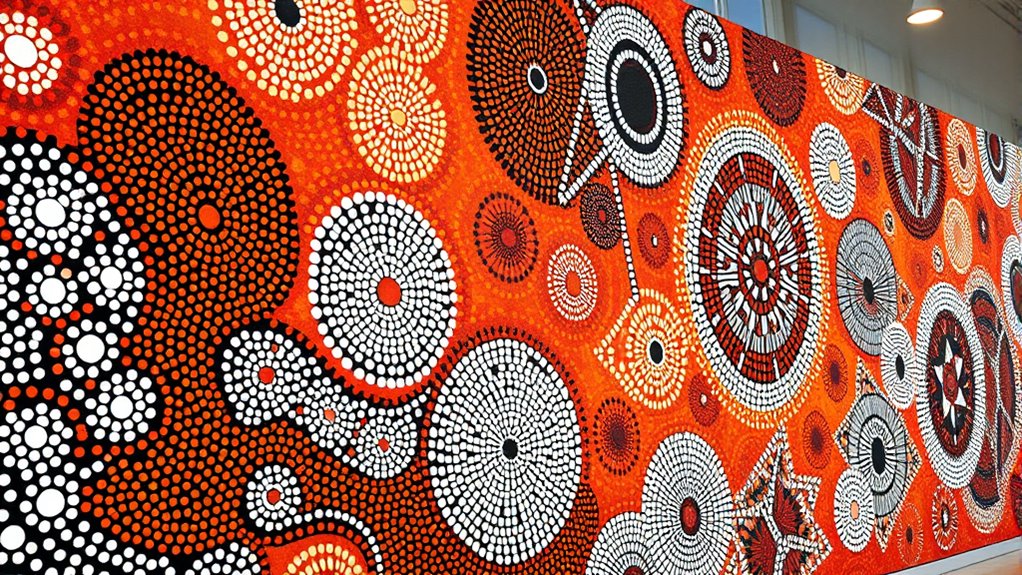
Aboriginal art has a rich history that reflects the deep cultural connections and spiritual beliefs of Indigenous Australians. When you explore this art form, you’re delving into a world where stories, traditions, and symbols are woven into every brushstroke and carving. One of the most essential elements of this tradition is the use of Dreamtime stories, which serve as the foundation of Aboriginal spirituality and understanding of the world. These stories explain how the land, animals, and people came into existence and are passed down through generations, often conveyed through intricate artworks. As you observe Aboriginal art, you notice that each piece is more than just a visual expression; it’s a narrative rooted in these Dreamtime stories, acting as a bridge between the spiritual and the physical worlds. The evolution of Aboriginal art also demonstrates how traditional techniques and motifs can adapt to contemporary contexts, ensuring their relevance and vitality in today’s cultural landscape.
Aboriginal art weaves Dreamtime stories into visual expressions connecting spiritual beliefs and cultural heritage.
Indigenous symbolism plays a pivotal role in conveying these stories and cultural values. You’ll see symbols that represent waterholes, tracks, animals, and ancestral beings, each carrying specific meanings that are understood within the community. These symbols are not arbitrary; they’re precise signs that communicate complex ideas succinctly. When Emily Kam Kngwarray created her works, she used this language of Indigenous symbolism to tell stories that resonate deeply with her culture. Her art captures the essence of Dreamtime narratives, transforming them into visual forms that invite viewers to interpret and connect with her heritage.
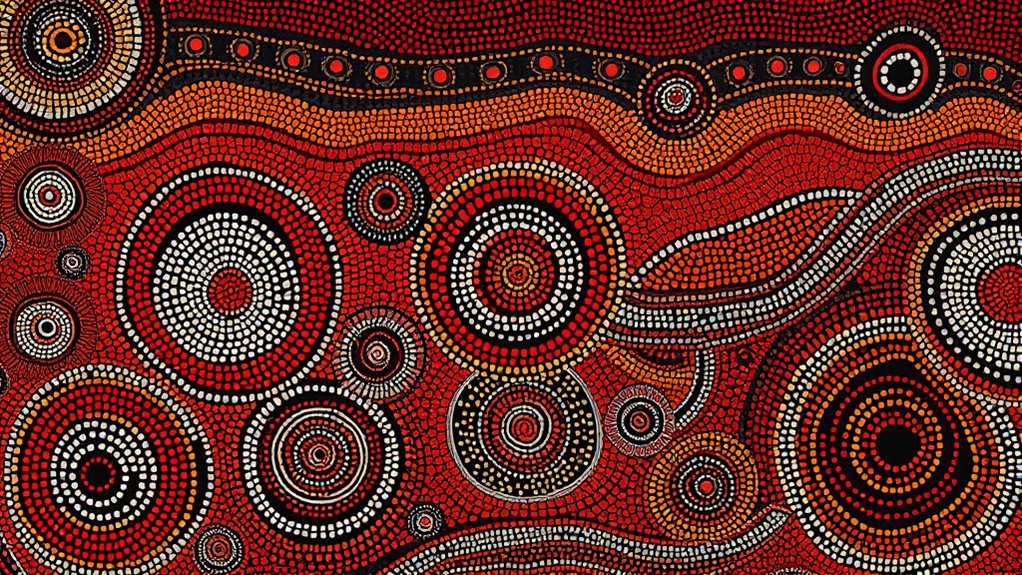
As you follow the evolution of Aboriginal art through her work, you’ll notice how traditional motifs are adapted and reinterpreted, blending ancient symbolism with contemporary expressions. Emily’s art often features dot painting techniques, which are emblematic of her cultural background, yet she infuses her pieces with personal insights and modern influences. This evolution doesn’t diminish the spiritual significance; instead, it enriches it, demonstrating how Indigenous art continues to grow and adapt while maintaining its core stories and symbols. Cultural continuity is a key aspect of Aboriginal art, ensuring that its spiritual and historical significance remains alive across generations.
In essence, Aboriginal art’s power lies in its ability to preserve Dreamtime stories and Indigenous symbolism, passing them from one generation to the next. When you engage with Emily Kam Kngwarray’s work, you’re witnessing a living tradition that honors its past while embracing new forms of expression. Her art invites you to see the world through her cultural lens, revealing the profound connection between storytelling, symbolism, and the ongoing evolution of Aboriginal artistic expression.
Top picks for "evolution aboriginal through"
Open Amazon search results for this keyword.
As an affiliate, we earn on qualifying purchases.
Frequently Asked Questions
How Did Emily Kam Kngwarray Influence Contemporary Aboriginal Artists?
You see, Emily Kam Kngwarray greatly influenced contemporary Aboriginal artists by inspiring cross-cultural collaborations and blending traditional stories with modern art influences. Her innovative style encourages artists to explore new techniques while respecting their cultural roots. You notice how her work sparks creativity and dialogue between indigenous traditions and contemporary art scenes, helping to elevate Aboriginal art’s global presence and fostering a deeper appreciation of Indigenous stories and perspectives.
What Symbols Are Commonly Used in Emily’s Artwork?
You’ll notice that Emily’s artwork often features Dreamtime symbols, which tell stories of the land and ancestors. She skillfully uses dot painting techniques to create intricate patterns and textures, making her symbols come alive. Common symbols include concentric circles representing waterholes, tracks for animals, and sacred sites. These symbols connect you to the stories and traditions of her culture, beautifully blending storytelling with artistic expression through her distinctive style.
How Has Emily Kam Kngwarray’s Work Impacted Indigenous Cultural Preservation?
Emily Kam Kngwarray’s work greatly impacts indigenous cultural preservation by using traditional techniques that keep cultural storytelling alive. Her art communicates ancestral stories and practices, ensuring they’re passed down through generations. By blending traditional symbols with contemporary styles, she fosters appreciation and understanding of indigenous culture. You can see her influence in how her artwork inspires others to value and uphold their cultural heritage, making her a crucial figure in preserving indigenous traditions.
What Challenges Did Emily Face in Her Artistic Journey?
You face challenges like cultural barriers that make it hard to share your art widely and gain recognition. Emily Kam Kngwarray struggled with limited artistic recognition outside her community, which affected her confidence and opportunities. Despite these obstacles, she persisted, staying true to her cultural roots. Her resilience helped her overcome barriers, inspiring others to celebrate Indigenous art and stories, even when recognition was slow to come.
How Is Emily Kam Kngwarray’s Legacy Preserved Today?
You can see Emily Kam Kngwarray’s legacy preserved today through ongoing efforts that promote cultural continuity and celebrate her artistic heritage. Her vibrant paintings continue to inspire new generations, displayed in galleries and collections worldwide. Art programs and cultural initiatives ensure her stories and style stay alive, fostering respect for Aboriginal traditions. By supporting these initiatives, you help keep her extraordinary contributions to art and culture enduring for future generations.
Conclusion
You might believe Aboriginal art has remained unchanged for centuries, but recent studies suggest it’s constantly evolving, blending ancient symbols with modern influences. Emily Kam Kngwarray’s work exemplifies this shift, challenging the idea that traditional art is static. Could it be that Aboriginal art is more adaptable than we thought, reflecting ongoing cultural stories? Keep exploring—this vibrant art form continues to evolve, revealing new layers of history and identity with every brushstroke.