
TL;DR

Get art and craft supplies delivered free with Prime
- Fast, free delivery on millions of items
- Prime Video, Amazon Music and more included
- Member-only deals all year
The British Museum’s Bayeux Tapestry exhibition opened to the public on Sept. 29, 2026, with tickets sold out for the rest of the year, according to a report by diamondgeezer. Reading Museum has a free, full-size embroidered Victorian replica on display; it was made in 1885–86 and given to the town in 1895.
The British Museum’s Bayeux Tapestry exhibition opened to the public on Sept. 29, 2026, and tickets for the remainder of the year are sold out, according to a report by diamondgeezer. Visitors unable to get a ticket can see a free, full-size embroidered replica at Reading Museum, where the Victorian copy is displayed around a first-floor gallery.
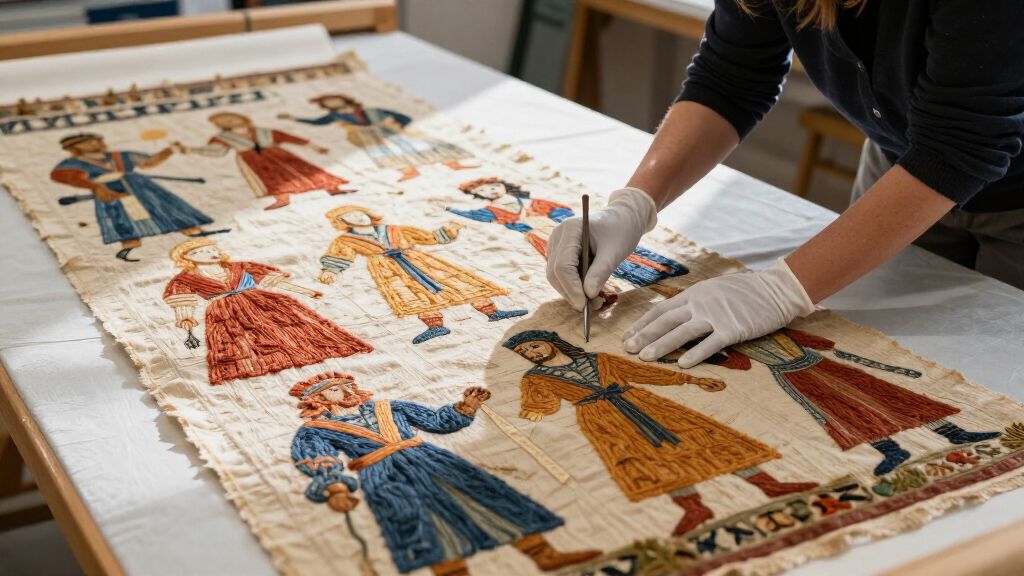
The Reading copy is about 70 metres long and arranged in three sections around the museum’s first-floor mezzanine. It follows the same broad narrative as the medieval tapestry, depicting events leading to the Norman Conquest. The report says visitors can follow the scenes at their own pace, with explanatory text displayed beneath the embroidery.
The replica was made by 35 members of the Leek Embroidery Society, recruited by Elizabeth Wardle after she saw the original in Normandy. Her husband dyed threads to match the original’s eight colours, and the group completed the work by Whitsun 1886. The finished tapestry toured England and was shown in Germany and the United States before coming to Reading in 1895.
When the society decided to sell the work, a Reading alderman bought it for £300 and gave it to the town, the report says. The replica now sits in a purpose-designed gallery that opened in 1992. Its panels bear the names of the embroiderers responsible for them, offering a record absent from the original, whose makers are unknown.
A Local Alternative to Sold-Out Tickets
Reading’s display gives visitors a way to see the tapestry’s long visual narrative while the London exhibition is fully booked for the rest of 2026. The report says bookings for January to March 2027 are expected to sell out when they reopen next month; that is a forecast, not a confirmed booking outcome.
The two displays also offer different viewing experiences. The Reading replica is free and presented with text panels, while the British Museum exhibition charges £33 per ticket, according to the report, and uses video narration. The replica’s Victorian origins make it a historical object in its own right, while its full scale allows visitors to take in the sequence without the reported ticket demand in London.
From Leek Embroiderers to Reading
Wardle began the project after travelling to Normandy to see the original tapestry in 1885. She persuaded 35 embroiderers in the Leek Embroidery Society to make a full-size copy. The report describes the result as a full-colour, fully embroidered facsimile, with threads dyed to match the original’s eight colours.
After completion in 1886, the work toured in Britain and abroad. It was in Reading when the society put it up for sale in 1895. A local alderman’s purchase established its connection to the town, and the museum later built a dedicated gallery for it, opening the space in 1992. The original Bayeux Tapestry tells a Norman account of the events surrounding the conquest of England in 1066.
““It’s a full-size full-colour fully-embroidered copy of the original and entirely free to view.””
— diamondgeezer report
Booking Outlook Still Unconfirmed
The report says the British Museum is sold out for the rest of 2026, but it does not provide ticket inventory figures or independently detail the booking system. Its expectation that January–March 2027 will also sell out is not a confirmed outcome. The report also does not specify whether advance booking is needed to visit the Reading Museum display or provide its current opening hours.
The source is a visitor’s account of the two displays, rather than a statement from either museum. Readers should check the museums directly for current access arrangements, prices and booking availability.
More London Tickets Due Next Month
The British Museum is expected to reopen bookings next month for exhibition dates in January through March 2027, according to diamondgeezer. The report does not give a specific date for that release. Visitors considering Reading can consult Reading Museum for current opening hours and access information before travelling.
Key Questions
Where can I see the Reading Bayeux Tapestry?
The replica is displayed in a dedicated gallery on the first-floor mezzanine at Reading Museum, according to the report.
Does it cost anything to see the replica?
The report describes the Reading display as free to view. It does not specify whether visitors need to book museum entry.
Who made the Reading replica?
Elizabeth Wardle organised 35 members of the Leek Embroidery Society to stitch it. They completed the full-size copy by Whitsun 1886.
How did the replica come to Reading?
It was in Reading in 1895 when the embroidery society decided to sell it. A local alderman bought it for £300 and gave it to the town, the report says.
When can visitors book the British Museum exhibition for 2027?
The report says bookings for January–March 2027 are due to reopen next month, but it does not provide an exact date.
Source: hn
Halloween Picks
halloween
As an affiliate, we earn on qualifying purchases.