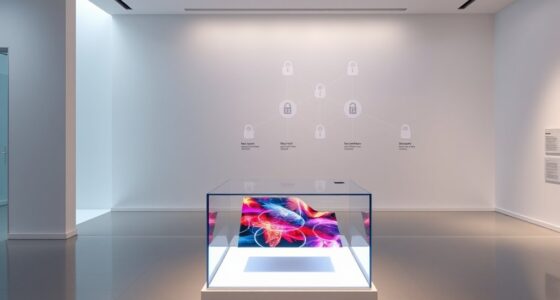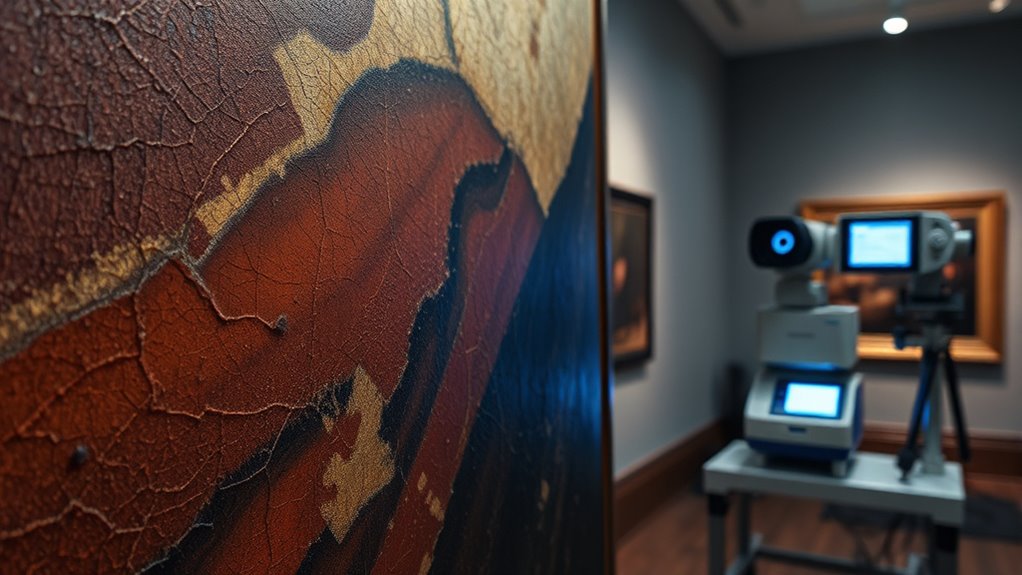

Modern challenges in art forgery and authentication involve sophisticated forgers using technology to bypass digital verification methods. As these tools advance, experts must constantly update databases and techniques, creating a continuous arms race. Digital verification improves speed, accuracy, and trust, but evolving counterfeit methods test these systems’ resilience. If you want to understand how technology is shaping the future of authenticating artworks and combating forgeries, there’s much more to explore.
Key Takeaways
- Sophisticated forgeries challenge digital verification methods, requiring continuous updates to detection technologies.
- Counterfeiters develop new techniques to bypass AI-driven authentication systems.
- Maintaining comprehensive, up-to-date databases is crucial for accurate art validation.
- Advances in AI security are essential to protect verification systems from being compromised.
- Ongoing innovation is needed to stay ahead of increasingly complex art forgeries.

Have you ever wondered how experts determine whether a piece of art is genuine or a clever forgery? It’s a complex process that blends traditional expertise with cutting-edge technology. One of the most significant advancements in recent years is digital verification, which allows specialists to analyze artworks with precision and speed that wasn’t possible before. Digital tools can compare a piece’s unique features—brushstrokes, pigment compositions, and even microscopic details—against vast databases of authentic works. This technology helps identify subtle inconsistencies that might escape the naked eye, making forgeries easier to detect. Digital verification doesn’t just streamline authentication; it also enhances the reliability of these assessments, reducing human error and increasing confidence among collectors, galleries, and museums.
Digital verification enhances art authentication by combining traditional expertise with precise, technology-driven analysis.
The use of digital verification also carries a profound cultural impact. When the authenticity of a piece can be confirmed swiftly and accurately, it preserves the integrity of the art world. Artworks are more than just objects; they embody cultural identities, historical narratives, and artistic achievements. Ensuring their authenticity safeguards their cultural significance and helps maintain the trust of the public and investors. Conversely, the proliferation of forgeries threatens to dilute this trust, undermine genuine artists’ legacies, and distort cultural history. Digital verification acts as a safeguard, helping to protect cultural heritage and preserve the true value of authentic art. It also democratizes access to authentication tools, enabling smaller institutions and individual collectors to verify artworks without relying solely on costly, traditional methods.
However, this technological progress isn’t without its challenges. Forgers constantly evolve their techniques to bypass digital verification, sometimes using sophisticated methods to mimic authentic features. As a result, experts must continuously update their digital tools and databases, creating a never-ending arms race between authenticators and counterfeiters. Despite these hurdles, the integration of digital verification into art authentication signifies a vital shift toward more transparent and efficient practices. It helps combat the global art market’s black market, reduces the circulation of illicit works, and fosters greater confidence in the provenance of artworks. Additionally, advances in AI Security contribute to developing more resilient verification systems, ensuring ongoing protection against sophisticated forgeries.
In essence, digital verification is transforming how we approach art authentication, blending technological innovation with cultural preservation. Its impact extends beyond mere identification, shaping the future of how society values and protects its artistic heritage. As technology advances, so too will our ability to distinguish genuine masterpieces from clever forgeries, ensuring that the cultural impact of authentic art remains intact for generations to come.

High-Accuracy Verification Tool, Portable Gem Tester with Led & Sound Indicator, Battery-Operated for Jewelers & Collectors
Visual & audio indicators: led lights and distinct beeping signals confirm authenticity instantly
As an affiliate, we earn on qualifying purchases.
As an affiliate, we earn on qualifying purchases.
Frequently Asked Questions
How Can Digital Tools Improve Art Authentication?
Digital tools can markedly improve art authentication by enabling you to use digital analysis to examine the artwork’s materials and techniques precisely. Blockchain verification helps you securely track the artwork’s provenance, ensuring its authenticity and history are transparent and tamper-proof. By combining these technologies, you gain a more accurate, efficient, and trustworthy way to verify artworks, reducing the risk of forgery and enhancing confidence in your collection or sale process.
What Are the Legal Consequences of Art Forgery?
Imagine holding a counterfeit masterpiece, its forged signature a shadow over your reputation. You face serious legal penalties, including hefty fines and potential jail time, for violating intellectual property laws. Art forgery damages artists and collectors, and the law punishes deception severely. If caught, you could lose credibility, face court cases, and damage your career forever, emphasizing how vital it is to respect authentic works and legal boundaries.
How Do Cultural Differences Impact Authentication Processes?
Cultural differences considerably impact authentication processes because cultural biases influence how experts interpret art’s origins and significance. You might find that varying authentication standards across regions lead to inconsistent judgments, complicating the validation of artworks. When evaluating authenticity, it’s essential to recognize these cultural biases so you can navigate differing perspectives and ensure fair, accurate evaluations that respect diverse artistic traditions and practices worldwide.
Can AI Reliably Detect Art Forgeries?
AI can assist in detecting art forgeries, but it can’t do it alone. You rely on digital analysis to identify subtle stylistic shifts and inconsistencies, while expert opinions add essential expertise. Though AI offers remarkable rapidity and pattern recognition, you should always combine its insights with human judgment for a reliable, well-rounded assessment. This collaborative approach helps you stay one step ahead of sophisticated forgers.
What Future Technologies Might Revolutionize Art Verification?
Future technologies like blockchain verification will revolutionize art authentication by providing secure, transparent records of provenance that are tamper-proof. Additionally, crowd-sourced authentication enables collectors and experts worldwide to collaboratively verify artworks in real-time, increasing accuracy. You’ll benefit from these innovations by gaining more reliable, accessible methods to confirm authenticity, reducing fraud risks, and fostering trust in the art market’s integrity.

Music Software Bundle for Recording, Editing, Beat Making & Production – DAW, VST Audio Plugins, Sounds for Mac & Windows PC
No Demos, No Subscriptions, it's All Yours for Life. Music Creator has all the tools you need to…
As an affiliate, we earn on qualifying purchases.
As an affiliate, we earn on qualifying purchases.
Conclusion
Just as a seasoned lighthouse guides ships safely through treacherous waters, mastering art authentication steers you past the dangerous reefs of forgery. Trust your intuition, stay vigilant, and embrace technology as your beacon. Remember, every genuine masterpiece is like a shining lighthouse—standing firm against deception. By sharpening your discernment, you become the steady captain of your collection, steering through modern challenges with confidence, ensuring only true treasures reach your harbor.
art conservation and authentication kits
As an affiliate, we earn on qualifying purchases.
As an affiliate, we earn on qualifying purchases.

Transformation-Based Reactive Systems Development: 4th International AMAST Workshop on Real-Time Systems and Concurrent and Distributed Software, … (Lecture Notes in Computer Science, 1231)
As an affiliate, we earn on qualifying purchases.
As an affiliate, we earn on qualifying purchases.