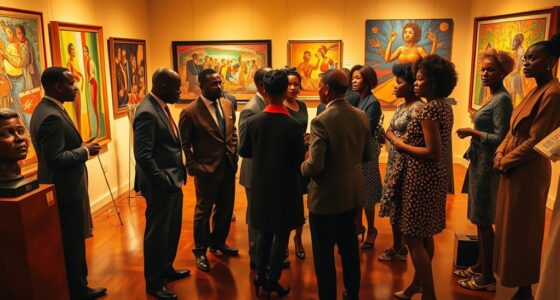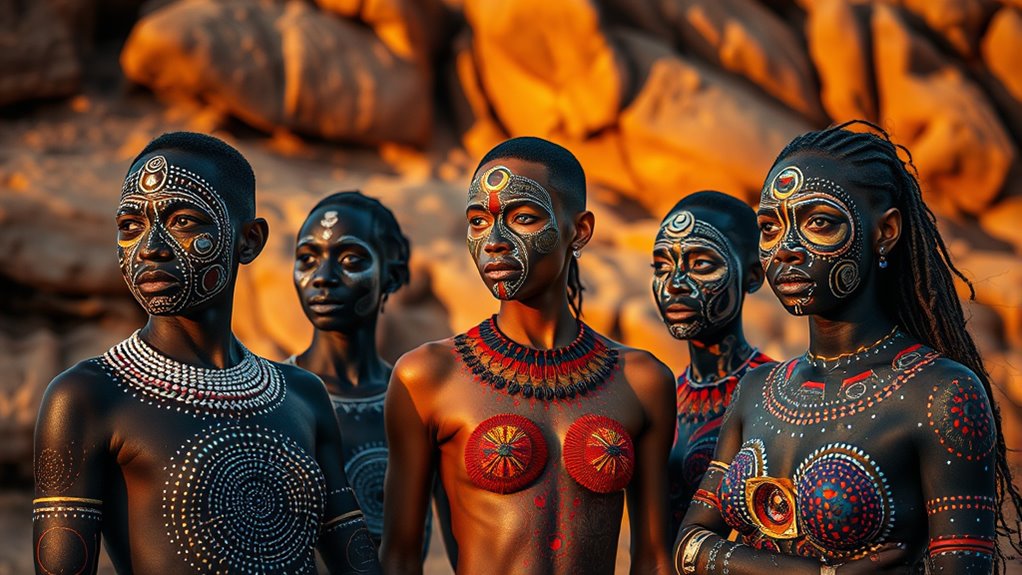

In “The Stars We Do Not See,” Indigenous Australian artists draw on sacred stories, symbols, and Dreamtime knowledge to share their deep connection to land, ancestors, and spiritual traditions. Through vibrant symbols and motifs, they preserve cultural heritage and express ancestral wisdom, often using artwork as a form of storytelling that links past and present. If you explore further, you’ll discover how their art continues to uphold traditions and communicate powerful spiritual narratives.
Key Takeaways
- The exhibition features Indigenous Australian artists who incorporate Dreamtime stories and ancestral symbolism in their works.
- Artists use symbols like concentric circles and lines to depict sacred sites and spiritual journeys.
- The artworks serve as visual storytelling, preserving cultural knowledge and cultural resistance.
- Indigenous artists in the exhibition emphasize connection to land, ancestors, and spiritual traditions.
- Their art embodies cultural heritage, storytelling, and ongoing practices rooted in Tjukurpa.
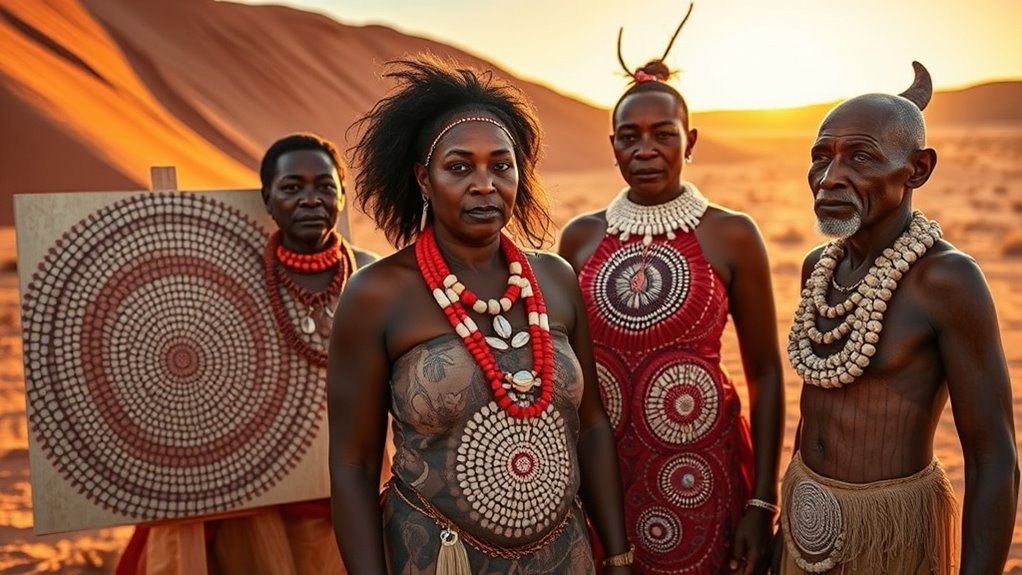
Have you ever wondered how Indigenous Australian artists express their rich cultural heritage through their work? When you look at their art, you’re not just seeing colors and shapes—you’re witnessing stories passed down through generations. These artists use their creations to connect the present with ancient traditions, especially through Dreamtime storytelling and ancestral symbolism. Dreamtime, or Tjukurpa, is the foundation of many Indigenous cultures, recounting how the world was shaped by ancestral beings. Artists draw on these stories to tell about origins, moral lessons, and the land’s sacredness. Their work becomes a visual language, conveying complex narratives that keep cultural knowledge alive. The use of visual storytelling is fundamental in their art, enabling them to communicate across generations and cultural boundaries.
In Indigenous art, Dreamtime storytelling isn’t just a myth; it’s a way to transmit cultural values and history. When you observe their paintings, you notice patterns, symbols, and motifs that represent specific stories or ancestral beings. These symbols act as a code, often understood within their community but mysterious to outsiders. For example, concentric circles might symbolize waterholes, while lines could depict pathways or journeys taken by ancestral spirits. Through these symbols, artists preserve and share their stories, ensuring that younger generations understand their cultural identity and spiritual connection to the land.
Ancestral symbolism is central to Indigenous Australian art because it embodies their spiritual relationship with nature and their ancestors. Every brushstroke or dot can carry profound meaning—representing animals, water sources, or sacred sites. As you examine their work, you realize that each image is more than just an aesthetic choice; it’s a deliberate act of storytelling rooted in tradition. These symbols often serve as a visual record of sacred sites or significant events, linking past and present. By incorporating ancestral symbolism into their art, Indigenous artists honor their ancestors’ wisdom and reinforce their ongoing cultural practices.
Furthermore, Indigenous art often functions as a form of cultural resistance and preservation. When you engage with their work, you’re participating in a dialogue that affirms their identity and sovereignty. Their use of Dreamtime storytelling and ancestral symbolism is a powerful reminder of their enduring connection to the land and their history. It’s not just about creating beautiful images but about keeping their stories alive, passing them on through generations. Their art becomes a living testament to a cultural legacy that continues to thrive despite historical challenges. As you explore their work, you gain insight into a worldview that values storytelling as both a spiritual and social practice, linking the past with the present in a vibrant, meaningful way.
Indigenous Australian art prints
As an affiliate, we earn on qualifying purchases.
As an affiliate, we earn on qualifying purchases.
Frequently Asked Questions
How Do Indigenous Artists Incorporate Dreamtime Stories Into Their Work?
You see Indigenous artists incorporate Dreamtime symbolism and ancestral stories into their work by using traditional motifs, colors, and patterns that represent these stories. They often depict sacred sites, animals, and spirits, bringing ancestral stories to life visually. Through this, you can connect with the spiritual and cultural significance of Dreamtime, preserving and sharing these stories for future generations while honoring their deep cultural roots and spiritual beliefs.
What Materials Are Commonly Used by Indigenous Australian Artists?
Ever wonder what materials bring Indigenous Australian art to life? You’ll find traditional ochre, which adds vibrant, earthy colors, and natural fibers, used for weaving and sculpture. These materials connect artists to their land and stories, creating a strong cultural link. Do you see how these natural elements not only craft beautiful art but also preserve ancient traditions? By using these materials, artists keep their heritage alive and vibrant.
How Does Community Influence Indigenous Art Styles?
Community deeply influences Indigenous art styles by shaping your cultural identity and inspiring your work. You draw from shared traditions, stories, and symbols that reflect your collective history. This connection also fuels your social activism, using art to advocate for your community’s rights and recognition. Your art becomes a powerful expression of identity and resistance, uniting your community and spreading awareness beyond it.
What Are the Main Challenges Facing Indigenous Artists Today?
Like steering a vast, shifting desert, indigenous artists face many challenges today. You may find it difficult to preserve cultural traditions amid modern influences, risking cultural erosion. The art market often favors commercialized pieces, making it harder to sustain authentic work rooted in tradition. Balancing cultural preservation with market demands becomes a tightrope walk, requiring resilience and support to guarantee indigenous voices continue to shine brightly in the artistic landscape.
How Can Viewers Best Interpret Indigenous Australian Art?
To interpret Indigenous Australian art effectively, you should embrace its cultural symbolism and appreciate its artistic evolution. Pay attention to symbols that convey stories, Dreamings, and ancestral connections, recognizing their deeper meanings. Observe how styles have transformed over time, blending tradition and innovation. By engaging with the artwork thoughtfully, you honor its cultural significance and gain a richer understanding of Indigenous perspectives and heritage.
Dreamtime storytelling art book
As an affiliate, we earn on qualifying purchases.
As an affiliate, we earn on qualifying purchases.
Conclusion
As you reflect on these artists’ stories, remember how each brushstroke is like a star illuminating the night sky—guiding us through their rich culture and history. Just like the night sky holds countless unseen wonders, their art reveals depths of tradition waiting to be explored. Their work reminds us that even in darkness, the brightest lights emerge, inspiring us to listen, learn, and appreciate the stories that shape Indigenous Australia’s vibrant tapestry.
aboriginal symbols wall decor
As an affiliate, we earn on qualifying purchases.
As an affiliate, we earn on qualifying purchases.
Indigenous Australian cultural jewelry
As an affiliate, we earn on qualifying purchases.
As an affiliate, we earn on qualifying purchases.