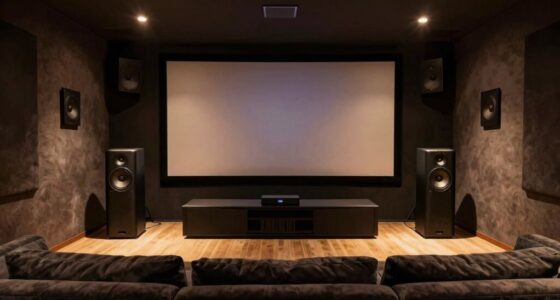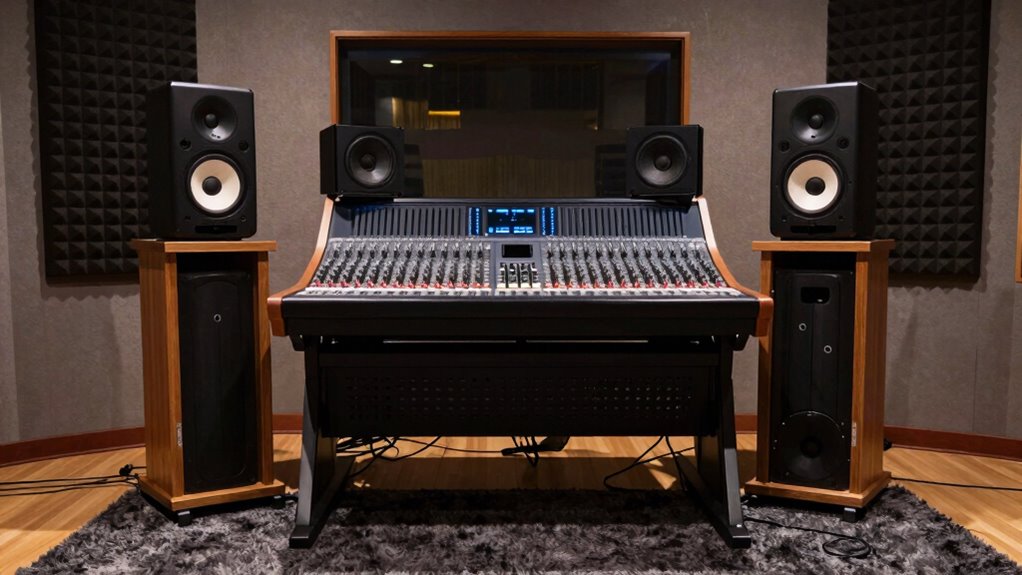
To stop mixing in a sonic lie, position your monitors carefully at ear level and form an equilateral triangle with your listening spot. Make sure your room is acoustically treated with bass traps and diffusers to control reflections and bass buildup. Use quality stands or isolation pads to reduce vibrations and keep monitors away from walls. Regularly verify your setup with test tones and adjustments to guarantee your sound is accurate. Learn more to perfect your monitoring environment.
Key Takeaways
- Proper monitor placement ensures accurate sound reproduction, preventing misleading mixes caused by poor positioning or room reflections.
- Position monitors at ear level and form an equilateral triangle with your listening spot for precise stereo imaging.
- Use acoustic treatments like bass traps and diffusers to minimize reflections, standing waves, and room coloration.
- Avoid placing monitors too close to walls or corners to reduce bass muddiness and high-frequency distortions.
- Regularly test and adjust your setup with measurement tools to ensure your mixes translate accurately across systems.

Sound Addicted – Studio Monitor Isolation Pads for 5 Inch Monitors, Pair of Two High Density Acoustic Foam which Fits Most Speaker Stands | SMPad 5
SMPad 5 is made out of the highest quality acoustical foam (50kg/m^3 density).
As an affiliate, we earn on qualifying purchases.
As an affiliate, we earn on qualifying purchases.
Why Proper Monitor Placement Is Key for Accurate Mixing
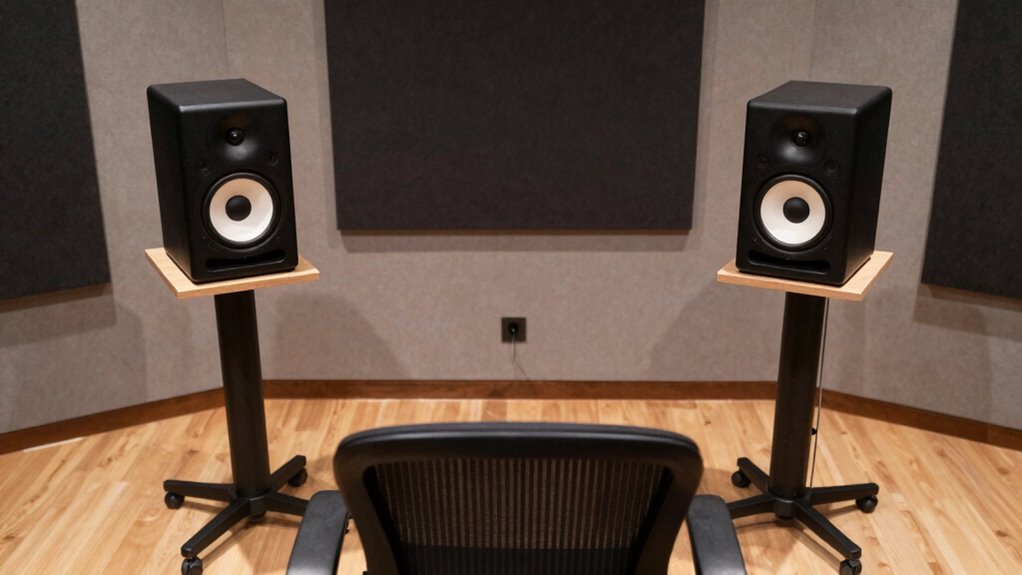
Proper monitor placement is essential because it directly affects how you perceive the sound during mixing. When your monitors are well-positioned, you gain better speaker isolation, reducing sound bleed and preventing reflections that can distort your mix. Acoustic treatment in your room plays a vital role here, helping to absorb unwanted echoes and standing waves that interfere with accurate sound reproduction. Without proper placement, you’ll struggle to hear true audio cues, leading to inaccurate mixing decisions. Ensuring your monitors are at the correct height, distance, and angle minimizes phase issues and enhances clarity. Additionally, understanding the history of audio engineering can inform better setup practices that improve your mixing environment. Proper monitor placement is also crucial for avoiding phase cancellation and ensuring a balanced stereo image, which is fundamental for professional-sounding mixes. When you combine proper positioning with Acoustic treatment, you create a more reliable listening environment that supports consistent mixing outcomes. Recognizing the importance of room acoustics can help you make informed adjustments for optimal sound quality. Ultimately, good positioning combined with effective acoustic treatment allows you to trust what you hear, making your mixes more precise and professional.

8 Pack – Bass Traps Acoustic Foam Corner, 8''x8''x12'' Black Bass Traps Corner Studio Foam, High Density and Fire-Proof Acoustic Panels Recording Studio Acoustical Treatments
Acoustic Principle- Bass Trap is a kind of sound absorbing structure specially used to absorb specific low-frequency standing…
As an affiliate, we earn on qualifying purchases.
As an affiliate, we earn on qualifying purchases.
The Fundamental Principles of Studio Monitor Positioning
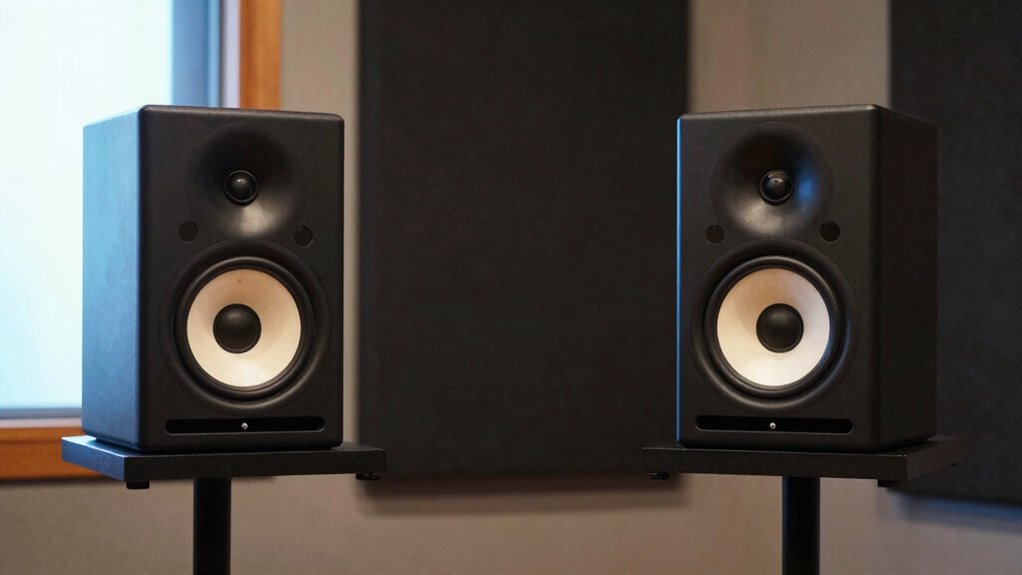
To get the best sound, you need to take into account where your monitors sit in your room. Position them at your ear level, forming an equilateral triangle with your listening position for accurate imaging. Keep your monitors and listening spot symmetrical in the room to minimize acoustic issues and ensure balanced sound. Additionally, proper monitor placement can help prevent listening fatigue and promote a healthier, more sustainable studio workflow. Using correct speaker alignment techniques can further optimize your sound clarity and stereo image. Incorporating the latest wall art trends, such as digital frames and interactive murals, can also enhance your studio environment, contributing to better acoustics and an inspiring workspace. Paying attention to room acoustics and making adjustments with acoustic treatments can significantly improve your monitoring accuracy. Ensuring your studio has appropriate acoustic treatments is essential for achieving a true representation of your mix.
Optimal Listening Height
Achieving the right listening height is essential because it directly affects how you perceive sound balance and stereo imaging. Your speaker height should align with your ears when you’re in your typical listening position, usually around ear level. If your speakers are too high or too low, you’ll miss critical cues in the soundstage and frequency response. Properly positioning your monitors at the correct height ensures that the sound waves reach your ears evenly, providing an accurate representation of your mix. Adjust your chair or monitor stands so that your ears are level with the speaker drivers. This ideal listening height helps you make better mixing decisions and prevents sonic illusions caused by misaligned speaker placement. Speaker placement plays a crucial role in achieving an accurate and balanced sound environment. Additionally, considering acoustic treatment can further optimize your listening setup for more precise sound reproduction. Proper monitor positioning ensures your studio environment delivers the most reliable feedback for your mixes. Ensuring that your setup accounts for room acoustics can also significantly improve sound clarity and accuracy. Regularly evaluating your setup with frequency response measurements can help identify and correct issues that affect sound quality.
Equilateral Triangle Setup
Setting up your monitors in an equilateral triangle arrangement is fundamental for accurate stereo imaging and balanced sound. When done right, it ensures your speakers are equally distant from your ears, providing a cohesive listening experience. To maximize this setup:
- Prioritize speaker isolation to prevent sound reflections and external noise from skewing your mix.
- Use proper cable management to keep connections tidy, reducing interference and accidental disconnections.
- Position your monitors so their tweeters are at ear level, maintaining consistency in sound perception.
- Consider the Free Floating principles to avoid unwanted vibrations and resonance that could affect your monitoring accuracy.
This setup creates a stable, focused sound environment. It allows you to trust your monitoring, avoiding sonic illusions caused by poor placement. With careful attention to these principles, your mixes will translate more accurately across all listening systems.
Symmetrical Room Positioning
Symmetrical room positioning is essential for creating a balanced and accurate monitoring environment. Achieving proper room symmetry guarantees that sound waves reach your ears evenly, reducing phase issues and tonal imbalance. Focus on aligning your speakers so they are equidistant from walls and centered within the room. Proper speaker alignment means the speakers are at the same height and directed toward your listening position, forming an equilateral triangle. This setup minimizes reflections and standing waves that can distort your mix. By maintaining room symmetry, you avoid acoustic anomalies that skew sound perception. Consistent placement helps you hear your mixes more accurately, leading to better translation across different systems. Prioritize symmetry and precise speaker alignment to create a reliable, natural listening environment.

Vondynote Set of 2 Studio Monitor Stands Adjustable Height Speaker Stands with Cable Management
Square Platform: 9" x 9" square platform for speakers with 2mm EVA anti-skid pad. You can place your…
As an affiliate, we earn on qualifying purchases.
As an affiliate, we earn on qualifying purchases.
How to Find the Perfect Spot for Your Monitors
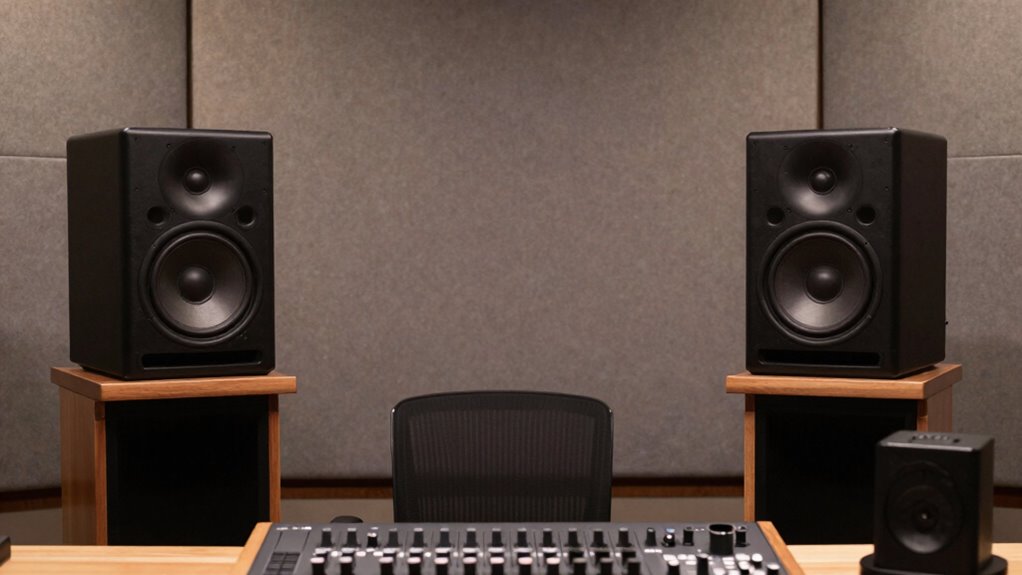
Finding the right spot for your studio monitors can considerably improve your listening experience. Proper placement enhances speaker isolation and reduces unwanted reflections, giving you a clearer, more accurate sound. To find that ideal position, focus on these key steps:
Proper monitor placement boosts clarity and accuracy in your sound.
- Position your monitors at ear level, forming an equilateral triangle with your listening spot.
- Use acoustic treatment to minimize reflections and standing waves.
- Keep monitors away from walls to improve speaker isolation and prevent bass buildup.
- Regularly check for cable failures and ensure all connections are secure to maintain optimal sound quality.

BXI Wood Sound Diffuser – 24 X 24 X 2.8 Inches Thick Acoustic Diffusion Panels Add Listening Room Musical Liveliness, Quadratic Residue Diffusor for Wall and Ceiling Acoustical Treatment (2D)
【SPECIFICATION】: Dimensions – 24 X 24 X 2.8 inches, pack of 1, covering 4 square feet; Weight -…
As an affiliate, we earn on qualifying purchases.
As an affiliate, we earn on qualifying purchases.
Common Mistakes That Can Ruin Your Mixes
One of the biggest mistakes you can make is ignoring room acoustics, which can color your sound and mislead your mixing decisions. Incorrect monitor placement also skews your perception, making it hard to judge balance and tone accurately. Addressing these issues is essential to avoid ruining your mixes before they even leave the studio. Additionally, room acoustics play a crucial role in how you perceive sound and should be carefully considered during your setup. Proper monitor placement can help mitigate some acoustic issues, but understanding your room’s unique characteristics is vital for achieving accurate sound. Recognizing acoustic treatment options can further improve your listening environment and clarify your mix decisions. Being aware of regional influences and their impact on sound can also provide inspiration for your creative process, enriching your mixes with diverse cultural elements.
Improper Room Acoustics
Improper room acoustics can substantially distort your mix, making it sound unbalanced and unprofessional. Unresolved room reflections bounce sound unpredictably, muddying clarity and detail. Without adequate bass trapping, low frequencies become exaggerated or undefined, causing your mix to lack punch and precision. Here are three mistakes to avoid:
- Ignoring reflections that create comb-filtering, leading to a hollow sound.
- Overlooking bass trapping, resulting in bass buildup and uneven response.
- Neglecting acoustic treatment, which worsens sound clarity and translation.
- Failing to consider regional sound preferences and how they influence your listening environment. Additionally, understanding your room’s acoustic characteristics can help you tailor your treatment effectively.
Addressing these issues ensures your monitors produce a true, honest sound. Proper acoustic treatment minimizes destructive reflections and controls low frequencies, giving you a reliable environment for mixing. Don’t let poor acoustics sabotage your work—invest in your room’s sound quality for professional results.
Incorrect Monitor Positioning
Incorrect monitor placement can severely impact the accuracy of your mix, even if your room acoustics are well-treated. When monitors aren’t properly positioned, you lose critical monitor isolation, causing sound reflections and vibrations to distort your listening. Poor placement also hinders effective speaker calibration, making it difficult to achieve a balanced and true sound. For best results, place your monitors at ear level, forming an equilateral triangle with your listening position. Avoid placing them too close to walls or corners, which can cause bass buildup and muddiness. Proper positioning ensures better monitor isolation and more accurate sound reproduction. Remember, even small adjustments can make a significant difference in how your mix translates across different systems. Correct monitor placement is essential for reliable, professional-sounding mixes.
Tools and Tips to Optimize Your Monitor Setup
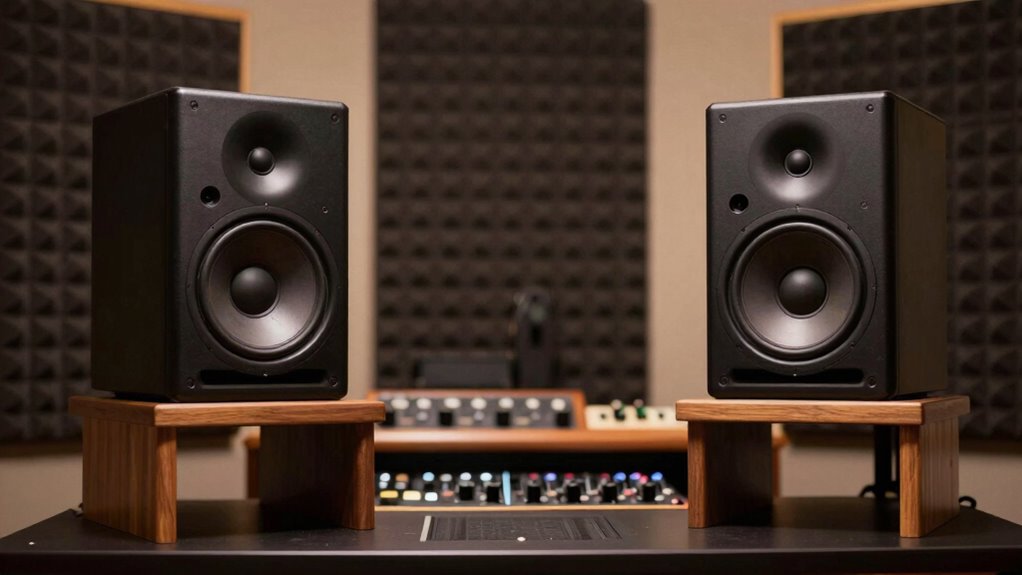
To get the most accurate sound from your studio monitors, using the right tools and applying practical tips can make a significant difference. Focus on speaker isolation to prevent vibrations from affecting your sound, and prioritize acoustic treatment to minimize room reflections. Here are three essential tips:
Optimizing studio monitors with isolation and acoustic treatment ensures accurate sound reproduction.
- Invest in quality isolation pads or stands—these improve speaker stability and reduce unwanted vibrations.
- Use bass traps and diffusers to control reflections and deaden echo, creating a more accurate listening environment.
- Keep your monitors at ear level and ensure they’re positioned away from walls to reduce boundary interference.
Adjusting Your Monitors for Room Acoustics and Speaker Height

Optimizing your monitor placement involves more than just choosing the right stands or pads; it also requires adjusting for room acoustics and speaker height. Your speakers should be positioned so the tweeters are at your ear level when seated, ensuring accurate high-frequency response. If your speakers are too high or low, you’ll miss critical details in your mix. Pay attention to room acoustics by minimizing reflections and standing waves that can color your sound. Use acoustic treatment like foam panels or bass traps to improve clarity. Proper speaker height and room setup help create a balanced stereo image and reliable translation. Don’t overlook these adjustments—they’re essential for an honest monitoring environment where your mixing decisions reflect your true sound.
How to Test and Verify Your Monitor Placement
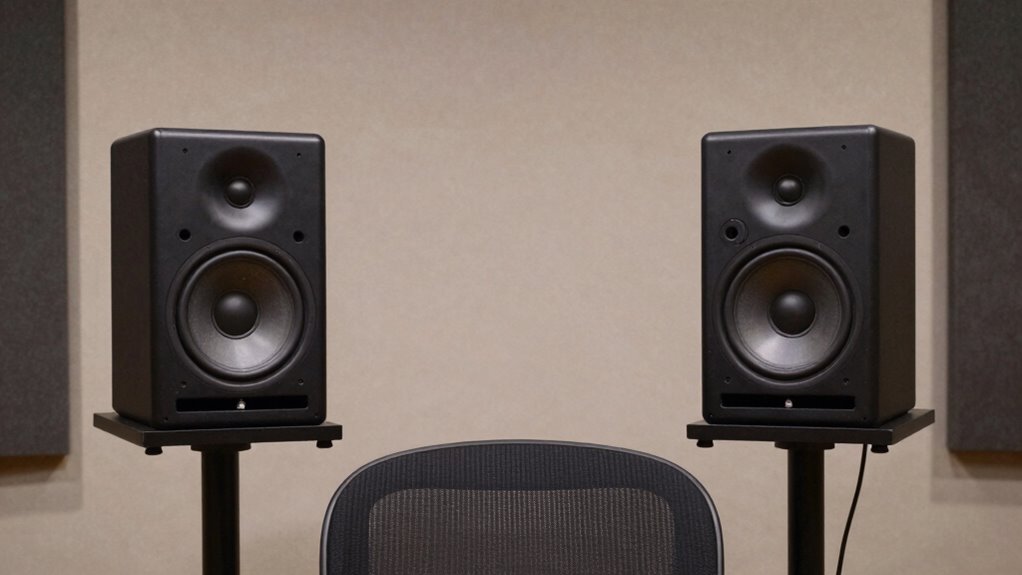
Testing and confirming your monitor placement is essential to guarantee your speakers are delivering an accurate and balanced sound. Proper placement ensures your acoustic treatment works effectively, preventing misleading audio cues. To verify your setup:
- Listen for a centered, clear stereo image without phase issues or comb filtering.
- Use test tones and measurements to check for even frequency response across your monitors.
- Move around your listening position to confirm the sound remains consistent, indicating proper monitor placement and acoustic treatment.
If any issues arise, revisit your speaker positioning, adjusting angles and distances. Remember, accurate testing prevents sonic illusions and helps you trust your mixes. Well-placed monitors combined with effective acoustic treatment bring your sound to life, eliminating the guesswork from your mixing process.
Troubleshooting and Fine-Tuning Your Monitor Setup
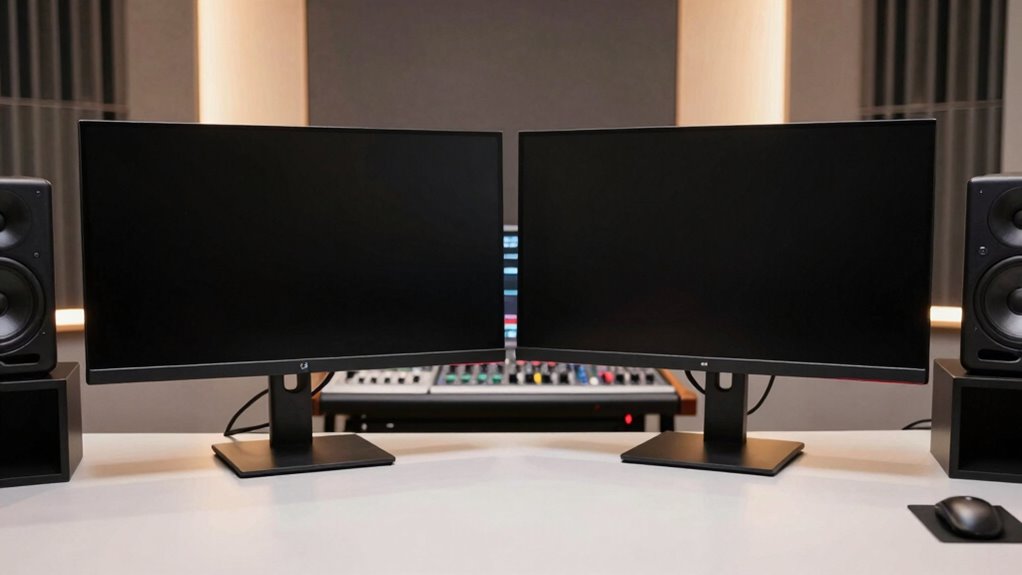
Even with careful placement, your monitor setup may still need fine-tuning to achieve the most accurate sound. To troubleshoot effectively, focus on monitor calibration to guarantee proper frequency response and levels. Acoustic treatment also plays a vital role in controlling reflections and room modes that skew your perception. Use this quick reference:
| Adjustment Area | Action |
|---|---|
| Monitor Calibration | Use a calibration microphone for flat response |
| Acoustic Treatment | Add bass traps and diffusers to reduce reflections |
| Speaker Height | Ensure tweeters are at ear level |
| Room Symmetry | Balance speaker positions for even sound |
| Listening Position | Sit directly between monitors, avoid corners |
Fine-tuning these elements helps you identify and fix issues, creating a more reliable mix environment.
Frequently Asked Questions
How Often Should I Check My Monitor Placement?
You should check your monitor placement at least once a month to guarantee optimal sound. Regularly reassess after making changes to your room calibration or adding acoustic treatment, as these can shift your monitors’ positioning. Keep an eye on how your room’s acoustics affect your setup, and don’t hesitate to fine-tune your placement to maintain accurate sound, ensuring your mixes translate well on other systems.
Can DIY Room Treatments Improve Monitor Accuracy?
Yes, DIY room treatments can improve your monitor accuracy by reducing unwanted room reflections and helping with speaker calibration. You can build bass traps and diffusers from affordable materials like foam or mineral wool, which absorb and scatter sound waves. Properly treated rooms minimize acoustic issues, providing a more accurate listening environment. This allows you to make better mixing decisions, ensuring your sound translates well across different systems.
What Are Signs of Poor Monitor Placement During Mixing?
You’ll notice poor monitor placement if your mixes sound unbalanced or lack clarity, especially if the sound isn’t centered or if bass feels uneven. Check for room symmetry—if your speakers aren’t equidistant from walls or your listening position, it can cause issues. Also, make certain your speaker height aligns with your ears; improper height can distort your perception, leading to inaccurate mixes.
Are There Specific Monitor Brands Better for Small Rooms?
Think of your small room as a musical instrument—some monitors resonate better than others. Brands like Yamaha, KRK, and Adam Audio often shine in small spaces because they excel at handling studio acoustics and are easier to monitor calibration. Their compact designs and balanced sound profiles help you hear accurate mixes without overwhelming the room, ensuring you don’t get lost in a sonic lie.
How Does Monitor Placement Affect Different Music Genres?
Your monitor placement directly impacts genre-specific mixing by affecting how accurately you hear your sound. For example, tight spaces benefit from room acoustic treatment to reduce reflections, ensuring clarity across genres. Different genres demand tailored monitoring; bass-heavy music needs proper positioning for tight low-end response, while acoustic genres require a balanced, natural sound. Proper placement helps you create a mix that sounds great across all genres, avoiding sonic lies.
Conclusion
Think of your studio monitors like a finely tuned orchestra—if they’re out of sync, your mix suffers. I once moved my speakers just a few inches, and suddenly, my bass became clear, and vocals more natural. Proper placement isn’t just setup; it’s the foundation of honesty in your sound. Take the time to optimize your setup, and you’ll hear your music the way it’s meant to be heard—true, balanced, and powerful.