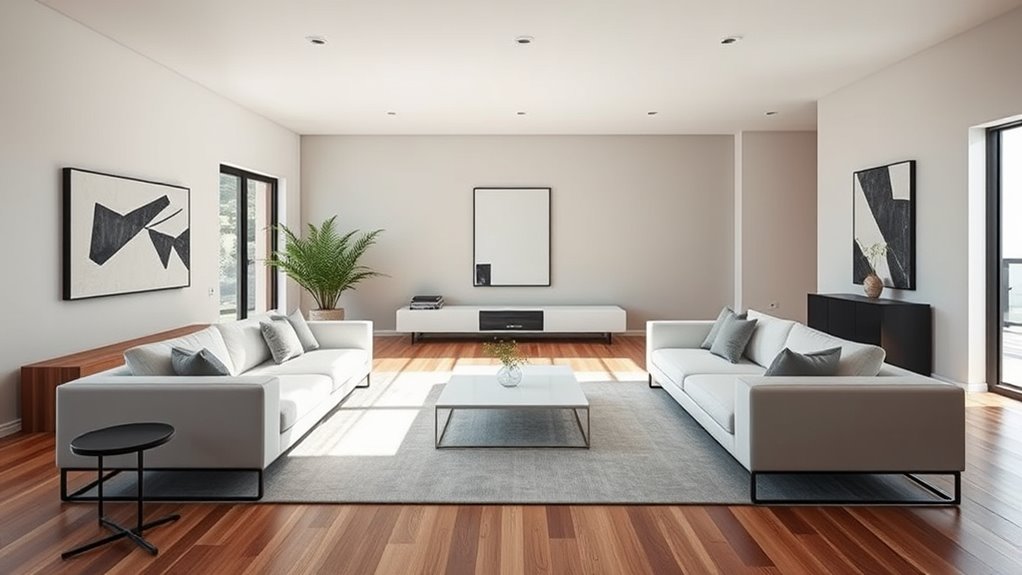

Bauhaus principles still influence modern interior design because they focus on functional simplicity, clean lines, and minimalism that create calm, open spaces. They prioritize practical furniture with sleek shapes and innovative materials for durability and ease of maintenance. These ideas promote efficiency and organization while supporting environmentally conscious choices. By emphasizing purpose over decoration, Bauhaus inspires timeless, versatile designs that suit today’s needs for stylish yet practical environments. Explore further to see how these concepts continue shaping spaces today.
Key Takeaways
- Bauhaus emphasizes functional design with minimalism, which remains central to modern interior aesthetics.
- Its focus on sleek, modular furniture promotes adaptability and efficiency in contemporary spaces.
- The use of durable, innovative materials from Bauhaus continues to inspire sustainable and easy-to-maintain interiors.
- Bauhaus principles prioritize clarity and simplicity, reducing clutter for a calming environment.
- The movement’s emphasis on purpose-driven design aligns with modern needs for practical and aesthetically pleasing spaces.
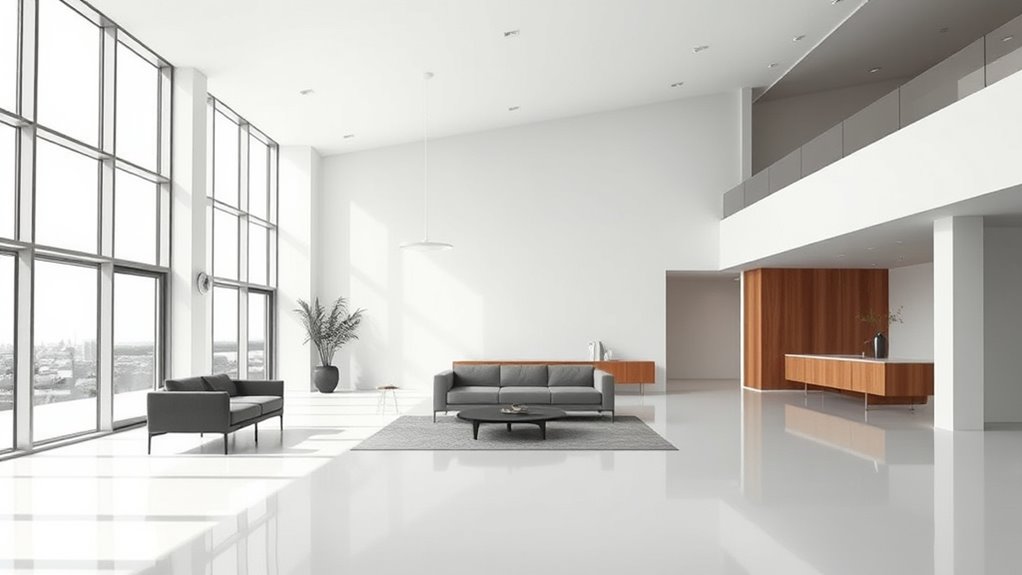
Rooted in the belief that form follows function, Bauhaus principles revolutionized interior design by emphasizing simplicity, clean lines, and practicality. This approach introduced you to a style where every element has a purpose, and unnecessary ornamentation takes a backseat. As a result, minimalist aesthetics became a defining feature, allowing you to create spaces that feel open, uncluttered, and calming. When you adopt Bauhaus-inspired design, you focus on essential shapes and straightforward color schemes, which help your space breathe and promote a sense of order. This philosophy encourages you to prioritize functionality, ensuring each piece of furniture serves a clear purpose and seamlessly integrates into the overall aesthetic.
Bauhaus emphasizes simplicity, function, and minimalism to create open, calming, and practical interior spaces.
Functional furniture is at the heart of Bauhaus design, and you’ll notice how it elevates your living environment. Instead of opting for decorative or overly ornate pieces, you select furniture characterized by its practicality and efficiency. Think of sleek, modular pieces that can adapt to your needs or multi-purpose items that maximize space without sacrificing style. This emphasis on functionality doesn’t mean sacrificing comfort or personality; rather, it encourages you to choose pieces that are both beautiful and useful. You’ll find that functional furniture often features geometric shapes, smooth surfaces, and durable materials, making your space feel cohesive and intelligently designed. Additionally, the use of visual and auditory cues can support your understanding of design principles and enhance your learning experience. Incorporating modern materials such as steel, glass, and molded plywood aligns with these principles, providing durability and a contemporary look. Furthermore, innovative manufacturing techniques have expanded the possibilities for creating furniture that adheres to Bauhaus ideals while offering increased customization and efficiency. Embracing sustainable materials can also help you develop environmentally conscious interiors that reflect the movement’s forward-thinking ethos.
Bauhaus principles also influence your choice of materials, favoring industrial and modern options like steel, glass, and molded plywood. These materials contribute to the minimalist aesthetic by offering a clean, polished look that’s easy to maintain. When you incorporate these elements, your space gains a sense of timeless elegance and efficiency. The focus on simplicity makes your interior easier to organize and maintain, reducing visual clutter and creating a streamlined environment. Additionally, the integration of cybersecurity concepts such as robust security protocols in modern design can help protect your digital environments from vulnerabilities, ensuring your smart home and connected devices remain secure. The use of modern materials and techniques aligns with your desire for innovation and progress, connecting your space to a broader cultural movement that values progress and rationality.
Ultimately, Bauhaus principles still hold sway because they align perfectly with your needs for a functional, aesthetically pleasing living space. By embracing minimalist aesthetics and functional furniture, you create environments that are not only visually appealing but also highly practical. These principles remind you that good design isn’t about decoration for its own sake but about enhancing everyday life through thoughtful choices. In a world that values efficiency and clarity, Bauhaus-inspired interior design continues to inspire you to craft spaces that are simple, sleek, and ultimately, truly yours.
Top picks for "bauhau principl still"
Open Amazon search results for this keyword.
As an affiliate, we earn on qualifying purchases.
Frequently Asked Questions
How Do Bauhaus Principles Impact Sustainable Interior Design?
You see, Bauhaus principles impact sustainable interior design by emphasizing simplicity, functionality, and quality. You’re encouraged to choose eco-friendly materials that reduce environmental impact and incorporate energy-efficient lighting to save power. These principles inspire you to create spaces that are both stylish and sustainable, ensuring practicality without waste. By applying Bauhaus ideas, you make conscious choices that promote eco-conscious living while maintaining aesthetic appeal.
Are Bauhaus-Inspired Designs Suitable for Small Apartments?
You’ll find Bauhaus-inspired designs are perfect for small apartments because they emphasize functional furniture arrangement and streamlined lighting choices. These principles help maximize space while maintaining a clean, uncluttered look. By choosing multi-purpose furniture and installing efficient lighting, you create an open, airy atmosphere. Bauhaus designs focus on simplicity and practicality, making them an excellent fit for compact living spaces without sacrificing style or comfort.
What Materials Are Commonly Used in Bauhaus-Style Interiors?
In Bauhaus-style interiors, you often see a mix of industrial materials like steel and glass, combined with natural textures such as wood and leather. These materials create a sleek, functional look that emphasizes simplicity and craftsmanship. You’ll notice clean lines and geometric shapes, with a focus on practicality. Using these materials helps you achieve that timeless Bauhaus aesthetic while adding warmth and authenticity to your space.
Can Bauhaus Principles Be Adapted to Minimalist Decor?
Think of Bauhaus principles as a versatile blueprint that easily adapts to minimalist decor. You can incorporate clean lines, functional furniture arrangement, and simple color schemes without losing the essence of both styles. Use lighting techniques that highlight form and function, creating harmony in your space. This blend keeps your design sleek yet warm, proving Bauhaus’s timeless influence can seamlessly merge with minimalist aesthetics.
How Do Bauhaus Principles Influence Color Schemes in Interiors?
Bauhaus principles influence your interior color schemes through a focus on color harmony and the effective use of contrasting palettes. You’re encouraged to combine bold, primary colors with neutral tones for balance and visual interest. By emphasizing simplicity and functionality, Bauhaus teaches you to select colors that enhance space without overwhelming it, creating a harmonious environment. This approach guarantees your interior remains vibrant yet cohesive, reflecting timeless design values.
Conclusion
So, as you step into a modern space that feels both sleek and functional, remember Bauhaus’s timeless influence. Its focus on simplicity, form, and function still guides your choices today, even amidst the chaos of the digital age. Think of it like your favorite vintage vinyl—an anachronism that still perfectly complements today’s playlist. Embracing these principles means creating spaces that are not just stylish but also truly livable, blending past and present seamlessly.