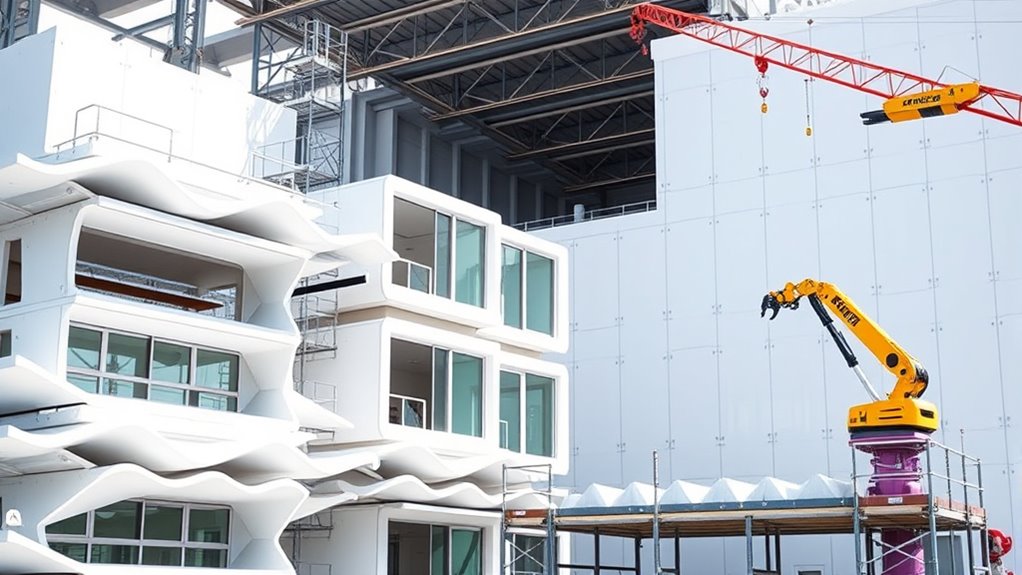

Modular and prefabricated construction help you boost project efficiency by combining factory-made components with on-site assembly. This approach speeds up construction, reduces disruptions, and keeps your project on schedule. It also offers better quality control, minimizes waste, and can lower long-term costs. With fewer weather delays and faster completion times, you gain more predictability and savings. To discover how these methods can transform your projects, continue exploring the key benefits they provide.
Key Takeaways
- Modular construction accelerates project timelines by enabling rapid on-site assembly from prefabricated components.
- Prefabrication reduces on-site disruptions and weather-related delays, ensuring more predictable project completion.
- Factory manufacturing enhances quality control, leading to durable structures with fewer defects and rework.
- Off-site fabrication minimizes environmental impact through reduced waste, energy use, and material reuse.
- Cost savings are achieved over the project lifespan due to shorter schedules, less labor, and decreased material waste.
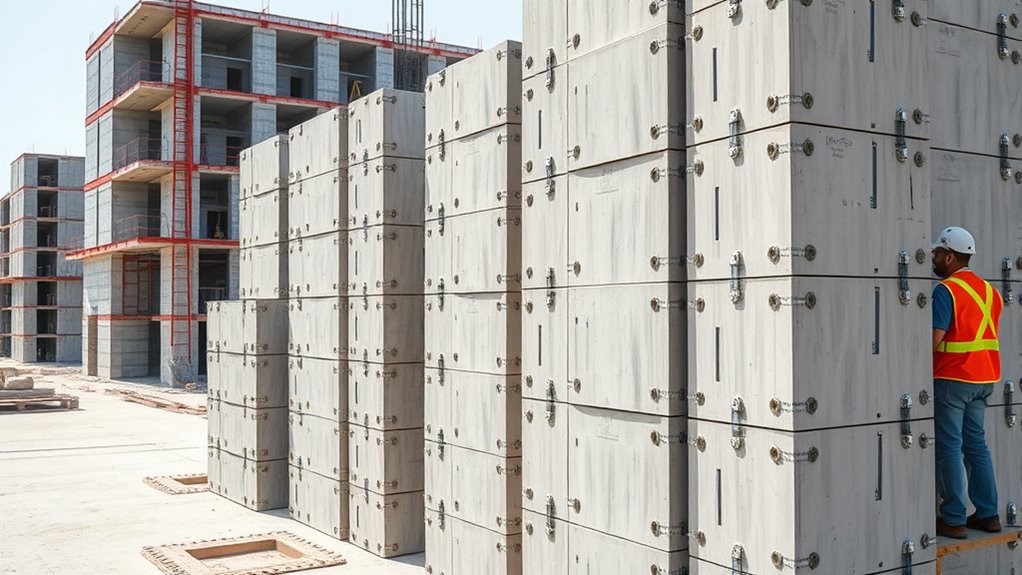
Modular and prefabricated construction are transforming the building industry by offering faster, more efficient ways to complete projects. When you choose these methods, you’re embracing a process that minimizes disruptions on-site and accelerates completion times, which is especially valuable for projects with tight deadlines. Beyond speed, these techniques have a significant impact on construction sustainability. Since much of the work occurs in controlled factory environments, waste is reduced, materials are reused more effectively, and energy consumption can be better managed compared to traditional construction. This environmentally conscious approach not only benefits the planet but can also align with your project’s sustainability goals, potentially qualifying you for green building certifications and incentives.
As you evaluate the advantages of modular and prefabricated construction, consider how a thorough cost analysis plays into your decision-making process. While initial expenses might seem higher due to factory fabrication and transportation, you often save money over the project’s lifespan. Reduced construction time translates to lower labor costs and less on-site equipment rental. Additionally, because factory settings enable precise manufacturing, there’s less material waste, which further cuts costs. When conducting your cost analysis, factor in the shorter project duration, decreased labor needs, minimized waste disposal fees, and the potential for fewer delays caused by weather or on-site issues. These factors can make prefabricated solutions more economical than traditional building methods, especially for projects that require quick turnaround times.
Furthermore, employing modular construction can enhance your project’s quality control. Factory environments ensure consistent standards, which means fewer defects and rework, ultimately saving you money and time. This consistency also contributes to better construction sustainability by reducing the need for repairs and replacements down the line. As you plan your project, think about how integrating these techniques can help you meet environmental standards and budget constraints simultaneously. The ability to simulate and test components beforehand means you’re less likely to encounter surprises during assembly, providing a clearer picture of your project’s costs upfront. Additionally, off-site construction methods can streamline project timelines and reduce the impact of weather delays, further improving efficiency.
Top picks for "modular prefabricat construction"
Open Amazon search results for this keyword.
As an affiliate, we earn on qualifying purchases.
Frequently Asked Questions
What Are the Environmental Impacts of Modular Construction?
Modular construction offers notable sustainability benefits by markedly reducing waste through precise manufacturing processes. You’ll find that this method minimizes onsite debris, conserving resources and lowering environmental impact. Additionally, it often results in energy-efficient buildings due to better quality control and insulation during factory fabrication. By choosing modular, you’re supporting eco-friendly practices that promote waste reduction and sustainability, making your project more environmentally responsible and aligned with green building goals.
How Do Costs Compare With Traditional Building Methods?
You’ll find modular and prefabricated construction more cost-efficient than traditional methods, mainly due to reduced labor and faster build times. This approach helps you manage your budget better by minimizing unexpected costs and streamlining procurement. While initial expenses might be similar, the overall savings and efficiency make modular construction a smart choice for controlling project costs and ensuring timely completion.
Can Modular Construction Be Customized for Unique Designs?
Yes, modular construction offers great design flexibility and material diversity, allowing you to customize unique designs. You can choose from various layouts, finishes, and materials to suit your aesthetic and functional needs. While prefabricated components are built off-site, they’re adaptable enough to incorporate your specific design features. This approach guarantees your project remains personalized, efficient, and tailored to your vision without sacrificing the benefits of modular construction.
What Are the Limitations of Modular Construction in Large-Scale Projects?
You might face structural limitations with modular construction in large-scale projects, as modules need to fit together seamlessly, which can restrict complex designs. Material constraints also come into play, since materials must meet specific standards for prefabrication and transportation. These factors can limit flexibility and customization, making it harder to adapt the project to unique architectural requirements. However, careful planning can help mitigate these challenges effectively.
How Does Modular Construction Affect Project Timelines and Schedules?
Time is of the essence, and modular construction can markedly accelerate your project timelines. You benefit from reduced construction delays because modules are built simultaneously off-site, allowing for better scheduling flexibility. This streamlined approach shortens overall project duration, keeps everything on track, and minimizes surprises. As a result, you can expect quicker completion without sacrificing quality, making modular construction an efficient choice for meeting your deadlines and optimizing project schedules.
Conclusion
By choosing modular and prefabricated construction, you streamline your project and save time and money. Imagine building a school in just a few months instead of years, thanks to this innovative approach. For example, a healthcare facility in California was completed 30% faster using modular methods, allowing patients to access care sooner. Embrace these techniques to transform your construction experience—faster, cost-effective, and tailored to your needs. The future of building is modular; are you ready to join it?