TL;DR

Get art and craft supplies delivered free — and shop member deals
- Fast, free delivery on millions of items
- Access to Prime Big Deal Days deals on October 6–7
- Prime Video, Amazon Music and more included
A Hyperallergic opinion article argues that architect J. Max Bond Jr. deserves greater recognition for helping secure and design the National Museum of African American History and Culture. The piece draws on a new biography of Bond and the museum’s 10th anniversary to revisit his role in the project and his opposition to architecture’s “star system.”
Architect J. Max Bond Jr., who advocated for the National Museum of African American History and Culture and helped co-design it, is the subject of a new biography that argues his contribution has been overshadowed. In a Hyperallergic opinion article marking the museum’s 10th anniversary, the book’s author calls for greater recognition of Bond’s role in shaping the Smithsonian landmark.
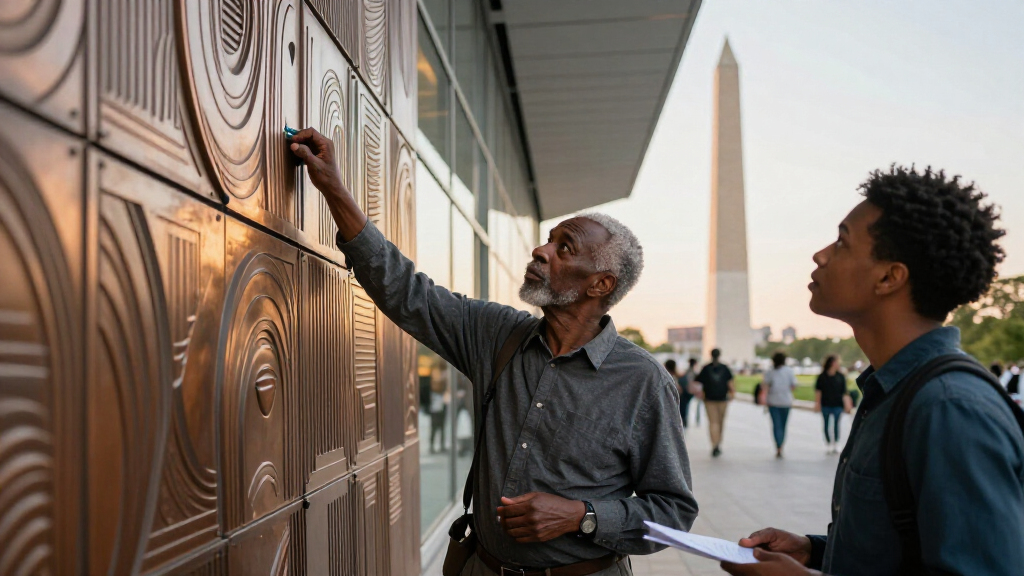
The museum opened on the National Mall in September 2016. Its design was created by the team of Philip Freelon, Bond and David Adjaye, working as Freelon Adjaye Bond/SmithGroup. The report says public coverage often focused on Adjaye, while naming the wider team less prominently. It points to descriptions in outlets including The Guardian, Vogue and The New Yorker that referred to the museum as Adjaye’s building or structure.
Bond died of cancer in 2009, before his teammates won the museum’s design competition. The article describes him as an advocate for the museum as well as a member of the design team, and bases its renewed account of his career on the newly published biography Max Bond: The Life and Work of the People’s Architect. A small museum display, “A Century in the Making,” traces the long development of the institution and includes a photograph of the winning design team.
The article also recounts Bond’s skepticism toward architecture’s focus on individual celebrity. In an unpublished 1993 essay, he questioned whether the profession’s “Star System” served architects as a group. The writer presents Bond’s approach as collaborative and attentive to how buildings function for the people who use them, particularly communities historically excluded from decision-making.
A Team Behind the Museum’s Design
Revisiting Bond’s work changes how the museum’s origin story is told: the landmark was the result of a team effort, alongside years of advocacy and institutional development. Giving fuller attention to Bond does not erase the contributions of Freelon or Adjaye; it helps explain how the design emerged from multiple architects’ work and from a longer campaign for a museum devoted to Black history.
The question also matters beyond this building. Bond’s stated doubts about the architectural star system speak to how public credit is assigned in a profession where buildings are made through collaboration. The Hyperallergic author argues that Bond’s emphasis on collective work and public benefit offers a useful way to understand the museum’s significance and the people-centered ideas behind its design.
architectural design books Max Bond
As an affiliate, we earn on qualifying purchases.
As an affiliate, we earn on qualifying purchases.
The Museum’s Long Development
The Smithsonian museum was not simply the product of a design competition. Its concourse-level display, “A Century in the Making,” presents the institution as the culmination of a long effort to establish a permanent home for Black history on the National Mall. The supplied report describes Bond as one of the people who pushed for the project before the competition selected the design team.
Bond had a substantial career in a profession the article describes as often hostile to Black architects. He served as chair of the Division of Architecture at Columbia University’s Graduate School of Architecture and Planning, an appointment shown in a 1980 photograph cited by the report. His career, the author argues, was successful without making him a celebrity architect—and Bond himself questioned whether celebrity was a useful model for the profession.
The article also places the renewed attention to Bond amid two developments: the museum’s anniversary and the public scrutiny of Adjaye after a Financial Times report in July 2023 described allegations of serious sexual misconduct by three former employees. Those are allegations reported by the newspaper, not findings established in the supplied material. The article says Adjaye withdrew from the limelight afterward and argues that the episode made the risks of the lone-genius narrative more visible.
““We as architects should question whether or not the ‘Star System’ serves our interests as a group.””
— J. Max Bond Jr., in an unpublished 1993 essay, as quoted in the Hyperallergic article
Smithsonian African American History Museum architecture model
As an affiliate, we earn on qualifying purchases.
As an affiliate, we earn on qualifying purchases.
Credit and Allegations in Focus
The supplied material does not provide a detailed breakdown of which design elements were led by Bond, Freelon or Adjaye, or describe how the three architects divided responsibilities. It establishes that they were members of the winning team and says Bond advocated for the museum, but the precise scope of each person’s contribution is not set out.
The account is an opinion article built around a biography by its author, rather than an independent assessment of the design team’s work. The source also reports that three former employees accused Adjaye of serious sexual misconduct in a 2023 Financial Times investigation; it does not provide responses from those involved or the outcome of any later proceedings. Those allegations should not be treated as proven based on this material.
architecture collaboration tools for architects
As an affiliate, we earn on qualifying purchases.
As an affiliate, we earn on qualifying purchases.
How Bond’s Legacy Is Reassessed
The biography, Max Bond: The Life and Work of the People’s Architect, offers readers a fuller account of Bond’s career and his role in the museum’s development. The Hyperallergic article uses its publication and the museum’s anniversary to press for a broader account of the landmark’s history, one that recognizes the architects as a team and traces the project’s advocacy as well as its final design.
The supplied report does not identify a new Smithsonian exhibit, institutional statement or other scheduled development focused on Bond. Whether the museum or other institutions will expand public recognition of his contribution remains unclear.
As an affiliate, we earn on qualifying purchases.
Key Questions
Who was J. Max Bond Jr.?
J. Max Bond Jr. was a Black American architect who advocated for the National Museum of African American History and Culture and joined its winning design team. He died of cancer in 2009, before the team won the competition.
Who designed the National Museum of African American History and Culture?
The museum’s winning team consisted of Philip Freelon, J. Max Bond Jr. and David Adjaye, working as Freelon Adjaye Bond/SmithGroup, according to the supplied report.
Why does the article say Bond has been overlooked?
The Hyperallergic article says news coverage often described the building as Adjaye’s work, with less attention to the full team. Its author argues that this framing has obscured Bond’s role as an advocate and co-designer.
What did Bond think about architectural fame?
In an unpublished 1993 essay, Bond questioned whether the profession’s “Star System” served architects as a group. The article describes him as favoring collaborative design and buildings that work well for their communities.
Source: rss
Fall Picks
fall essentials
As an affiliate, we earn on qualifying purchases.