In the Tate Britain dialogue between Turner and Constable, you see how both artists revolutionized landscape painting with their focus on atmosphere, light, and emotion. Turner’s experimental use of color and loose brushwork, along with Constable’s naturalistic detail, challenge traditional techniques and inspire future movements like Impressionism. Their innovations emphasize capturing fleeting moments of nature’s beauty. If you explore further, you’ll discover how their ideas shaped modern art and changed the way we experience landscapes.
Key Takeaways
- The Tate Britain exhibition explores the contrasting yet influential techniques of Turner’s atmospheric light and Constable’s natural realism.
- It highlights how their innovative approaches revolutionized landscape painting and inspired future movements like Impressionism.
- The dialogue emphasizes their shared focus on emotional impact and capturing transient natural phenomena.
- The exhibition showcases their legacy in redefining art’s perception of nature through atmospheric effects and spontaneous brushwork.
- It demonstrates how Turner and Constable’s pioneering work laid foundations for modern art’s emphasis on perception and sensory experience.
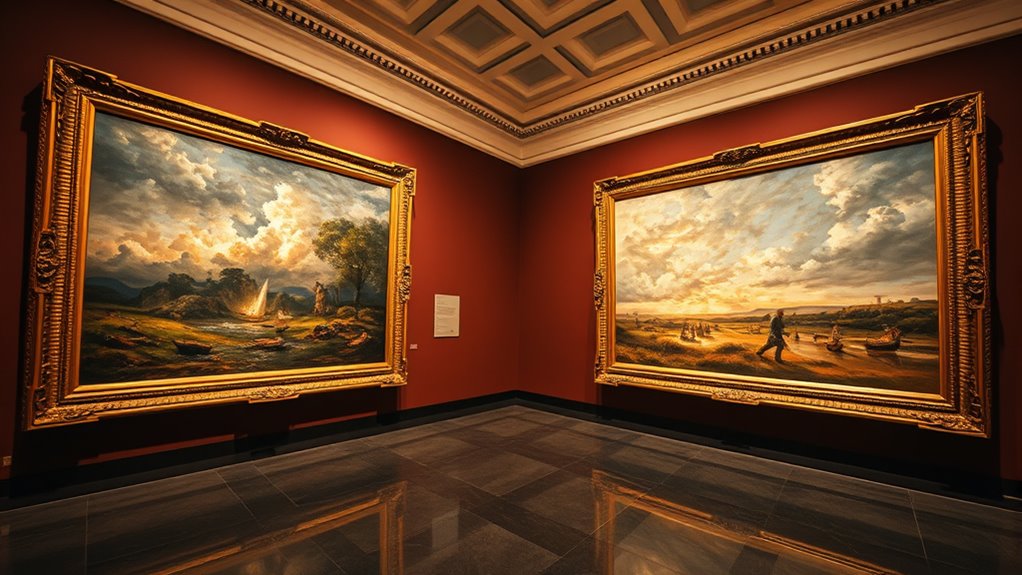
Have you ever wondered how Turner and Constable transformed landscape painting? Their work marked a pivotal shift, laying the groundwork for later artistic movements, including Impressionism. You can see how Turner’s bold experimentation with light and atmosphere, combined with Constable’s emphasis on naturalism, created a new language for depicting the outdoors. Their techniques challenged traditional approaches, pushing the boundaries of artistic expression. Turner’s mastery of Impressionist techniques, such as capturing fleeting effects of light and weather, influenced many artists who followed. Instead of rigidly detailed scenes, Turner used loose brushwork and luminous colors to evoke mood and atmosphere. His focus on the transient qualities of nature foreshadowed Impressionists’ emphasis on capturing a moment’s immediacy. Constable, on the other hand, approached landscape with a different sensitivity. His detailed studies of sky and water, along with his emphasis on capturing the natural world’s changing conditions, showcased a deep understanding of atmospheric effects. Both artists prioritized the emotional impact of landscape, a trait that became central to Impressionist art. Their artistic influence extended beyond technique; they inspired a new way of seeing and representing nature—more spontaneous, more personal. When you look at their paintings, you notice how Turner often blurred lines and used vibrant color contrasts to create a sense of movement and light. Constable’s work, while more detailed, still embraced an immediacy that broke away from classical clarity, favoring a truthful portrayal of the landscape’s fleeting moments. These qualities resonated with later artists who sought to depict the world as they experienced it, rather than through idealized or overly formal compositions. Their pioneering approaches encouraged others to experiment with color, brushwork, and atmosphere—hallmarks of Impressionism. Turner’s influence is particularly evident in the way he manipulated paint to evoke natural phenomena, inspiring Impressionists like Monet to explore similar effects. Constable’s focus on natural observation and capturing the seasonal and weather variations contributed to the evolving appreciation of nature’s unpredictability. Their innovative techniques helped redefine landscape painting, moving it away from strict realism and toward a more expressive, sensory experience. As you explore their works, you see how their innovations laid the foundation for modern art’s focus on perception and emotion. Turner and Constable didn’t just paint landscapes—they revolutionized the way you experience and interpret the natural world through art, inspiring generations to see nature’s beauty in its fleeting, atmospheric moments.
Top picks for "turner constable dialogue"
Open Amazon search results for this keyword.
As an affiliate, we earn on qualifying purchases.
Frequently Asked Questions
How Did Turner Influence Modern Landscape Painting?
Turner influenced modern landscape painting by pioneering Impressionist techniques, such as loose brushwork and vibrant colors, which capture fleeting moments and atmospheric effects. His Romantic landscape style emphasized emotion and the sublime, inspiring later artists to explore mood and light more freely. You can see his impact today in how contemporary painters experiment with color, texture, and capturing the transient beauty of nature, bridging traditional Romanticism with modern artistic approaches.
What Are the Key Differences Between Turner and Constable’s Techniques?
You notice that Turner uses loose, expressive brushwork styles to create dynamic, atmospheric scenes, often blending vibrant color palettes to evoke mood. In contrast, Constable prefers more detailed, precise brushwork with a focus on naturalistic color palettes, capturing realistic textures and light. Turner’s approach emphasizes emotion and movement, while Constable emphasizes accuracy and tranquility in his landscapes.
Did Turner and Constable Ever Collaborate on Projects?
You won’t find evidence of Turner and Constable collaborating on projects. Despite their artistic rivalry and shared influences from nature and landscape, they worked independently, each developing unique styles. Their rivalry pushed both to innovate, but they never teamed up professionally. Instead, their contrasting approaches and mutual respect shaped their individual legacies, inspiring future artists and fueling ongoing debates about the role of innovation versus tradition in art.
How Are Their Artworks Preserved and Restored Today?
You can see their artworks preserved through advanced art conservation and restoration techniques. Experts carefully analyze each piece, using methods like cleaning, consolidation, and sometimes retouching to stabilize and restore the paintings. These techniques help prevent deterioration and guarantee their longevity. Modern technology and careful handling allow us to appreciate Turner and Constable’s masterpieces for generations, keeping their artistry alive and vibrant for future audiences.
What Role Did Their Personal Lives Play in Their Artistic Development?
Your personal lives deeply influenced their artistic development, shaped by Romantic influences and personal struggles. Turner’s emotional turmoil fueled his vivid, dramatic landscapes, while Constable’s love for nature and rural life inspired his detailed, serene scenes. Romantic ideals encouraged them to express intense feelings through their work, and personal struggles often pushed them to innovate and explore new techniques, making their art reflections of their inner worlds and life experiences.
Conclusion
As you step back and soak in Turner and Constable’s works at Tate Britain, you realize their paintings are like windows into a storm or a gentle breeze—both wild and calming. Their styles dance like fire and water, shaping your view of nature’s ever-changing face. You leave with a newfound appreciation, feeling as if you’ve glimpsed the heartbeat of the landscape itself, alive and breathing beneath the brushstrokes.