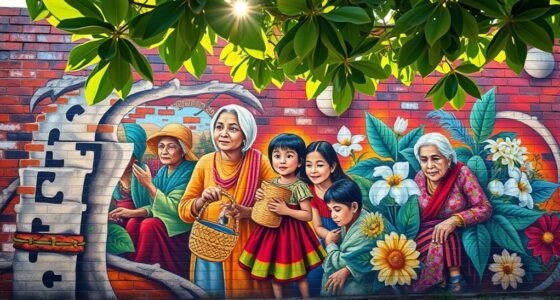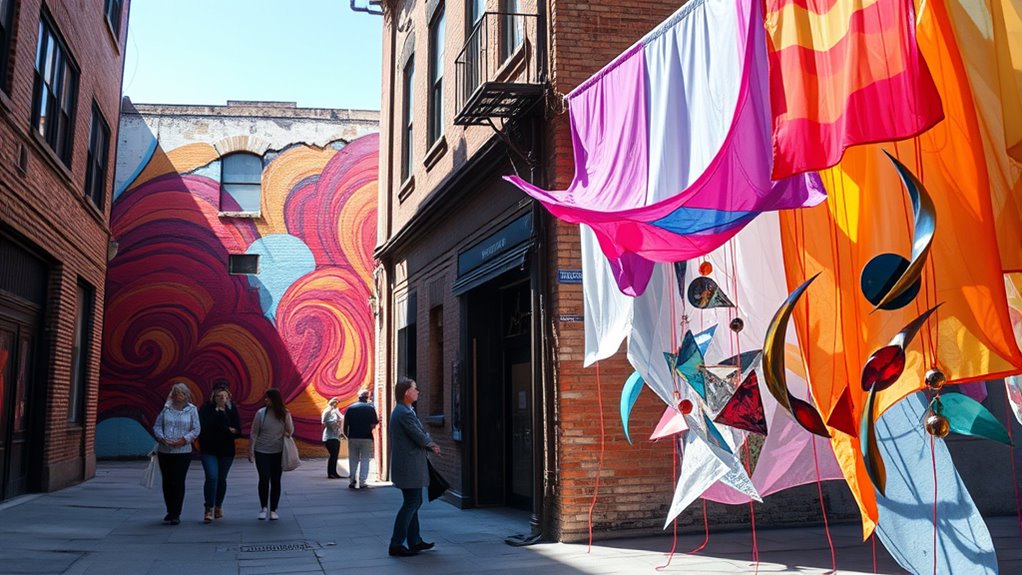

Temporary public art projects actively engage communities, inviting residents to participate and share their stories. These installations help revitalize neighborhoods by transforming abandoned spaces into vibrant cultural hotspots, attracting visitors and boosting local pride. They also promote diversity and inclusivity by providing accessible platforms for various voices. Additionally, these projects encourage innovative urban planning and foster a strong sense of ownership. If you want to explore how these initiatives shape cities, stay with us to discover more.
Key Takeaways
- Temporary public art fosters community participation, encouraging dialogue about local identity and shared goals.
- These projects revitalize neglected areas, attracting visitors and boosting local economy.
- They promote diversity and inclusivity by providing accessible platforms for varied community voices.
- Temporary installations demonstrate urban innovation, inspiring new approaches to city planning and space utilization.
- Art projects enhance neighborhood identity, making public spaces more vibrant, engaging, and reflective of community aspirations.
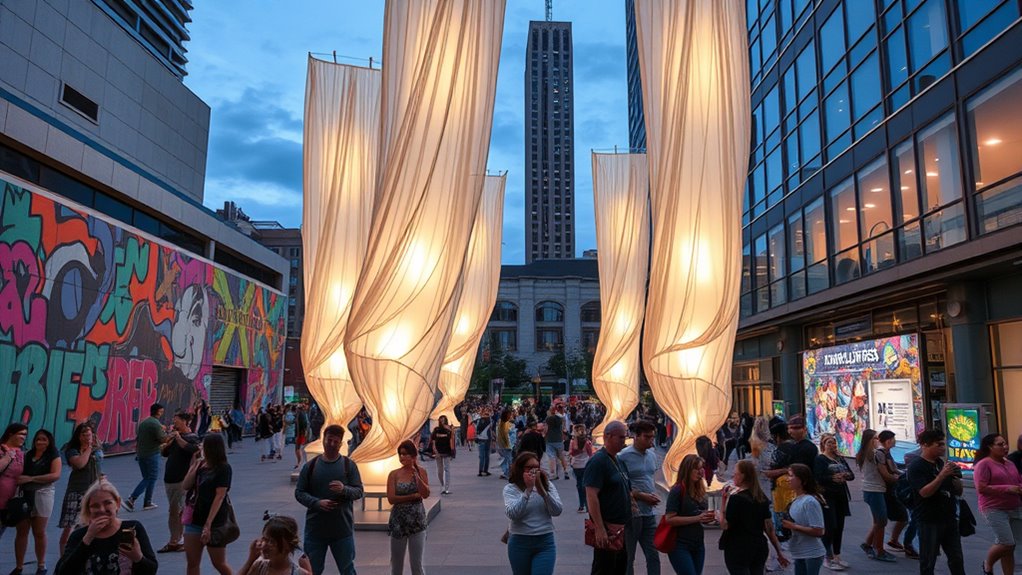
Temporary public art projects transform urban spaces by engaging communities and sparking conversations. When you get involved in these initiatives, you become part of a dynamic process that brings people together around shared creativity and local identity. These projects often serve as catalysts for community engagement, encouraging residents to participate actively rather than passively observe. As you walk through a neighborhood with a temporary sculpture or mural, you notice how it invites dialogue—about the art itself, the community’s history, or future aspirations. This sense of participation fosters a stronger connection between residents and their environment, making public spaces feel more alive and inclusive.
Temporary public art invites community dialogue and fosters stronger connections in shared spaces.
You might find that these art projects also play a significant role in urban revitalization. When an abandoned lot transforms into a vibrant display of temporary art, it can change perceptions of the area, attracting visitors and potential investors. The visual impact of innovative, eye-catching installations helps redefine the neighborhood’s identity, making it more attractive and welcoming. As you see vacant lots filled with colorful murals or interactive sculptures, it becomes clear how temporary art can breathe new life into neglected spaces, turning them into cultural hotspots. This process often encourages local businesses to thrive, boosting the economy and fostering a sense of pride among residents.
Furthermore, temporary public art projects provide an accessible platform for diverse voices to be heard. You might notice how community members, local artists, and organizations come together to create something meaningful. Their collaboration not only results in unique artworks but also builds relationships and trust within the neighborhood. These projects often include workshops, discussions, and participatory elements that deepen your connection to the art and the community. This shared effort helps break down social barriers and promotes inclusivity, as everyone has a chance to contribute and shape the visual narrative of their surroundings.
In addition, the transient nature of these projects emphasizes the importance of adaptability and innovation in urban planning. You realize that temporary art isn’t just about aesthetics; it’s a strategic tool for community development. When you witness a city embrace temporary installations, it signals a willingness to experiment with new ideas and approaches to urban living. This openness can inspire residents and officials alike to think creatively about how public spaces are used and experienced. Ultimately, temporary public art projects serve as powerful catalysts for community engagement and urban revitalization, transforming neighborhoods into vibrant, interactive environments that reflect the collective identity and aspirations of those who live there.

Outdoor Sculpture in Baltimore: A Historical Guide to Public Art in the Monumental City
Used Book in Good Condition
As an affiliate, we earn on qualifying purchases.
As an affiliate, we earn on qualifying purchases.
Frequently Asked Questions
How Are Temporary Public Art Projects Funded?
You can fund temporary public art projects through various funding sources, including local government grants, arts organizations, and community fundraising efforts. Sponsorship opportunities also play a significant role, with businesses or individuals providing financial support in exchange for recognition. By exploring diverse funding sources and seeking sponsorships, you can guarantee your project has the resources needed to succeed and make a meaningful impact in the community.
What Safety Considerations Are Involved in Temporary Installations?
Imagine installing a sculpture in a busy park; you need to ensure safety first. You should conduct a thorough risk assessment to identify potential hazards, like structural instability or sharp edges. Implement safety protocols, such as secure anchoring and clear signage, to protect visitors and workers. Regular inspections ensure ongoing safety, reducing accident risks and making sure everyone enjoys the art without harm.
Who Are the Typical Artists Involved in These Projects?
You’ll find that temporary public art projects often feature emerging street artists and community muralists. These artists bring fresh perspectives and local flair, engaging communities directly. Their work is usually vibrant, accessible, and designed to spark conversation or celebrate cultural identity. By involving these artists, projects gain authenticity and relevance, making public spaces more dynamic and inclusive. Their creativity helps transform urban areas temporarily, leaving lasting impressions on residents and visitors alike.
How Do Communities Participate in Temporary Art Initiatives?
You can actively participate in temporary art initiatives through community engagement, transforming empty spaces into vibrant expressions of local culture. While the art may be fleeting, your involvement creates a lasting cultural expression that resonates beyond the moment. Join workshops, share ideas, or help with installation—your participation fosters a sense of ownership and connection, turning temporary projects into meaningful celebrations of community identity.
What Are the Environmental Impacts of Temporary Public Art?
You might worry about environmental impacts, but if you choose eco-friendly materials, you can decrease waste and pollution. Temporary art projects can disrupt wildlife if not planned carefully, so you should consider their location and timing. By minimizing habitat disturbance and using sustainable resources, you help protect ecosystems while still creating engaging public art. This balanced approach ensures your project benefits communities without harming the environment.

Interactive Art and Embodiment: The Implicit Body as Performance (Arts Future Book)
As an affiliate, we earn on qualifying purchases.
As an affiliate, we earn on qualifying purchases.
Conclusion
As you’ve seen, temporary public art projects often surprise us when we least expect it—like that spontaneous mural you stumble upon on your way home. These fleeting installations remind us that art doesn’t have to last forever to make a lasting impression. Sometimes, the best moments happen by coincidence, turning an ordinary day into something memorable. So keep your eyes open—you never know when a temporary masterpiece might change your perspective just when you need it most.

Chroma Mural Paint, Assorted Primary Colors, Pints, Set of 6
Mural paint offers lasting results on both outdoor and indoor murals, canvas, and other mediums
As an affiliate, we earn on qualifying purchases.
As an affiliate, we earn on qualifying purchases.

Revive and Thrive: The Art of Town Revitalization and Historical Preservation (Conservation, Revitalization, and Restoration)
As an affiliate, we earn on qualifying purchases.
As an affiliate, we earn on qualifying purchases.