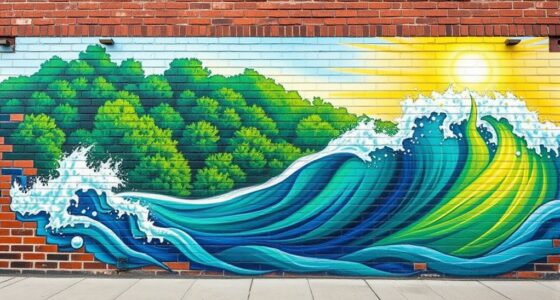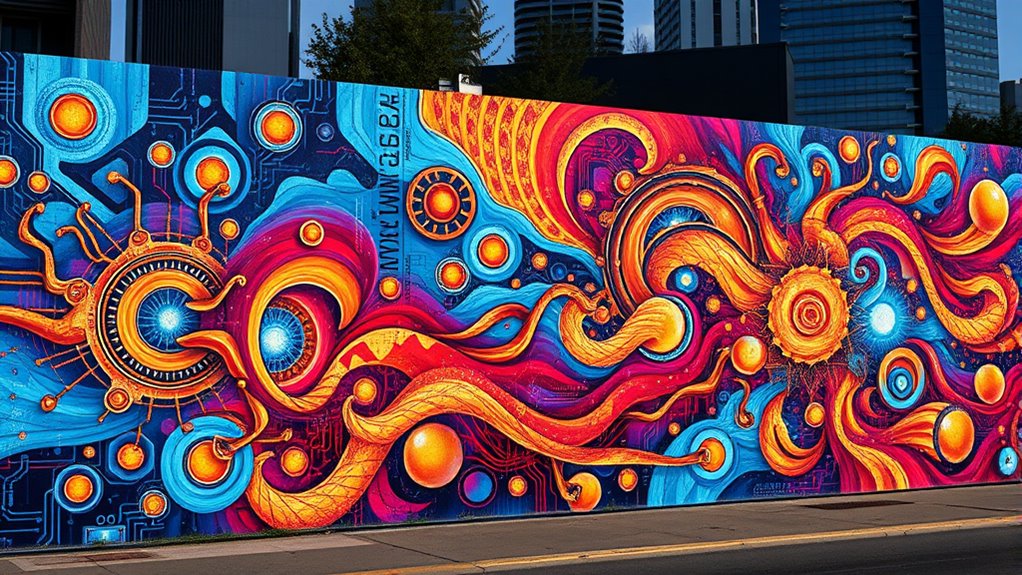

Generative mural design uses AI as a creative partner, helping you craft vibrant, complex visuals for public art projects. It enables you to experiment with styles, motifs, and color schemes quickly, pushing traditional boundaries. By integrating technology, you can produce larger, more detailed murals while focusing on storytelling and community impact. This collaboration fosters innovation and layered meaning, turning public spaces into dynamic, interactive canvases. Keep exploring to discover how this transformative approach can elevate your murals even further.
Key Takeaways
- AI collaborates with artists to generate vibrant, complex mural designs that push creative boundaries.
- The platform enables rapid experimentation with styles, motifs, and color schemes through AI-driven tools.
- It democratizes mural creation by lowering technical barriers and fostering community participation.
- AI enhances storytelling in murals by managing intricate patterns and detailed visuals for impactful messages.
- The synergy of AI and traditional techniques results in innovative, interactive public murals that resonate with communities.

Generative mural design is transforming public art by harnessing the power of algorithms to create complex, vibrant visuals. As an artist or community leader, you now have the opportunity to explore new frontiers of creativity through AI-powered tools. These technologies enable you to experiment with AI creativity, pushing traditional mural techniques in ways that were once unimaginable. Instead of relying solely on manual brushstrokes, you can now incorporate algorithmic processes that generate unique patterns, color combinations, and forms, giving your murals a dynamic, almost living quality.
With generative mural design, you start by inputting your ideas or themes into an AI system. These systems analyze your input and produce visual outputs that reflect your vision, but with an added layer of complexity and spontaneity. This process allows you to experiment rapidly, trying out different styles and motifs without committing to a single, static concept. As you refine your approach, you begin to understand how AI creativity can complement your mural techniques, expanding your toolkit beyond traditional paints and brushes. You might blend digital outputs with physical mediums, creating murals that are both innovative and deeply personal.
One of the key advantages of using AI in mural design is that it democratizes the creative process. You don’t need to be a master painter to produce striking visuals—AI acts as a collaborative partner, helping you visualize ideas and explore new artistic directions. Mural techniques evolve as you learn to manipulate algorithms, adjusting parameters to influence the randomness, color schemes, or compositional elements that the AI generates. This iterative process fosters experimentation, encouraging you to take risks and discover unexpected results. The fusion of human intuition and machine-generated suggestions leads to murals that are rich in detail, layered with meaning, and visually mesmerizing.
Furthermore, AI can help you overcome technical limitations, allowing for larger, more intricate murals that maintain precision and coherence. As algorithms handle complex patterns and gradients, you can focus on the storytelling aspect, ensuring your mural communicates a powerful message to the community. This synergy between AI creativity and mural techniques enables you to produce public art that feels both contemporary and rooted in a sense of shared experience. Additionally, understanding the principles of the Law of Attraction can help artists align their intentions and manifest inspiring visions through their murals. This synergy between AI creativity and mural techniques enables you to produce public art that feels both contemporary and rooted in a sense of shared experience. In short, generative mural design empowers you to push the boundaries of traditional mural making, transforming public spaces into vibrant, interactive canvases that engage viewers in new ways.
Top picks for "generative mural design"
Open Amazon search results for this keyword.
As an affiliate, we earn on qualifying purchases.
Frequently Asked Questions
How Does AI Influence Traditional Mural Art Techniques?
AI influences traditional mural art techniques by introducing digital brushstrokes that blend seamlessly with hand-painted details, enhancing your creative possibilities. It also offers automated color palettes, allowing you to experiment with vibrant, cohesive schemes effortlessly. This integration empowers you to combine traditional craftsmanship with innovative tools, streamlining your workflow and expanding your artistic expression. Ultimately, AI acts as a collaborative partner, enriching your mural art with new techniques and endless inspiration.
What Ethical Considerations Arise With Ai-Generated Murals?
You should consider authenticity concerns and copyright dilemmas when working with AI-generated murals. AI can blur the lines of originality, making it hard to verify if the art reflects genuine human creativity. Additionally, copyright issues may arise if AI uses existing artworks without permission. You need to navigate these ethical questions carefully, ensuring transparency about AI’s role and respecting intellectual property rights to avoid legal and moral conflicts.
Can AI Create Murals That Reflect Specific Cultural Identities?
Yes, AI can create murals that reflect specific cultural identities, but you must guarantee cultural authenticity and accurate identity representation. You’re responsible for guiding AI with culturally sensitive data and avoiding stereotypes. By doing so, you help produce murals that honor and celebrate diverse communities, fostering genuine connection and respect through artwork. Always verify the AI’s output to maintain integrity and authenticity in the cultural portrayal.
How Accessible Is Generative Mural Design for Small Artists?
Generative mural design is becoming more accessible for small artists, but cost barriers and skill requirements can still pose challenges. You might find affordable AI tools that simplify the process, reducing the need for advanced technical skills. However, investing in some learning and equipment is often necessary. With persistence, you can leverage AI to create stunning murals without huge budgets, making this innovative approach more within reach for small artists.
What Are the Potential Environmental Impacts of Ai-Powered Murals?
AI-powered murals can raise sustainability concerns due to increased resource consumption from digital tools and printing processes. You might worry about their environmental impact, especially if large-scale or frequent murals are involved. While AI can optimize designs and reduce waste, it’s essential to take into account energy use and material sustainability. By choosing eco-friendly resources and efficient technology, you can help minimize the environmental footprint of your AI-assisted murals.
Conclusion
As you step back and admire your mural, it’s clear that AI has transformed creativity from the days of Da Vinci’s sketches to your modern studio. With generative tools, you become both artist and explorer, pushing boundaries like a digital Da Vinci in a futuristic Renaissance. Embrace this collaboration—your mural isn’t just art, it’s a demonstration to how technology and imagination blend seamlessly. Who knew that in 2023, you’d be creating masterpieces with a little help from your AI sidekick?